On a podcast episode published August 12, 2026, Kyal Van Der Leest, founder of LVLUP Health, which sells oral peptide capsules, argued that the common view that oral peptides do not work is wrong for some of them. He named BPC-157 in delayed-release capsules, the arginate salt of BPC-157, KPV, GHK-Cu, liposomal peptides and a four-peptide gut capsule. He was also candid about the limits: injection delivers the full dose, insulin does not work by mouth, and, in his words, “I don’t think there’s too many in the full catalog of peptides that do work orally.”
This article tests the part he says does work, starting with the strongest available comparison: the peptide drugs that pharmaceutical companies have actually managed to turn into pills.
How much of a swallowed peptide reaches the blood?
Most approved oral peptide drugs deliver roughly 0.1 to 2% of what is swallowed; the exceptions are a cyclic outlier and drugs designed to work inside the gut. Each approved example below carries an absorption-enhancing ingredient, is potent enough to work at a tiny absorbed fraction, has an unusual cyclic structure, or never needs to leave the intestine. The figures come from the products’ own prescribing information unless marked as our arithmetic.
| Drug | Size | How it gets around the gut | Share of oral dose absorbed | What it teaches |
|---|---|---|---|---|
| Semaglutide tablets (Rybelsus; Ozempic and Wegovy tablets) | 31 residues, lipidated | SNAC absorption enhancer, absorbed in the stomach; strict fasting rules | 0.4 to 1% (Rybelsus); about 1 to 2% (Ozempic and Wegovy tablets); 89% by injection | The best-engineered oral peptide still loses almost all of the dose. US label; Wegovy label |
| Oral insulin OI338 (Novo Nordisk, discontinued) | 51 residues | Sodium caprate enhancer | Relative bio-efficacy of 1.7% versus injected insulin glargine | Worked in a phase 2 trial, then stopped because the doses were too large to manufacture commercially. Trial; follow-up paper |
| Octreotide capsules (Mycapssa) | 8 residues | Delayed-release capsule plus a transient permeation enhancer | 20 mg by mouth matches the exposure of 0.1 mg injected, about 0.5% (our arithmetic) | Being small and delayed-release is not enough; the excipients do the work. Label |
| Desmopressin tablets | 9 residues | None; relies on potency | 0.08 to 0.16% | A tiny absorbed fraction works when the drug acts at microgram doses. US label; UK label |
| Linaclotide (Linzess) | 14 residues | Acts on the gut lining; does not need absorption | Below the limit of quantitation in plasma | A peptide can be a real oral medicine without reaching the blood. Label |
| Cyclosporine | 11 residues, cyclic | Unusual cyclic structure | About 30% for the original capsules; under 10% to 89% depending on the patient group | The structural outlier, not a model for linear peptides. Label; Neoral label |
| Orforglipron (Foundayo), not a peptide | Small molecule | Conventional small-molecule absorption | 77%, with or without food | The easiest oral GLP-1 drug left the peptide behind. Label |
| BPC-157 | 15 residues, linear, unmodified | None demonstrated | Never measured | See what has been measured. |
Reviews of oral peptide delivery land in the same place. Brayden and colleagues describe permeation-enhancer products as working “against a background of low and variable oral bioavailability values of ~1%” (2020 review); a 2023 review notes that bioavailability after Rybelsus and Mycapssa “is still only around 1%” (Pharmaceutics review).
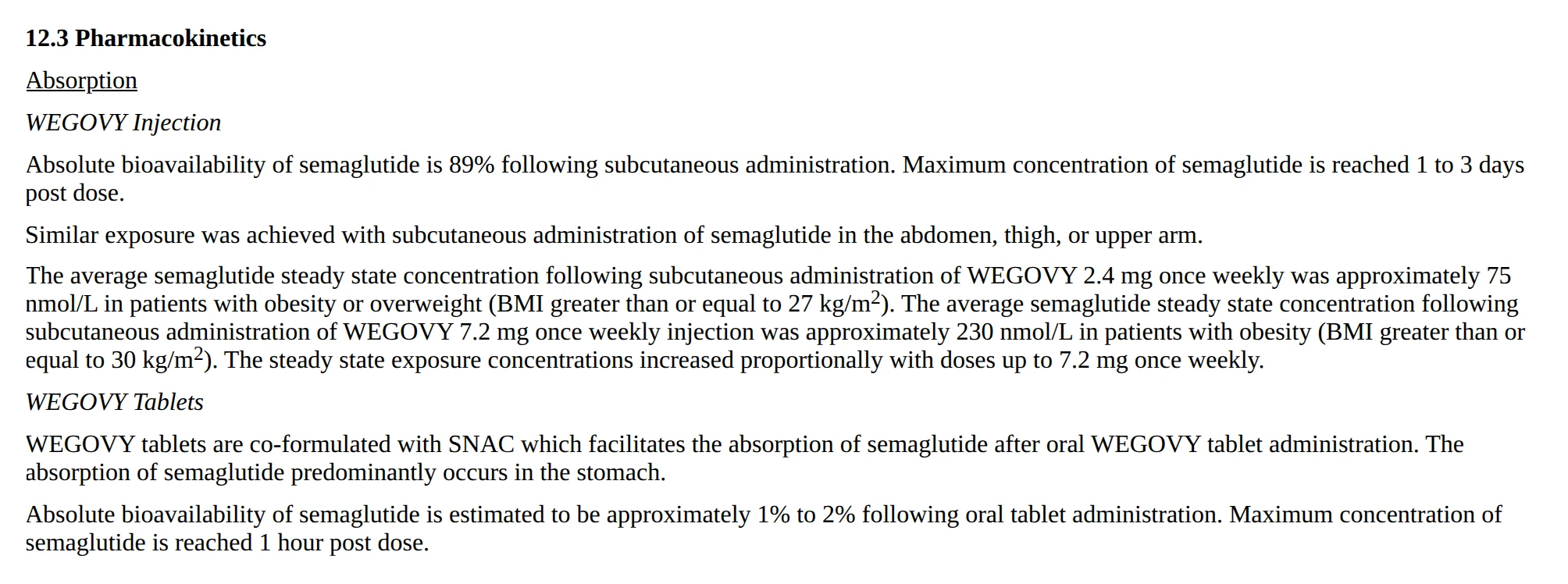
What it took to make semaglutide a pill
The oral semaglutide tablet is a purpose-built delivery system, and its label still assumes most of the drug is lost. Each tablet is co-formulated with salcaprozate sodium (SNAC). Novo Nordisk’s mechanism study found that absorption happens in the stomach, close to the eroding tablet, “requires coformulation with SNAC,” and that SNAC protects the peptide from enzymes by buffering the acid around the tablet (Buckley and colleagues, 2018). An industry-authored review reports 300 mg of SNAC per tablet in development and a bioavailability of 0.8% under the recommended dosing conditions, with within-person variability estimated at 137% (Aroda and colleagues, 2022).
That is why the US label requires the tablet on an empty stomach, with no more than 4 ounces of water, and a wait of at least 30 minutes before food, drink or other medicines (label). The European label adds an eight-hour fast and says waiting less than 30 minutes “decreases the absorption of semaglutide” (EU label).
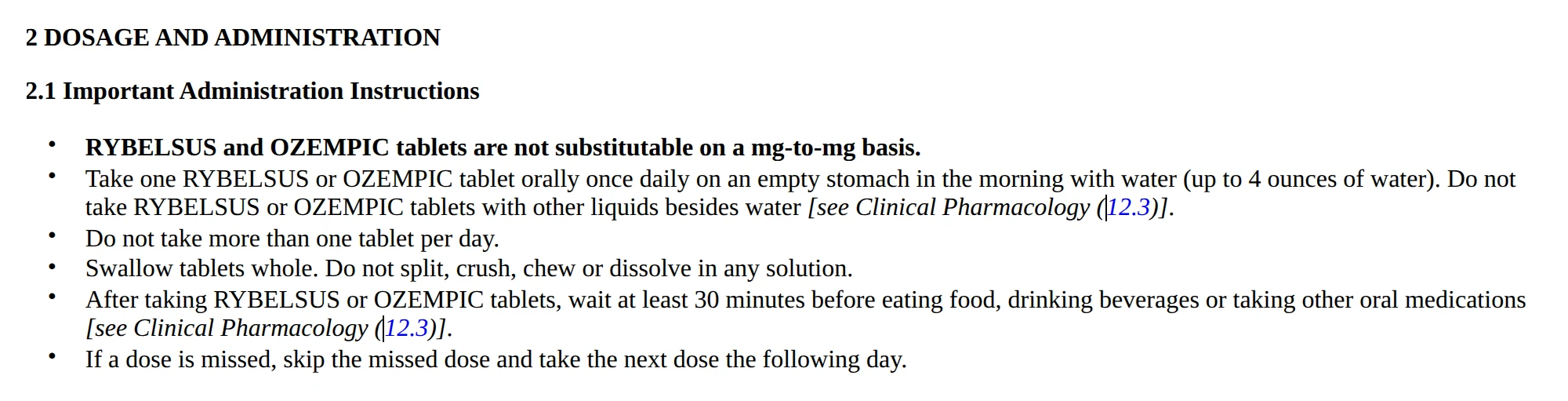
The dose arithmetic shows the cost. The Wegovy label switches a patient from the 2.4 mg weekly injection to a 25 mg daily tablet (label). That is 175 mg swallowed per week to replace 2.4 mg injected, about 73 times as much by weight (our arithmetic from the label’s switching instruction; the European label warns that the effect of switching “cannot easily be predicted”).
Two other programs show how hard the problem is:
- Oral insulin. Novo Nordisk’s OI338 tablet matched injected insulin glargine on fasting glucose over eight weeks in 50 people with type 2 diabetes. Development stopped because “I338 doses were high and, therefore, production of the required quantities of I338 for wide public use was deemed not commercially viable” (Halberg and colleagues, 2019). A later Novo paper put its relative bio-efficacy at 1.7% of injected glargine (Hubalek and colleagues, 2020). Oramed’s oral insulin capsule missed its primary A1C endpoint in a phase 3 trial of about 700 patients in January 2023 (Oramed announcement).
- Leaving the peptide behind. The FDA approved Eli Lilly’s orforglipron (Foundayo) on April 1, 2026. It is a small molecule, not a peptide, with 77% absolute bioavailability and no food restrictions (label; Nature Reviews Drug Discovery).
A capsule of a linear 15-residue peptide with no disclosed absorption enhancer would need to outperform all of this to deliver a meaningful systemic dose. That is possible in principle. It has not been shown.
Is there an 8 to 9 amino acid cutoff?
No such threshold appears in the literature we reviewed. The documented carrier route stops at three amino acids. The intestinal transporter PepT1 moves di- and tripeptides across the gut wall, and “neither free amino acids nor peptides containing four or more amino acids are accepted as substrates by the PepT1 transporter,” according to a review of peptide absorption in healthy adults. The same review found little unequivocal evidence that larger dietary peptides cross the gut intact in meaningful amounts and estimated that such absorption may be several orders of magnitude below 0.1% of the dose (Miner-Williams and colleagues, 2015).
Size also fails as a simple rule in the other direction. Octreotide has eight residues and still needs an enhancer. Desmopressin has nine and absorbs 0.08 to 0.16%. Cyclosporine has eleven and can absorb far more because of its cyclic structure. Backbone modifications such as N-methylation are among the chemical changes researchers use to improve oral uptake (review). BPC-157 has none of those features.
What the transporter evidence does support is narrower: KPV and GHK are tripeptides, so they are the right size to be PepT1 candidates. For KPV, uptake through PepT1 has been shown in cells and mice. For GHK, we found no study demonstrating it.
BPC-157 by mouth: what has actually been measured
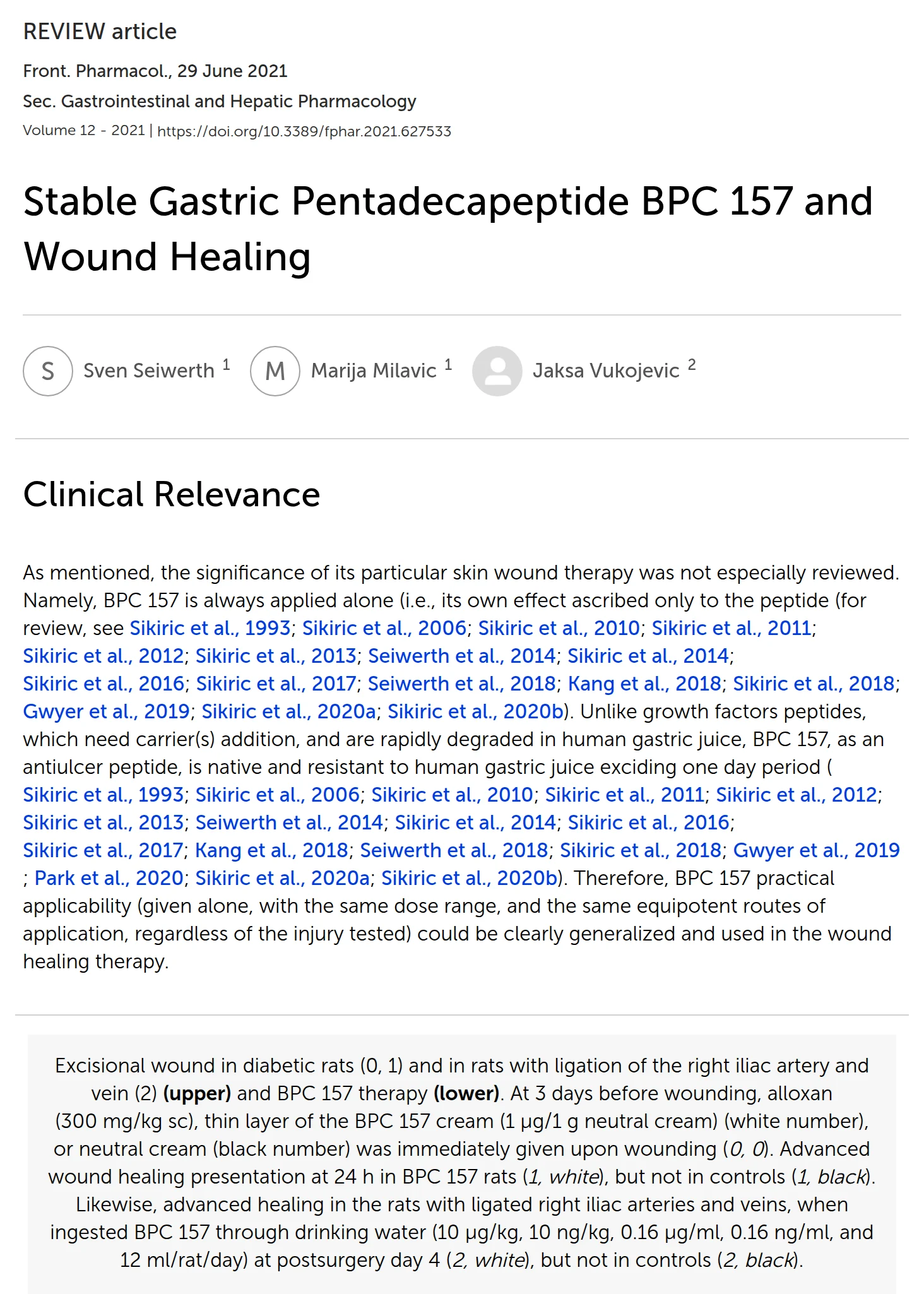
Oral BPC-157 has animal healing studies and stability claims, but no measured absorption in any species and no published human oral data. A 2026 review of BPC-157’s pharmaceutical development states that “oral bioavailability in any species under standardized fasting and fed conditions” is missing from the pharmacokinetic record, and that the idea that gastric stability alone is enough for clinically meaningful oral bioavailability “is unsupported by direct evidence” (Mateescu and colleagues, 2026).
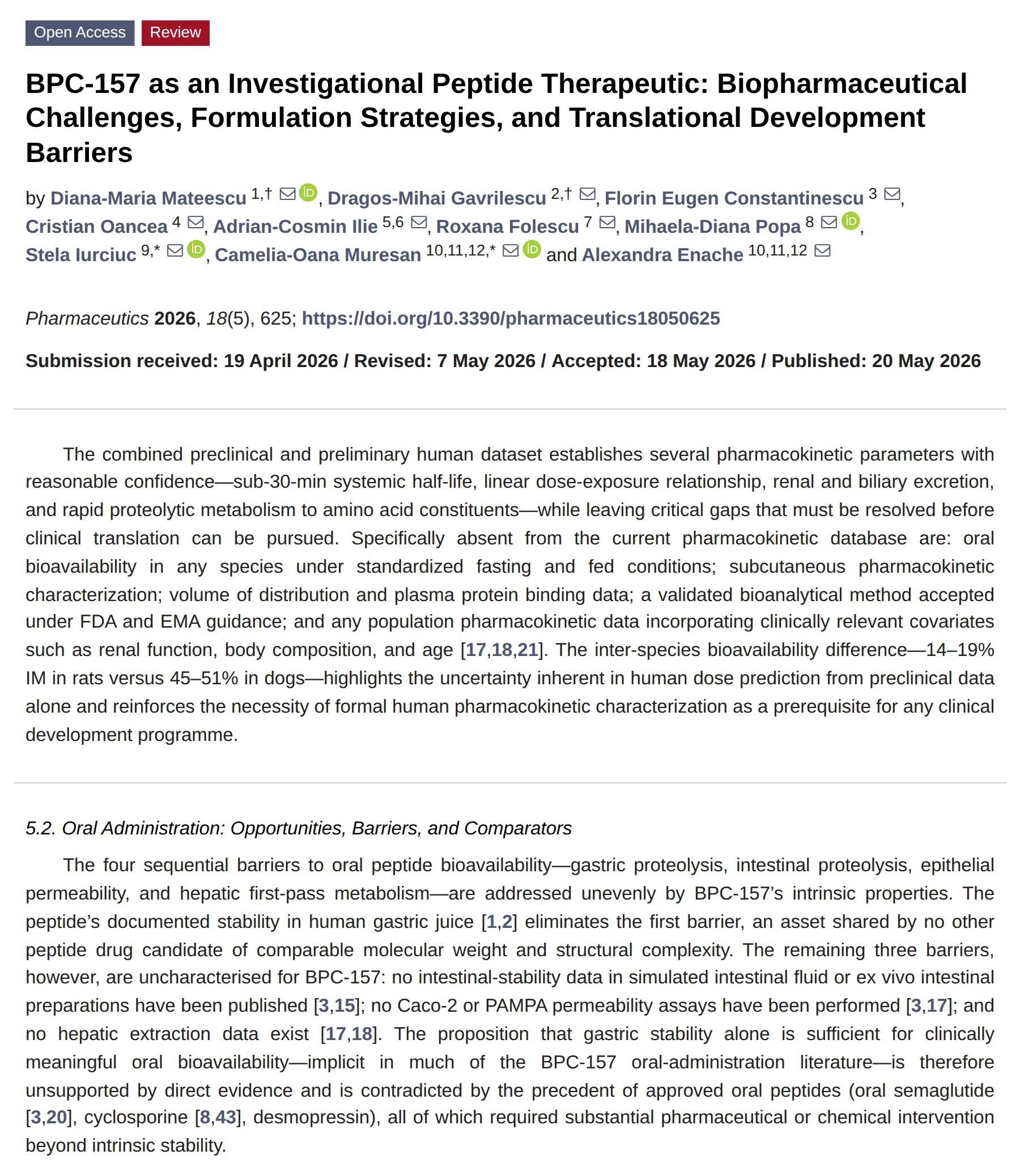
The record breaks down this way:
- Stability in gastric juice. Reviews from the Zagreb group that developed BPC-157 describe it as resistant to human gastric juice for more than a day (Seiwerth and colleagues, 2021). The underlying data trace to a 1995 conference abstract that is not indexed in PubMed or Europe PMC, so its methods cannot be inspected. Surviving the stomach is also a different question from crossing the gut wall.
- Animal studies by mouth. Rat studies typically give BPC-157 in drinking water at 10 micrograms or 10 nanograms per kilogram and measure healing outcomes, not blood levels (dosing described here). The evidence is concentrated in one laboratory: in Europe PMC on September 30, 2026, 178 of 298 records mentioning BPC-157 listed Predrag Sikiric as an author, and 48 of 55 records mentioning drinking-water administration did.
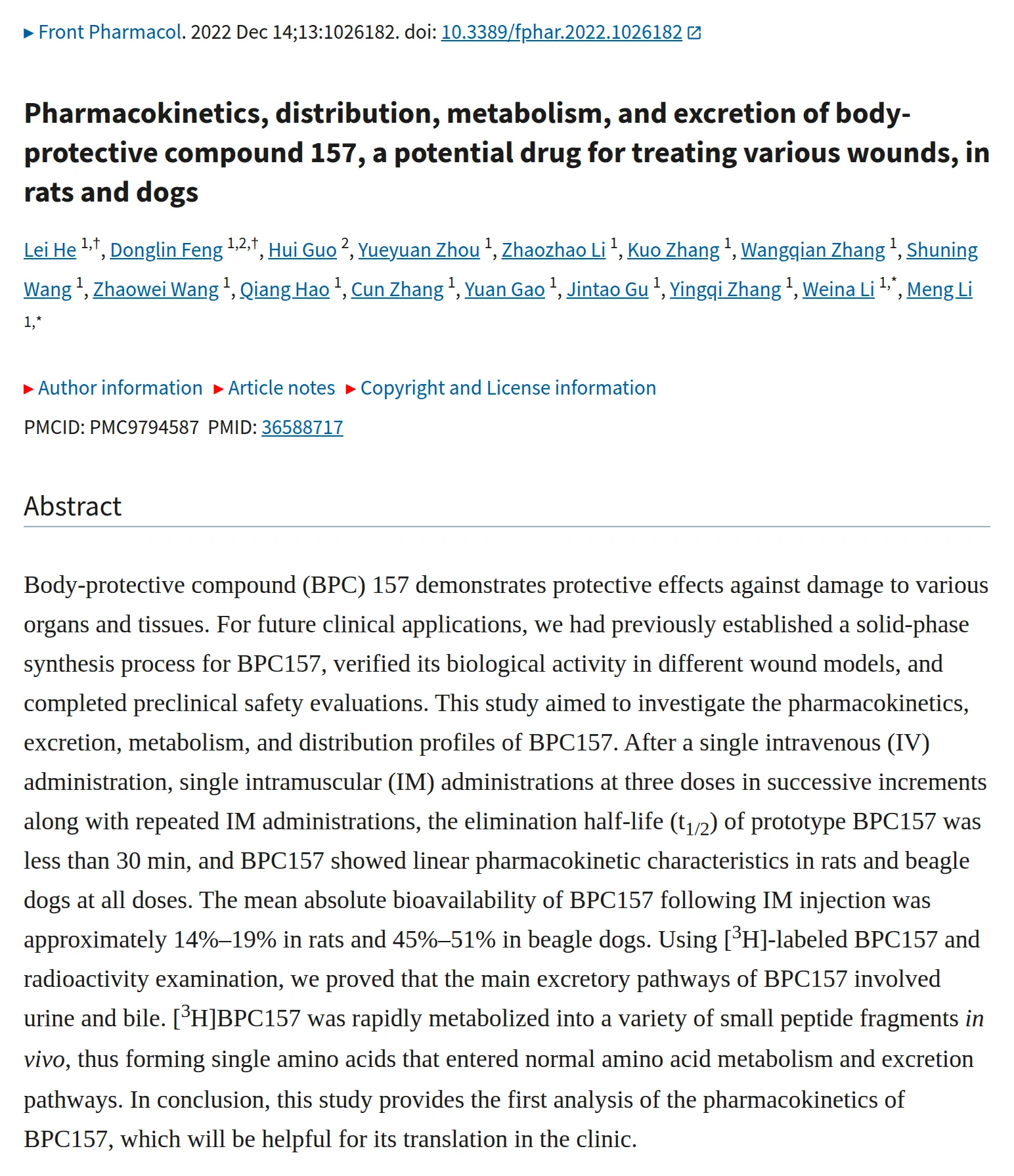
- The only dedicated pharmacokinetic study we found. An independent group at the Air Force Medical University in Xi’an gave BPC-157 by intravenous and intramuscular injection to rats and dogs. The half-life was minutes, and intramuscular bioavailability was about 14 to 19% in rats and 45 to 51% in dogs. No oral dose was tested (He and colleagues, 2022). Those percentages describe injections, not capsules.
- Human data. FDA’s briefing for its July 2026 advisory committee found five clinical studies of BPC-157: rectal enemas in 24 healthy subjects and in about 26 people with ulcerative colitis, knee injections in 17, a bladder instillation in 12 and IV infusions in two. None gave BPC-157 by mouth, and FDA described the studies as short, small and likely exploratory (FDA briefing, page 42). A 2025 review calls the human evidence “exceedingly sparse” (McGuire and colleagues, 2025; IV pilot).
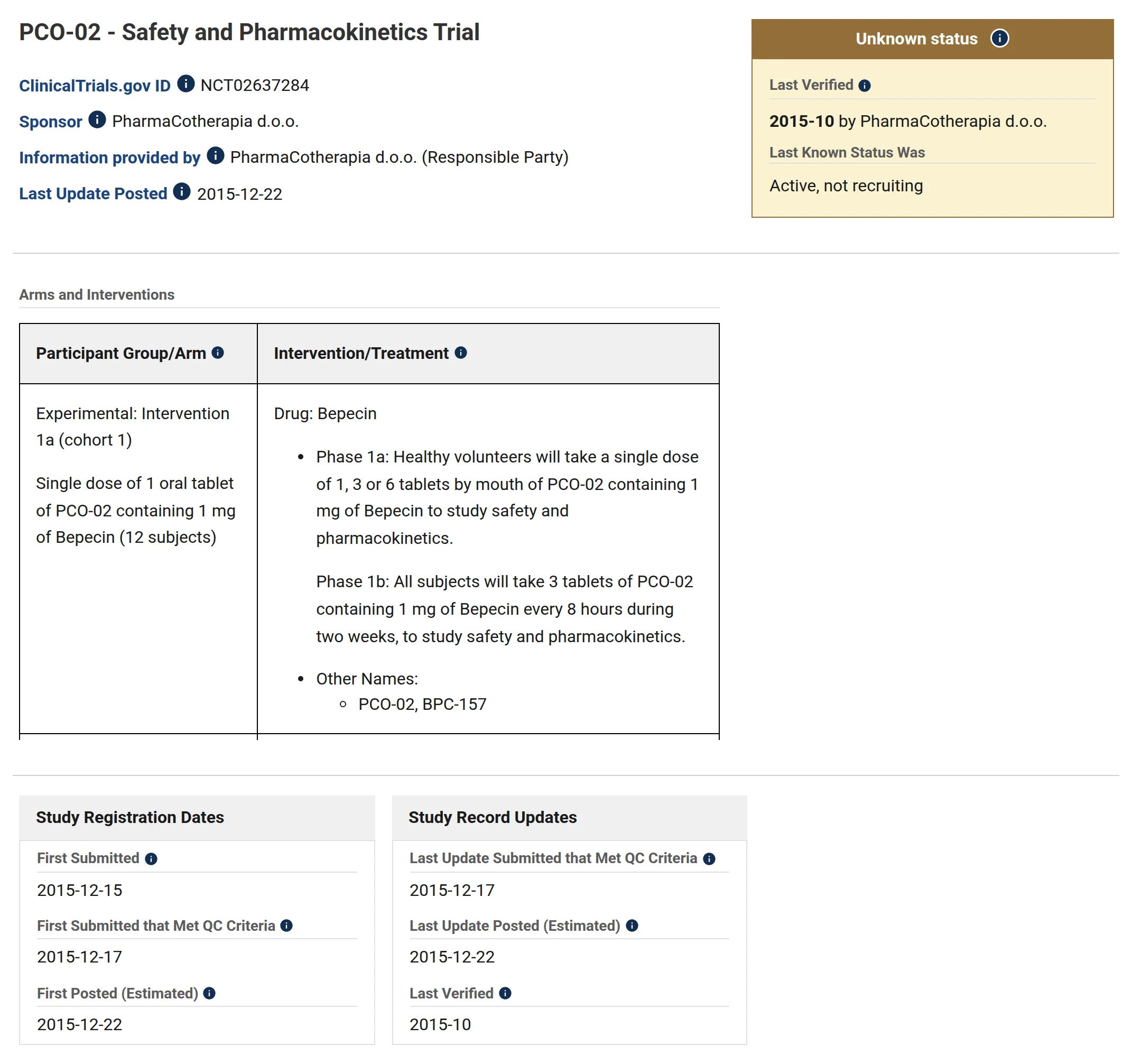
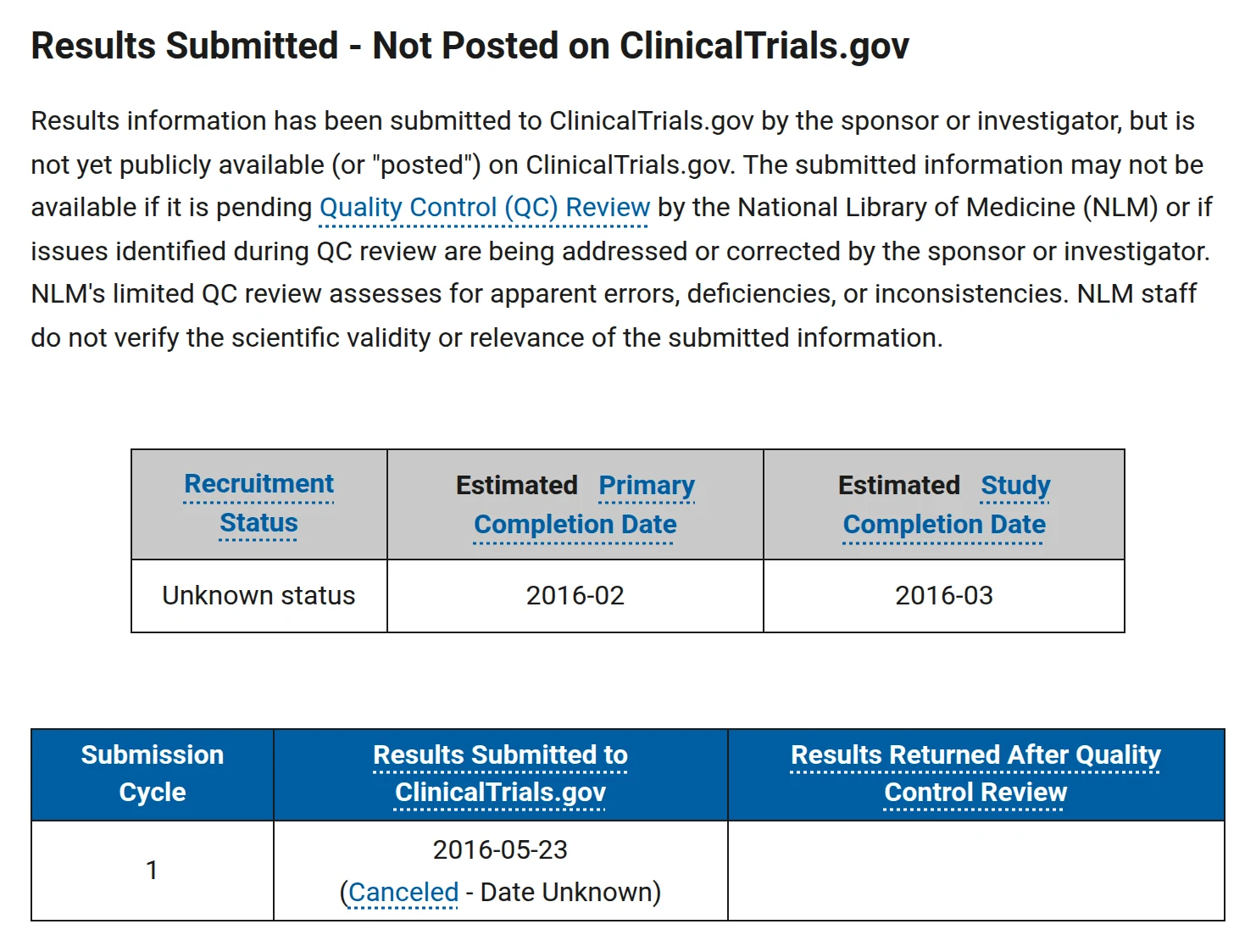
- The oral tablet trial. ClinicalTrials.gov lists a phase 1 study of 1 mg oral BPC-157 tablets (PCO-02) with a planned enrollment of 42 healthy volunteers, started in October 2015. The record was last updated in December 2015 and its status is “Unknown.” The results tab shows a results submission dated May 23, 2016 that was canceled; nothing has been posted (NCT02637284). Some reviews describe the trial as terminated; the registry itself does not say so.
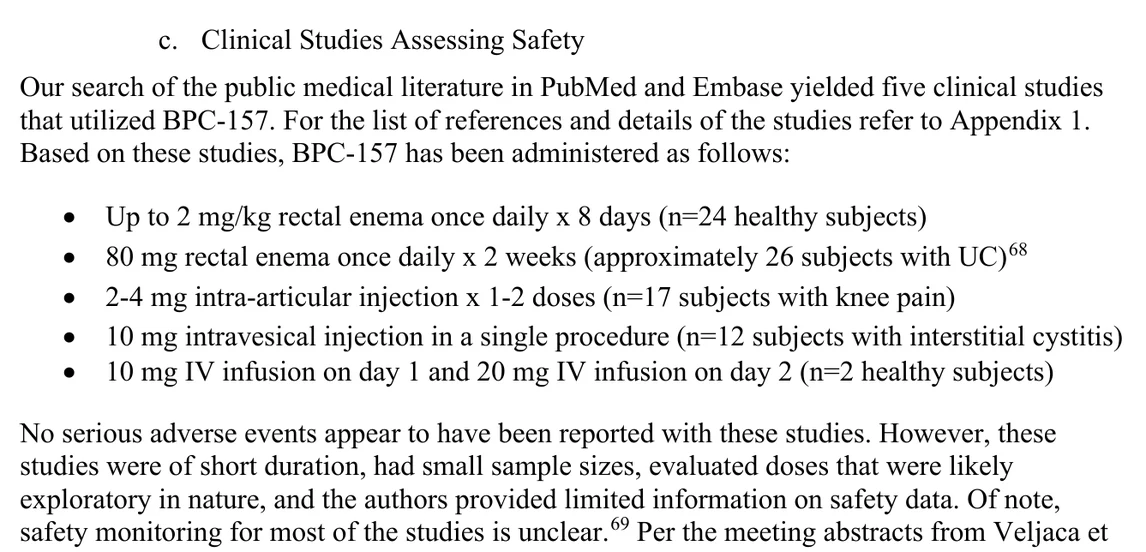
The regulatory record points at the gut as well. When an FDA advisory committee reviewed BPC-157 in July 2026, it did so for ulcerative colitis. The committee voted 8 to 6, with one abstention, to recommend it, as reported by AJMC; FDA had not posted minutes when we checked, and the vote is non-binding. Our PCAC coverage has the background on the meeting.
FDA placed BPC-157 in Category 2 for compounding in September 2023. Its Category 2 page, current as of April 22, 2026, now lists BPC-157 among substances “previously in category 2” whose nominations were withdrawn, still with FDA’s statement that compounded BPC-157 “may pose risk for immunogenicity for certain routes of administration” (archived FDA page). Leaving Category 2 did not add it to the list of bulk substances pharmacies may compound (21 CFR 216.23). BPC-157 is also prohibited in sport under the WADA S0 category (USADA).
Delayed-release capsules skip the stomach, where the stability claim applies
A delayed-release capsule sends BPC-157 past the one environment where its stability has been claimed. This section is our inference from the evidence above, not a tested result. Enteric and delayed-release coatings are designed to open after the stomach, in the small intestine, where pancreatic enzymes such as trypsin and chymotrypsin break down peptides (review of oral peptide barriers). We found no study of BPC-157 in intestinal fluid and no absorption study of any enteric BPC-157 product.
Octreotide capsules are the useful comparison. Mycapssa is also a delayed-release capsule, but it pairs the capsule with permeation-enhancing excipients, which a clinical pharmacology review describes as Transient Permeation Enhancer technology; food cuts its bioavailability by about 90% (label; review). Delayed release is part of a delivery system; on its own it is not evidence of absorption.
Acetate or arginate?
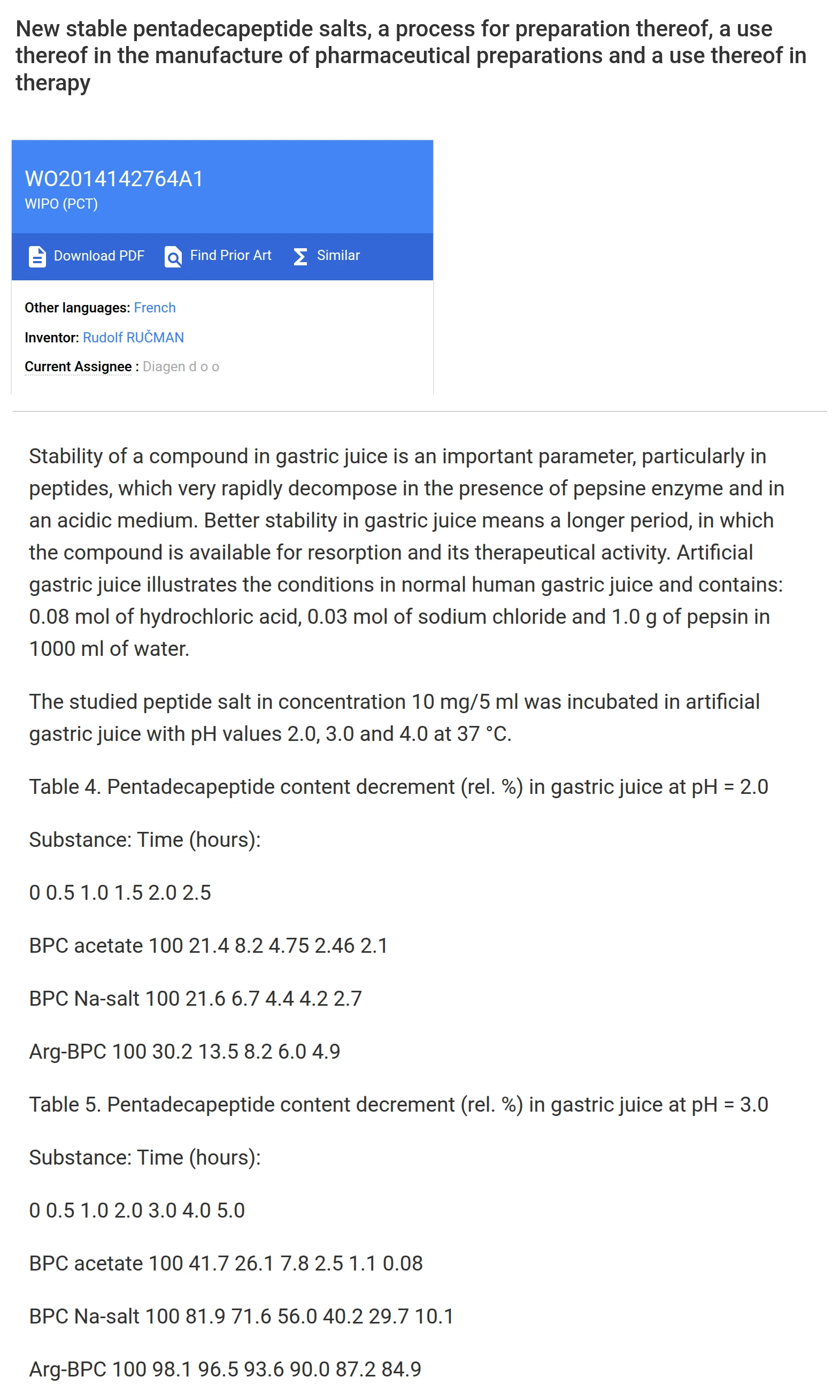
The case for the arginate salt comes from one patent’s laboratory tables, and those tables show the advantage depends on how acidic the test was. Patent WO2014142764A1, filed by Diagen d.o.o. with Rudolf Ručman as inventor, incubated the salts in artificial gastric juice with pepsin (patent):
| Artificial gastric juice | BPC-157 acetate remaining | Arginate salt remaining |
|---|---|---|
| pH 3.0, after 5 hours | 0.08% | 84.9% |
| pH 2.0, after 30 minutes | 21.4% | 30.2% |
| pH 2.0, after 2.5 hours | 2.1% | 4.9% |
The widely repeated number is the pH 3.0 result. A review of oral peptide delivery describes the stomach as “pH 1-2” (Frontiers in Drug Delivery, 2026), and at pH 2.0 the patent’s own table shows both salts almost gone within hours. The filing also reports better stability for the arginate salt under heat and humidity, which may matter for shelf life.
Three limits matter:
- It is the applicant’s own data. The patent does not report replicates, validated methods or independent testing, and we found no peer-reviewed comparison of the two salts for stability, absorption or effect.
- It contains no in-vivo data. Surviving longer in acid is not a measurement of absorption.
- It contradicts the older claim. The Zagreb reviews describe BPC-157 as resistant to human gastric juice for more than a day. In the patent, the acetate fell to 2.1% within two and a half hours at pH 2.0. At least one of those results is wrong, or the conditions differ too much for either to support a consumer claim.
A better storage profile may still be a real advantage for shelf life. It does not answer whether a capsule delivers BPC-157 anywhere.
KPV, GHK-Cu, larazotide and thymosin beta-4 fragments
None of the other oral peptides named on the podcast has human oral data, and the one that reached a phase 3 trial failed it.
| Peptide | Size | Best oral evidence found | Human oral data | What it establishes |
|---|---|---|---|---|
| KPV | 3 residues | Uptake through PepT1 in intestinal cells; reduced intestinal inflammation in two mouse colitis models when given in drinking water (Dalmasso and colleagues, 2008). A later version packed KPV into nanoparticles inside a colon-targeted hydrogel and reported effects at a 12,000-fold lower concentration than free solution (Laroui and colleagues, 2010) | None found | A plausible local gut mechanism in mice, largely from one laboratory. The nanoparticle work implies free oral KPV is inefficient. |
| GHK-Cu | 3 residues | No oral absorption or efficacy study found. The main review of GHK-Cu covers topical, cell and injected-animal evidence (Pickart and Margolina, 2018) | None found | Real evidence for skin application does not transfer to swallowing it. |
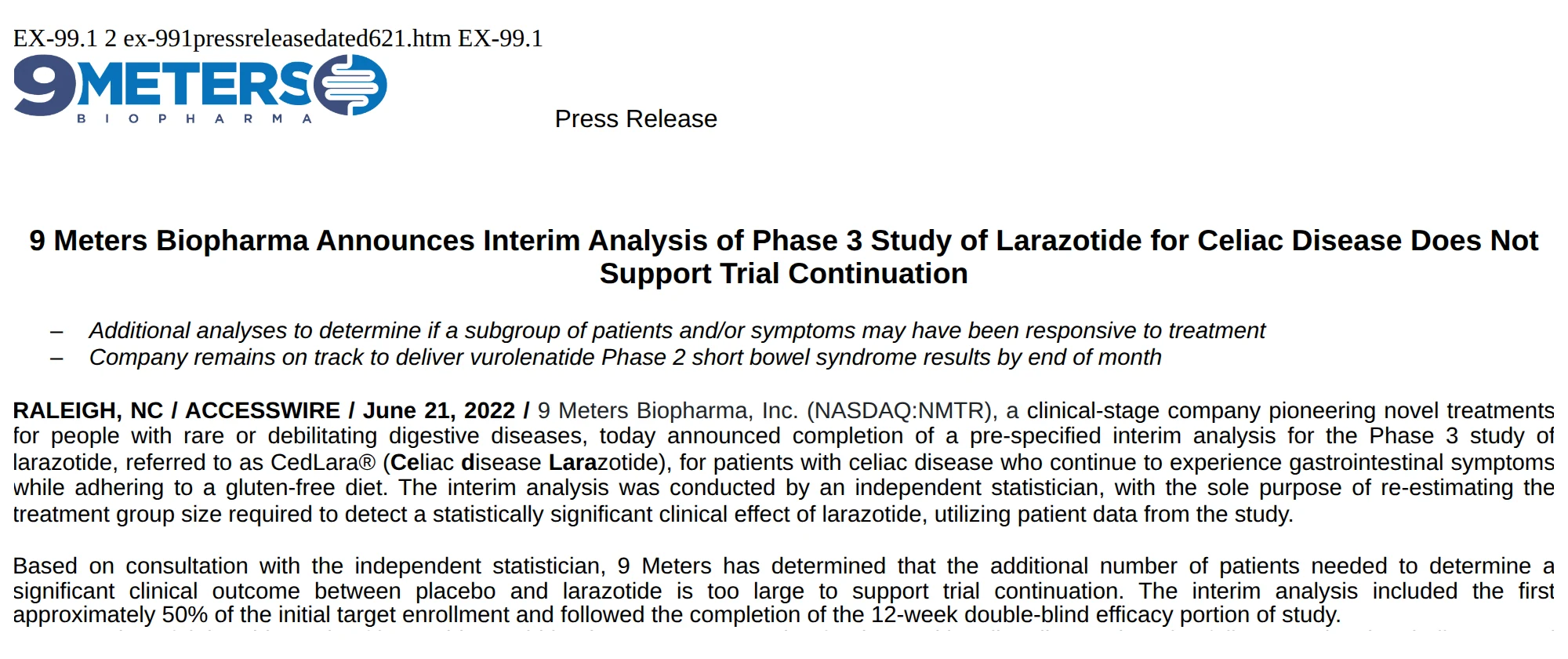
| Larazotide | 8 residues | Designed to act on the gut lining in celiac disease; several phase 2 trials | Phase 3 CeDLara, 307 enrolled, terminated (NCT03569007) | The sponsor stopped the trial after an interim analysis showed the patients needed to find a difference from placebo was “too large to support trial continuation” (June 21, 2022 release). |
| Ac-SDKP (thymosin beta-4, residues 1 to 4) | 4 residues | Rodent studies used under-the-skin infusion pumps; circulating half-life of about 5 minutes | None found | No oral evidence in any species. |
| TB-500 (thymosin beta-4, residues 17 to 23) | 7 residues | None found | None found | No oral evidence in any species. |
KPV, injectable GHK-Cu and a thymosin beta-4 fragment were placed in FDA’s Category 2 alongside BPC-157 in September 2023 (secondary list). FDA’s current page lists KPV among the withdrawn nominations and says the agency “has not identified any human exposure data on drug products containing KPV administered via any route of administration” (archived FDA page).
Do liposomes carry peptides into the blood?
Conventional liposomes break down in the gut, and we found no approved oral liposomal peptide or human trial showing one delivers a peptide systemically. Reviews of oral liposome delivery describe three problems: stomach acid and pepsin, bile salts that act like detergents on the lipid layer, and pancreatic lipases that digest the phospholipids (review). Research formulations add coatings or other modifications to survive; an unmodified liposome is closer to the problem than the solution.
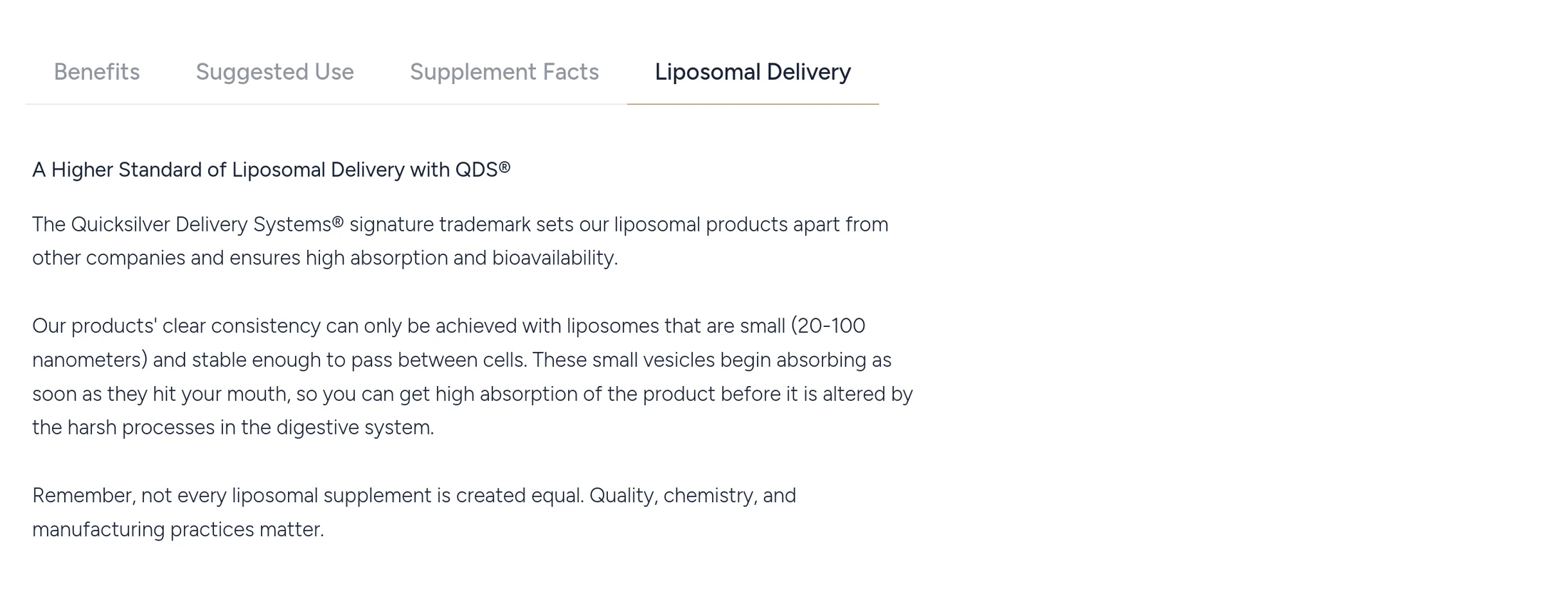
The approved oral peptides above use permeation enhancers or potency, not liposomes. On the podcast, liposomal GHK-Cu was described as reaching the body at “a much higher bioavailability.” We found no human measurement of that for GHK-Cu, a thymosin beta-4 fragment, BPC-157 or TB-500. One liposomal BPC product goes further:
What oral BPC-157 listings disclose
Of 17 oral BPC-157 product pages we could read on September 30, 2026, at least eight named a salt form, one printed a numeric absorption claim, and five published a test of the finished capsule or tablet. This is a record of what sellers publicly state, not a quality rating. We read each page between 17:43 and 18:01 UTC, captured screenshots and certificates for several of them between 19:03 and 19:50 UTC, and did not buy anything.
| Seller and product | Stated amount | Salt form on the page | Delivery claim | Published test of the finished product |
|---|---|---|---|---|
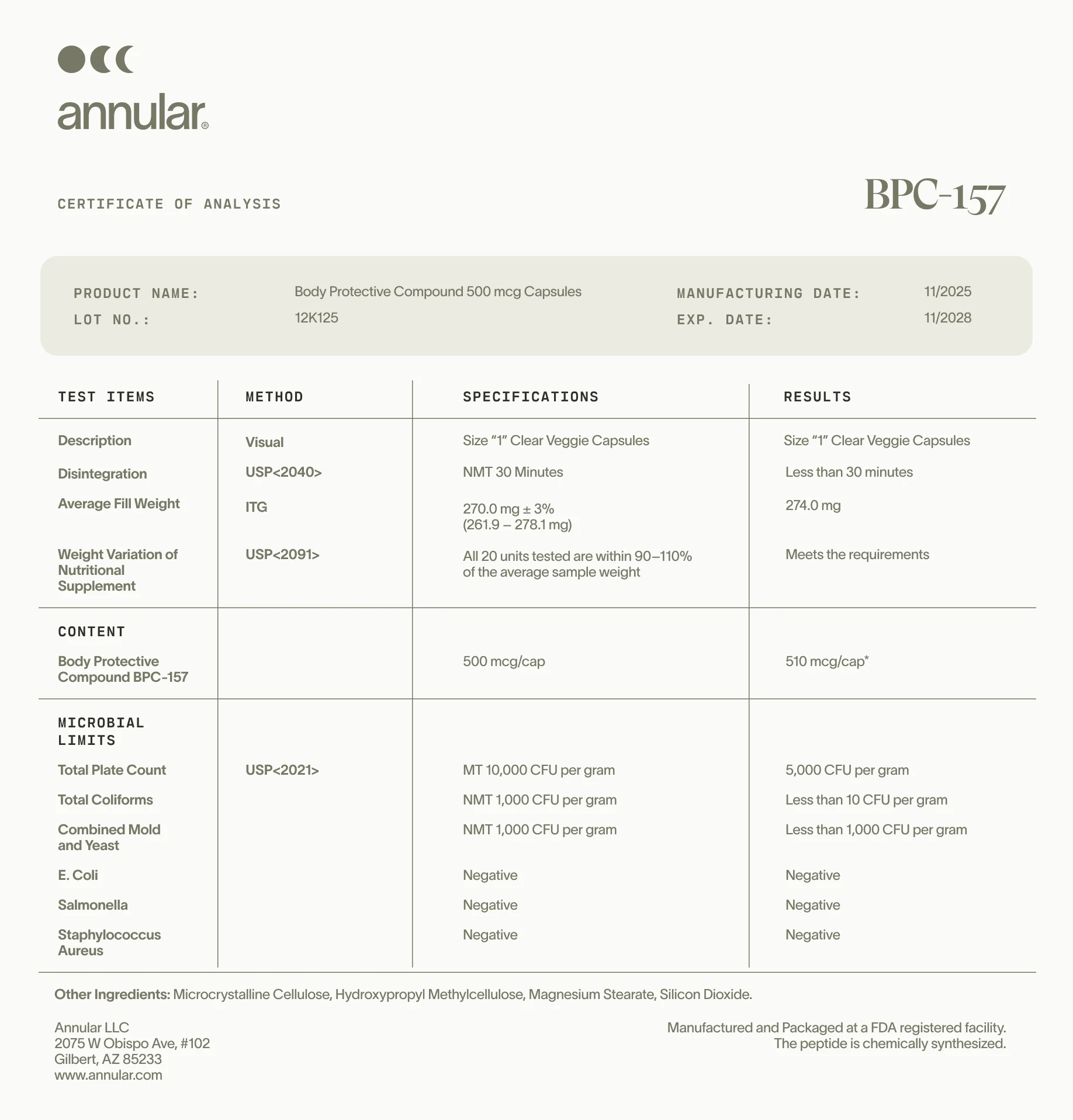
| Annular, BPC 157 Oral Capsules | 500 mcg per capsule | Arginate | None | Yes, on Annular’s own letterhead with no laboratory named: 510 mcg per capsule, lot 12K125 |
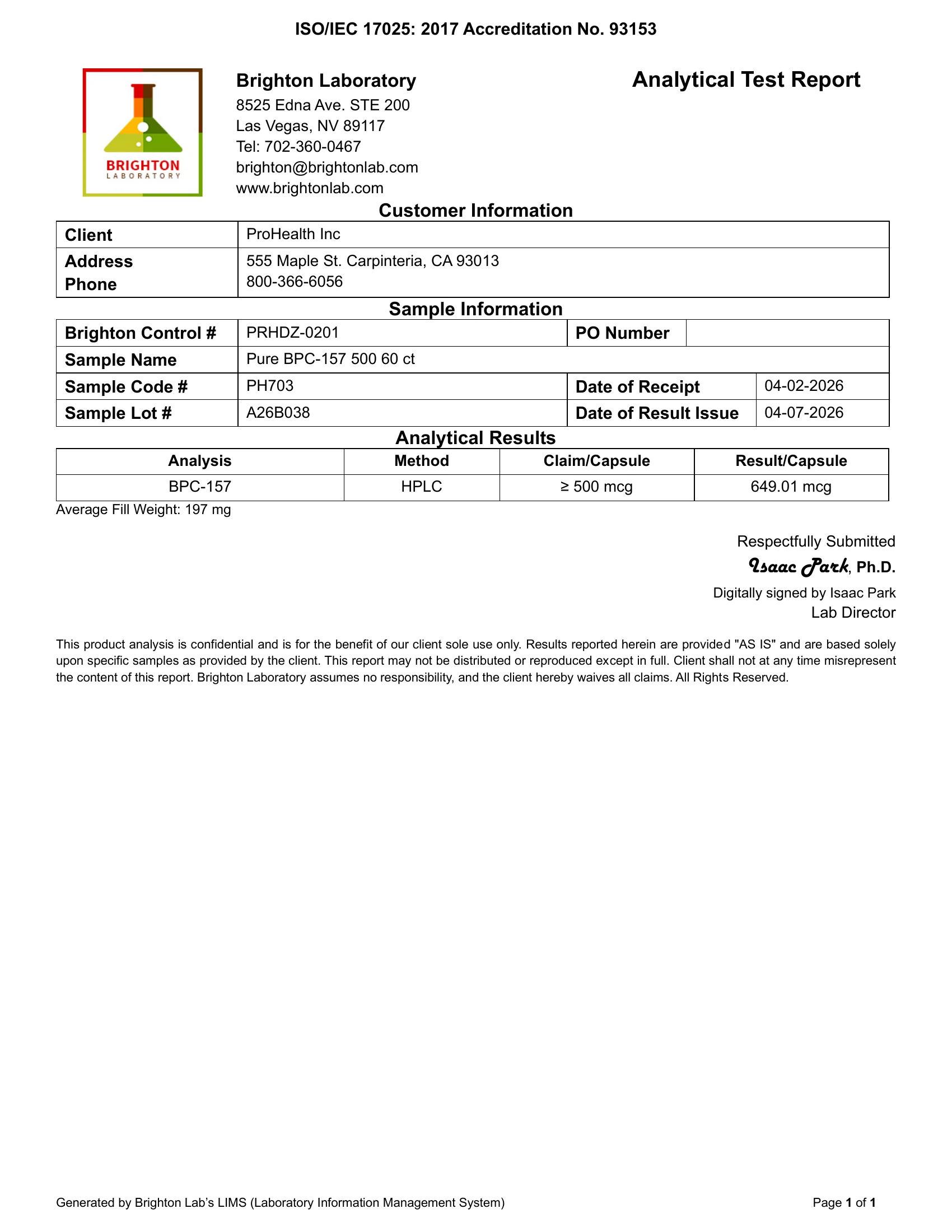
| ProHealth, Pure BPC-157 | 500 mcg per capsule | Arginate | None | Yes, Brighton Laboratory: 649.01 mcg per capsule against a claim of at least 500 mcg, lot A26B038, issued April 7, 2026 |
| Apeiron Elementals, BPC-157 Capsules | 500 mcg per capsule | Not stated | None | No; testing claimed, no certificate published |
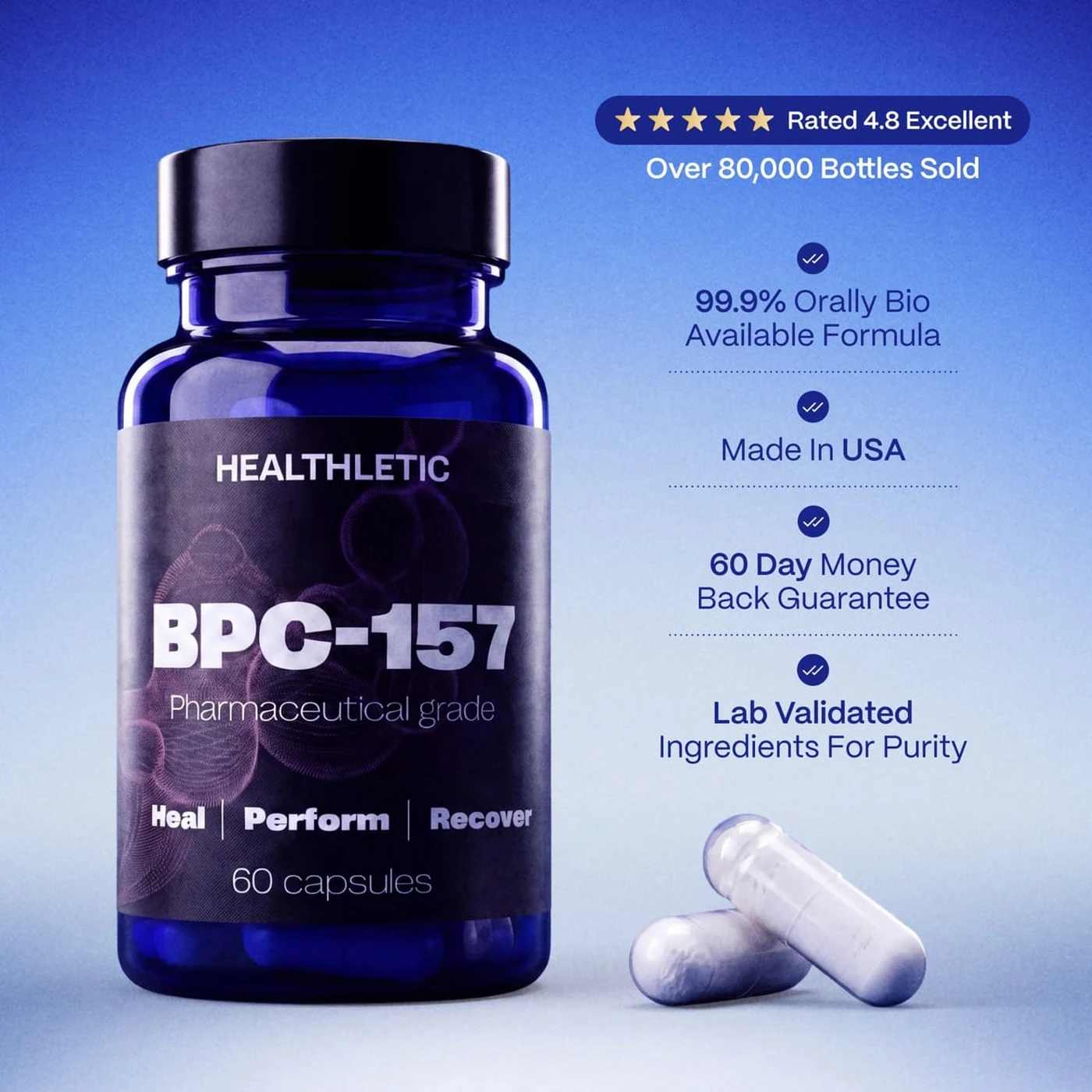
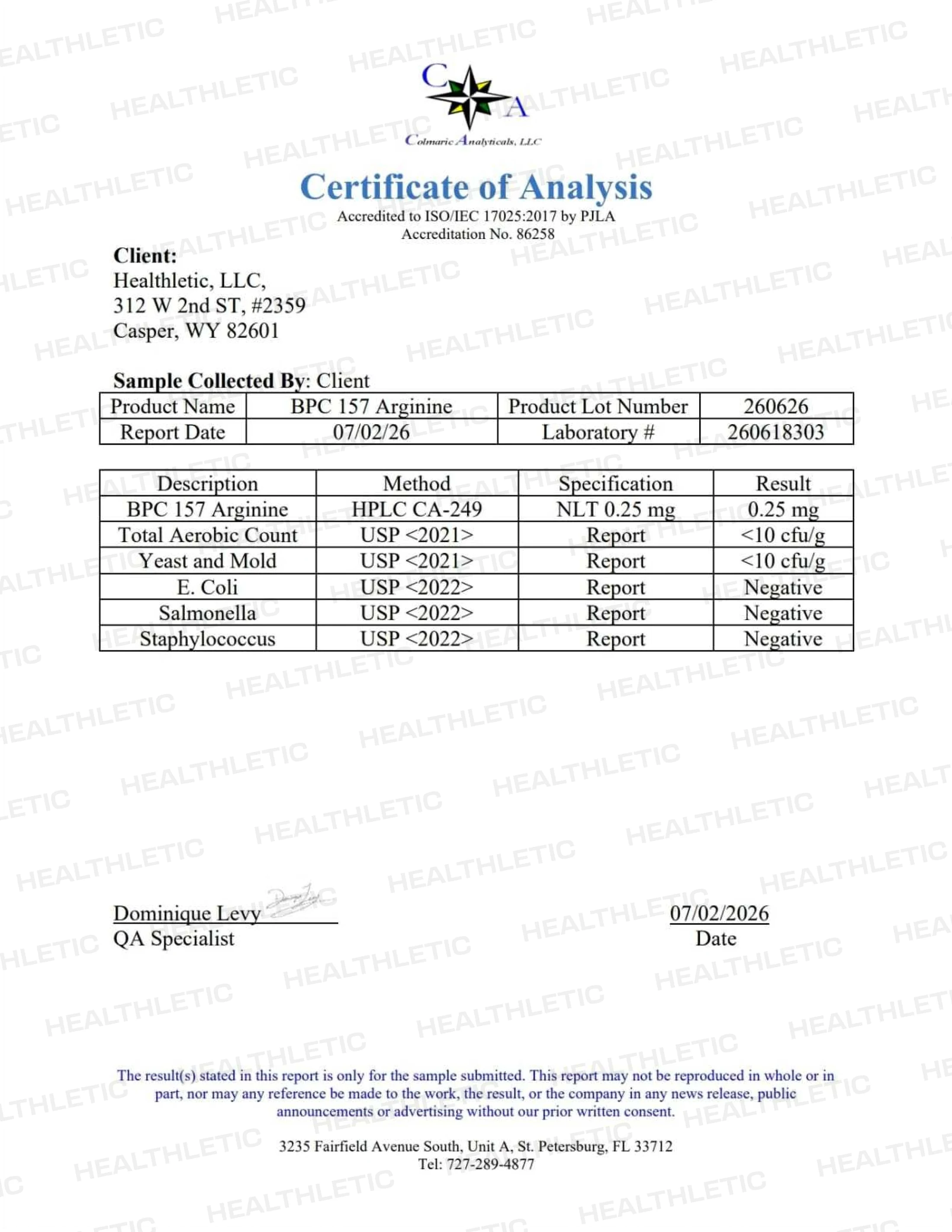
| Healthletic, Body Protection Compound | Not stated | Arginate | Delayed-release capsule; artwork reads “99.9% Orally Bio Available Formula” | A Colmaric Analyticals certificate for “BPC 157 Arginine,” lot 260626, July 2, 2026, reports 0.25 mg against “NLT 0.25 mg” without saying per what; an older Light Labs result reads “0.47 mg/serving” with no lot |
| Integrative Peptides, BPC-157 Pure (reseller listing; brand store requires login) | 500 mcg per capsule | Not a salt; “Acetylated and Amidated Form” | Acid-resistant capsule | No |
| Quicksilver Scientific, Oral Liposomal BPC | 1,000 mcg per 2 pumps (liquid) | Not stated | Liposomal, 20 to 100 nm | No; the site’s certificate page lists CBD products only |
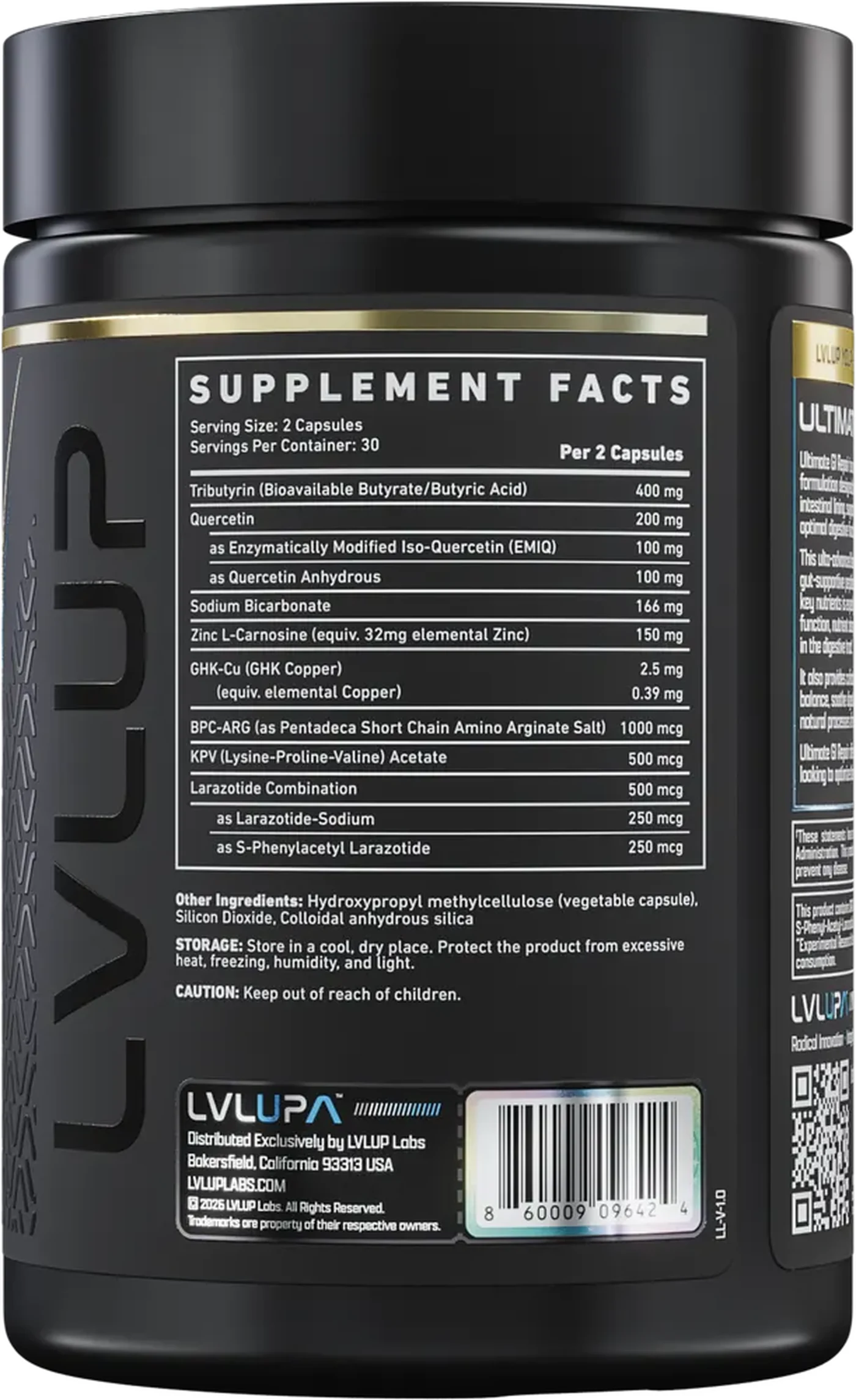
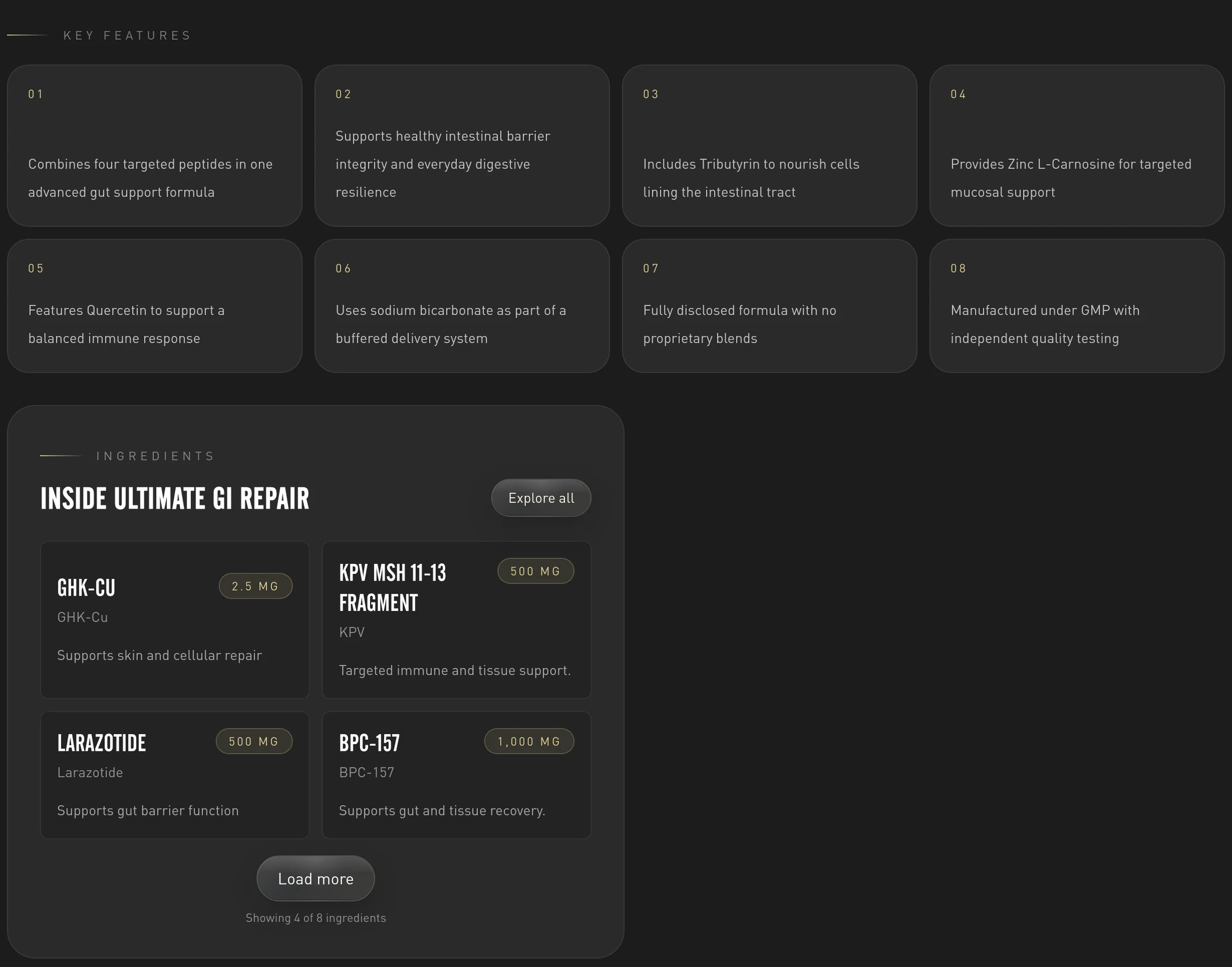
| LVLUP Health, Ultimate GI Repair | Label image: 1,000 mcg per 2 capsules; web panel: “BPC-157 1,000 MG” | Arginate (label image) | Sodium bicarbonate “buffered delivery system” | No; independent testing claimed, no certificate published |
| LVLUP Health, BPC-157 Double Strength | 1,000 mcg per 2 capsules | Arginate (label image) | “pH-buffered system for better absorption” | No; testing claimed, no certificate published |
| LVLUP Health, Re-Generate | 0.5 mg per 2 capsules | Only on a separate ingredient page | Sodium bicarbonate listed | No |
| Pharma Lab Global, BPC-157 Capsules | 500 mcg per capsule | Not stated | None | No certificate on the product page |
| Peptides World, Stable BPC-157 | 250 mcg per capsule | Arginate | None | Claimed; none shown |
| Limitless Biotech, BPC-157 Capsules | 250 mcg per capsule | Arginate | None | Claimed; none shown |
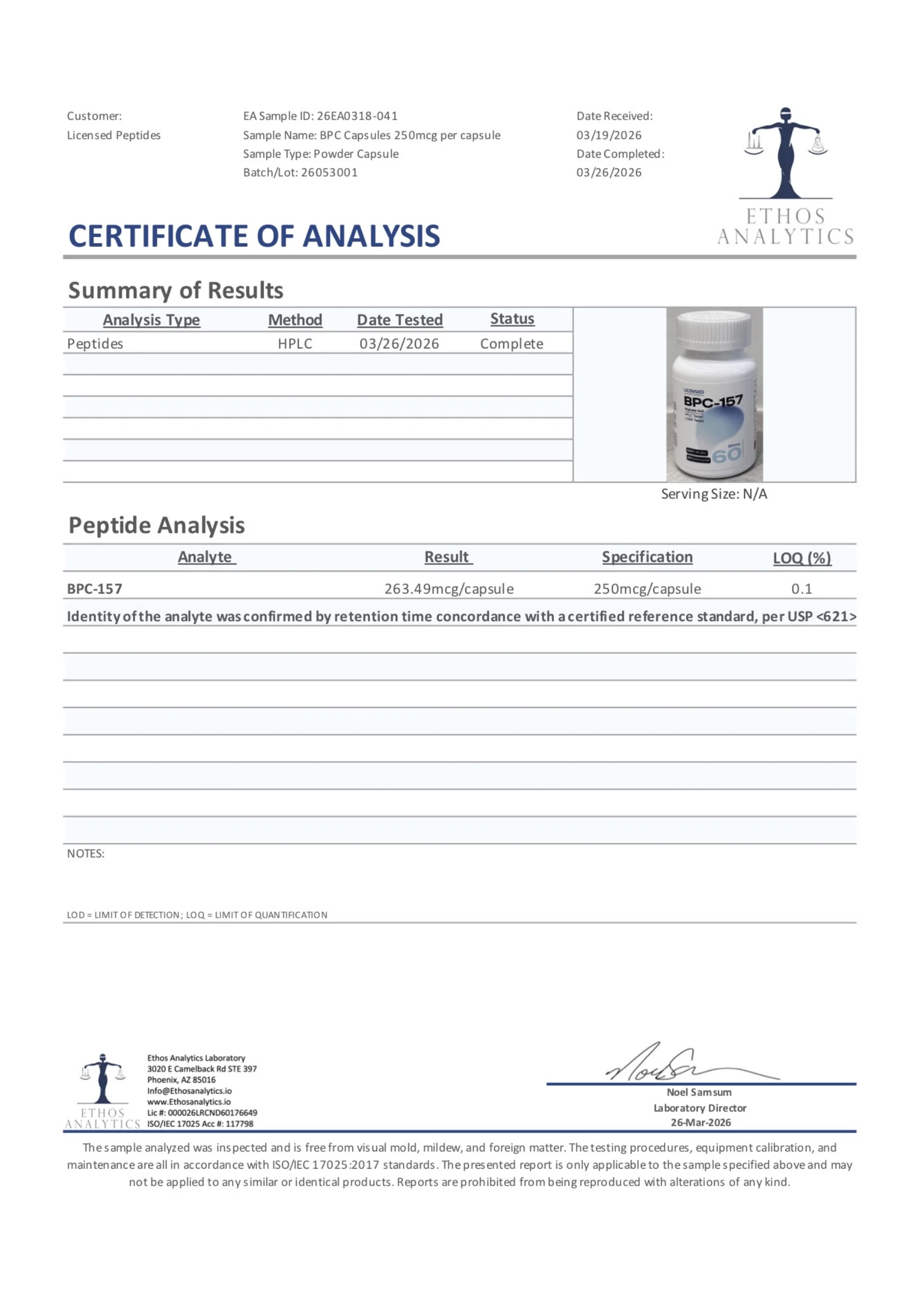
| Licensed Peptides, BPC-157 Capsules | 250 mcg per capsule | Arginate (bottle image) | None | Yes, Ethos Analytics, though the page’s certificate section is headed with Vanguard Laboratory: 263.49 mcg per capsule, lot 26053001, tested March 26, 2026 |
| Pepspan, BPC-157 Oral Capsules | “typically 500 mcg” | Not stated | Enteric coating that dissolves above pH 5.5 | Pending; no certificate yet |
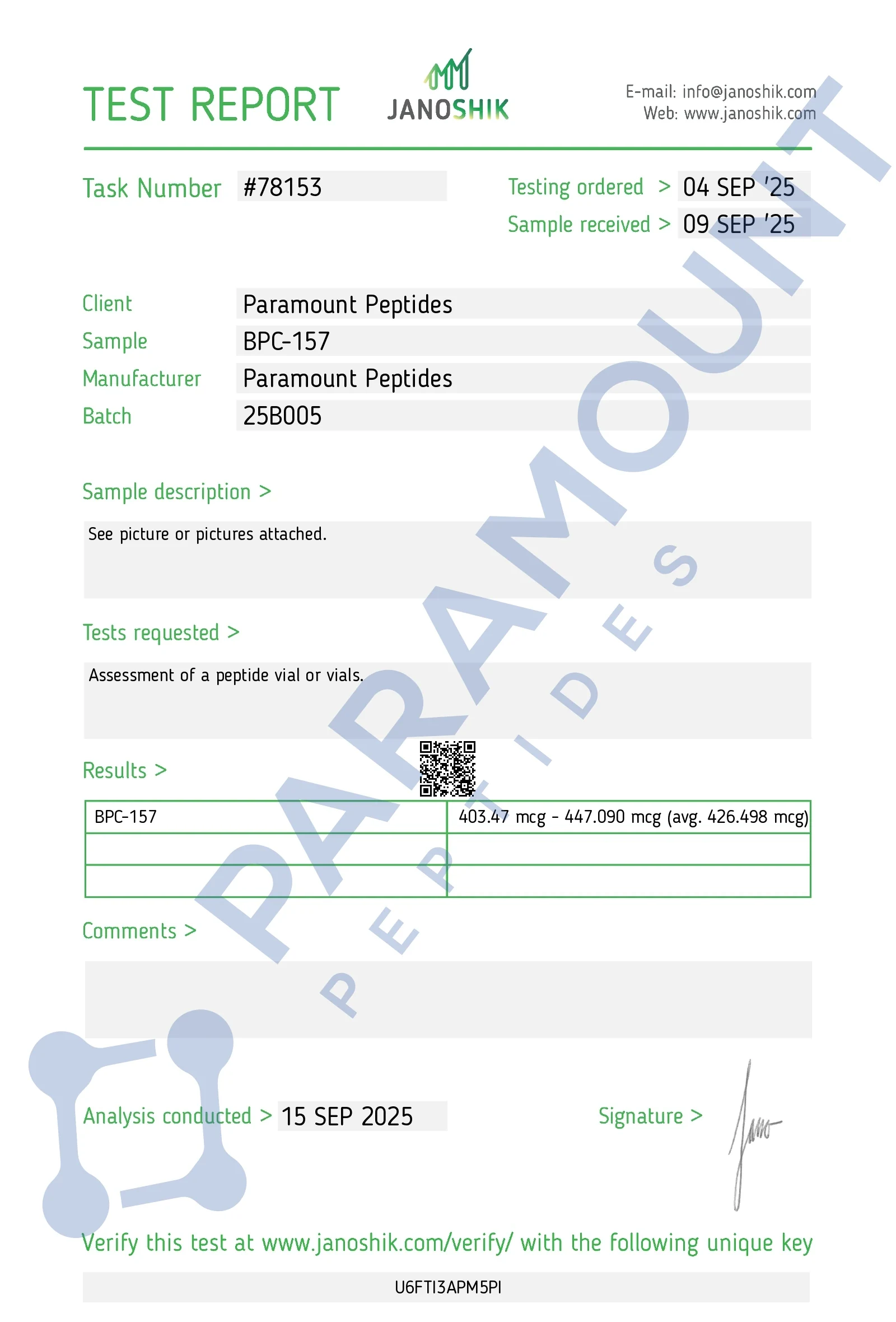
| Paramount Peptides, BPC-157 Tablets | 500 mcg per tablet | Not stated | None | Yes, Janoshik: 403.47 to 447.09 mcg, batch 25B005, September 15, 2025; the report’s test type reads “Assessment of a peptide vial or vials” and does not name the dosage form |
| Polar Peptides, BPC-157 Capsules | 500 mcg per capsule | Not stated | None | A certificate image is shown; we could not extract its details |
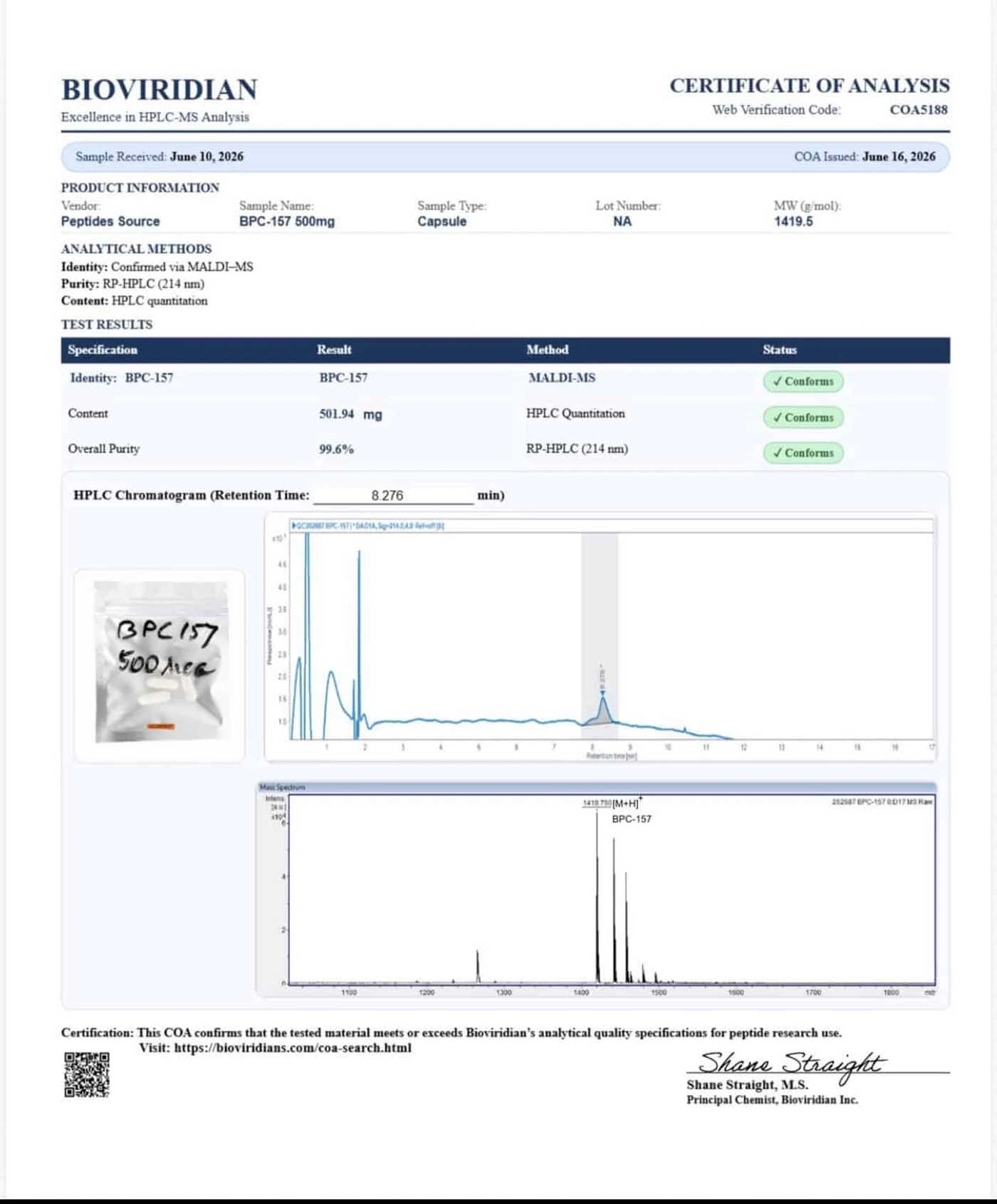
| Peptides Source, BPC-157 500mcg | 500 mcg per capsule | Not stated | None | Yes, Bioviridian, sample type “Capsule,” lot “NA,” issued June 16, 2026; the content is printed as “501.94 mg” for a product labelled in micrograms |
What the table shows:
- Arginate is the only salt any seller names. At least eight pages state it, in page text or on the label or bottle shown on the page. Two pages contrast it with acetate: Healthletic says the acetate form “gets destroyed by stomach acid before it can do anything,” and Annular says acetate forms “degrade more easily.” Those statements restate the patent’s pH 3.0 result, not its pH 2.0 result.
- One seller prints a number. Healthletic’s main product image reads “99.9% Orally Bio Available Formula,” and a customer video on the page is headlined “99.9% Absorption.” We found no measurement behind that figure on the page, and no study has measured oral BPC-157 absorption in any species. Other absorption claims are qualitative: Quicksilver says its liposomes “begin absorbing as soon as they hit your mouth,” and LVLUP says sodium bicarbonate means “more intact BPC-157 reaches absorption sites in the intestine.”
- Finished-product testing exists but is uncommon. Five of 17 pages published a result for the finished capsule or tablet, and four of those came from an outside laboratory. Where the unit was printed consistently, measured amounts ran from about 81% (Paramount’s lowest tablet result) to 130% (ProHealth) of the label. Two further products outside the main count, Apeiron’s BPC-157 + TB4-Frag and LVLUP’s Wolverine, list SNAC, the Rybelsus absorption enhancer, as an ingredient; neither page publishes absorption data.
- Eight of 17 pages call their capsules or tablets research use only or not for human consumption, while selling a swallowable format. Annular states the opposite: “Made for human use.”
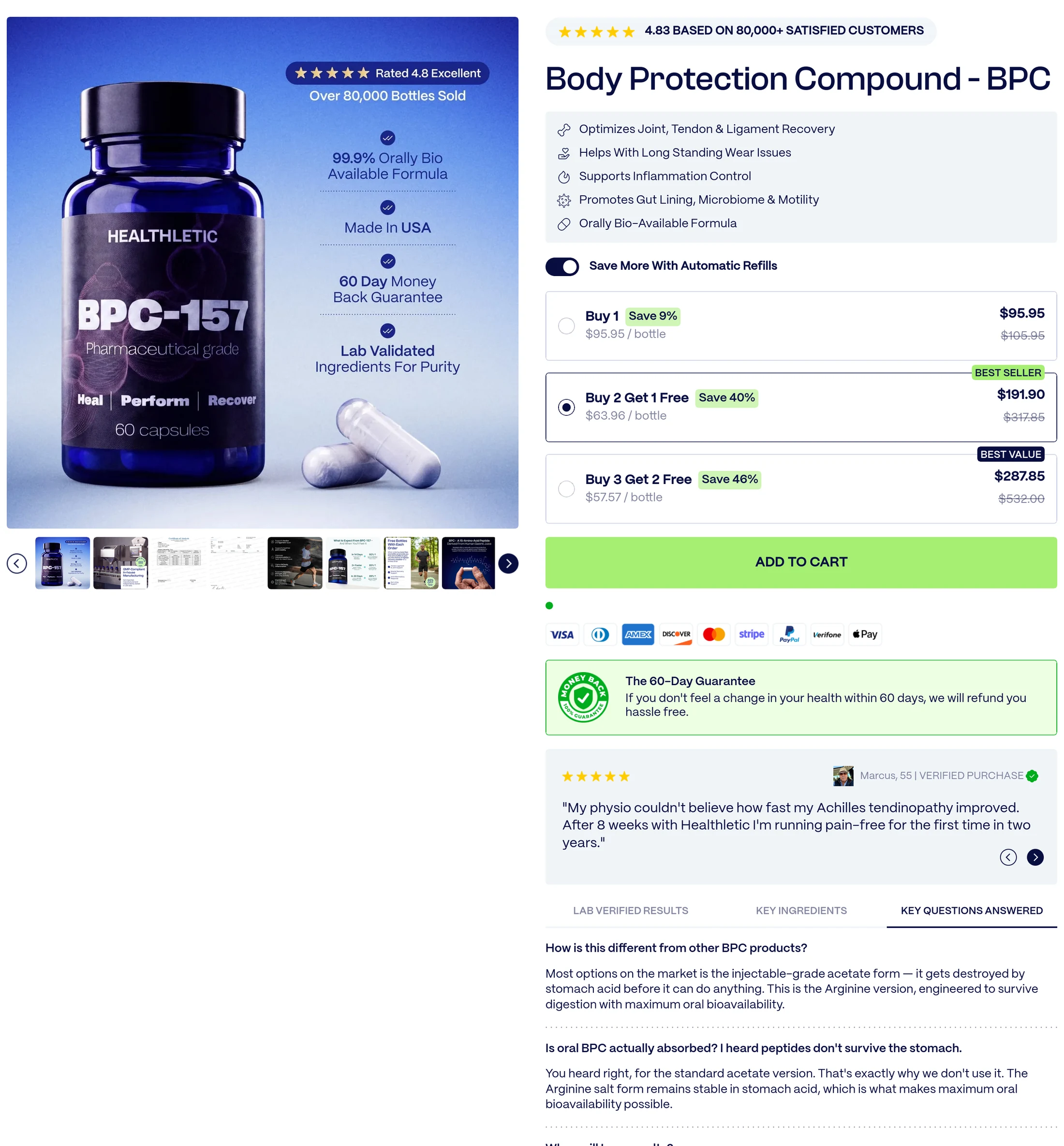
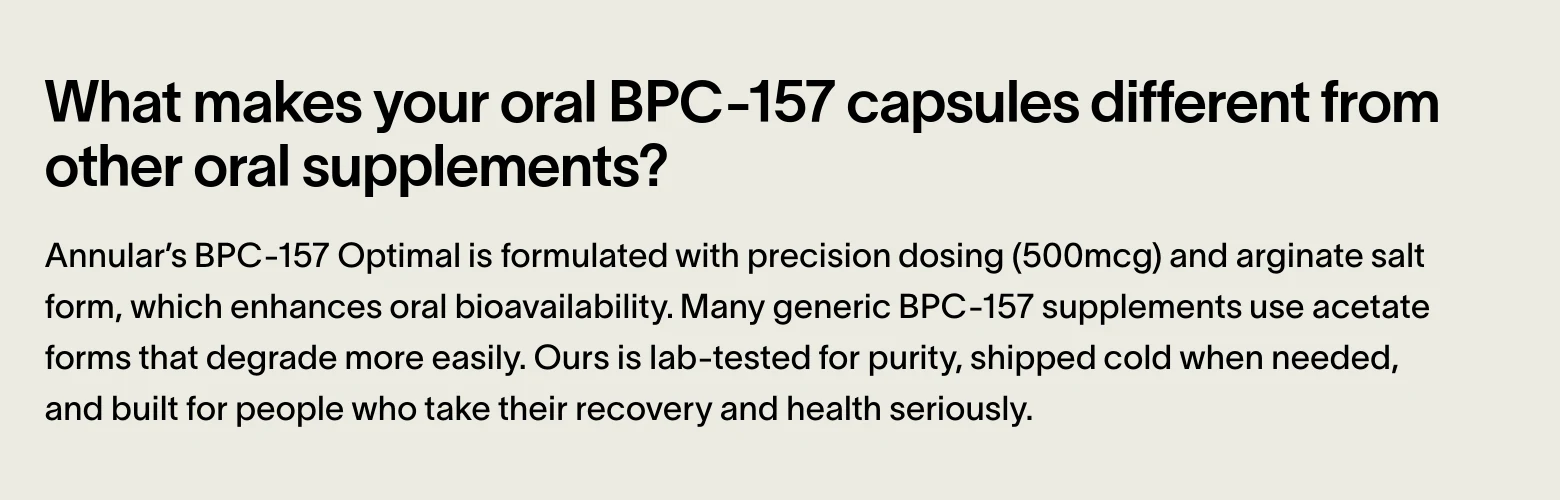
The five finished-product certificates, plus Healthletic’s current certificate, as each seller links them. Measured amounts are the laboratories’ figures; we did not verify them with the laboratories.
We could not read the three Amazon listings that search results surfaced, or one store that was closing. TitrateLab’s price index excludes capsules and tablets, so we do not track capsule prices.
The four-peptide gut capsule discussed on the podcast is LVLUP’s Ultimate GI Repair. The Supplement Facts label shown on its product page lists, per two capsules, “BPC-ARG (as Pentadeca Short Chain Amino Arginate Salt) 1000 mcg,” 500 mcg of KPV acetate, 500 mcg of larazotide and 2.5 mg of GHK-Cu, along with sodium bicarbonate, tributyrin, quercetin and zinc carnosine. The ingredient panel on the same page prints the peptides in “MG,” including “BPC-157 1,000 MG.” We did not find a certificate of analysis for the product.
Where oral delivery makes the most sense: the gut itself
If oral BPC-157 does something, the most defensible place to look is the gut lining. Linaclotide shows that a swallowed peptide can be an approved medicine while staying in the intestine and being digested there (label).

KPV’s mouse data concern colitis. The earliest human BPC-157 development program used an enema for ulcerative colitis, and the FDA committee reviewed BPC-157 for the same condition.
The podcast guest made a version of this point himself: in someone with an inflamed gut, he said, an oral peptide may be used up there before it can reach an injury elsewhere. That is a coherent hypothesis. It is also a different product claim from “oral BPC-157 heals tendons,” and larazotide shows that a gut-local peptide with a sound mechanism can still fail a controlled trial.
What would make an oral peptide claim credible?
A credible oral claim would show, for the specific product, that the peptide survives, gets where it is supposed to act and does something measurable there. In practice that means:
- Measured exposure. Intact peptide in blood, or in the target tissue, after the actual capsule, compared with an injection. Pharmaceutical labels report exactly this.
- The right outcome for the claim. A gut-local claim needs a controlled trial with a gut outcome; a systemic claim needs systemic exposure first.
- A finished-capsule test. A certificate of analysis for raw powder does not show what is in each capsule. Laboratories issue per-capsule reports; TitrateLab’s lab price comparison lists posted prices for standard BPC-157 tests, and our guide to verifying a peptide COA explains how to match a report to a batch.
- Full formulation disclosure. Salt form, coating and any absorption enhancer, since the approved products show the excipients decide absorption.
- Honest evidence labels. Which results come from people, which from rats and which from a patent.
For injectable BPC-157, TitrateLab tracks laboratory results on the BPC-157 COA page; our bone and joint review covers the broader biological rationale, and our intranasal peptide review applies the same route-specific test to nasal sprays.
Method, limitations and corrections
Evidence reviewed September 30, 2026. TitrateLab Research Desk prepared this AI-assisted, targeted synthesis around the oral peptides named in the August 12, 2026 podcast episode, using approved oral peptide drugs as comparators. We read current US prescribing information on DailyMed, European product information from the EMA, FDA approval records through openFDA, ClinicalTrials.gov records through its public API, abstracts and open-access full texts through Europe PMC, the arginate patent on Google Patents, and company announcements filed with the SEC. Positive, negative, human and animal findings were eligible.
The bibliometric counts used Europe PMC’s search service on September 30, 2026 with the queries "BPC 157" OR "BPC-157" (298 records), the same query with AUTH:"Sikiric P" (178), "BPC 157" AND "drinking water" (55), and that query with the author filter (48). Records include reviews and commentaries, and author matching by name can miss or over-count individuals.
The listing survey searched the web on September 30, 2026 for oral BPC-157 products from supplement brands, liposomal products, research-peptide sites, Amazon and the podcast guest’s company, then read 17 product pages between 17:43 and 18:01 UTC. Pages that blocked automated readers were opened with a read-only headless browser; we did not buy, sign in, submit forms or contact sellers. Reseller copies of a product were not counted separately. The sample is non-random, is not a measure of market coverage, and records seller statements, not product quality. Certificate details were read from the documents linked on each page; we did not verify them with the issuing laboratories. A second pass between 19:03 and 19:50 UTC captured the screenshots and certificates shown here and read product images for six sellers; it found salt forms and one numeric claim that appear only in images, so counts drawn from images are reported as minimums. Screenshots of third-party pages are shown as dated evidence of what each page stated; open-access papers are reproduced under their Creative Commons licenses.
This is not a systematic review, and an unsuccessful search does not prove a study does not exist. We did not test any product. On October 4 we rechecked the regulatory record: FDA’s BPC-157 briefing document and its Category 2 page were read from Internet Archive copies captured July 30 and June 8, 2026, because FDA’s site blocks automated access. FDA had not posted meeting minutes, so the vote tally comes from trade press coverage. Arithmetic comparisons between oral and injected doses are ours and are marked as such; they are not measured exposure ratios. Quotations from the podcast come from an automatically generated transcript and were checked against it; we paraphrased where the transcript was unclear.
The podcast guest founded a company that sells oral peptide capsules, and the host sells peptides and supplements. TitrateLab has no relationship with either. This article provides research context, not individualized treatment, dosing or purchasing advice. For our evidence practices, see TitrateLab’s methodology. Send corrections with the article URL and supporting primary source to [email protected].
