How could treating addiction lead to fewer arrests?
The proposed link runs through recovery. If a medicine reduces the urge to drink heavily or use opioids, it could help people use less and engage with treatment. Investigators want to know whether those changes also reduce repeat encounters with the justice system. In a September interview, Allegheny County’s Alex Jutca describes this sequence: reduced cravings, lower consumption, then possible changes in arrests, charges, incarceration, employment and housing.
There is clinical evidence for the first part. A 2025 randomized trial of 48 adults with alcohol use disorder found that semaglutide reduced alcohol craving and some drinking outcomes versus placebo over nine weeks. It did not establish fewer arrests or jail stays. The new trial will measure those outcomes directly in people already at elevated risk of justice involvement.
What will the semaglutide crime trial test?
The GLP-1RA Recovery and Stability Trial, covered in BMJ’s October 20 report, will test semaglutide alongside usual addiction care. Arnold Ventures is funding it through a $13.3 million grant. That figure is the study’s funding, not a calculation of crime prevented or money saved. Investigators’ announcement
The registered trial will study semaglutide, a GLP-1 receptor agonist, in adults with alcohol and/or opioid use disorder at elevated risk of criminal-justice involvement in Allegheny County, Pennsylvania. Its findings will concern this drug and population; other GLP-1 medicines would need their own evidence.
Semaglutide + usual care
Usual care alone
Planned random assignment. The comparison group receives usual services, without a trial medication. These are enrollment targets, not reported results.
| Primary outcome | Measure and timing |
|---|---|
| Substance use | Heavy-drinking days or opioid-use days, depending on the disorder. Previous 30 days, assessed at six months. |
| Criminal-justice contact | An index covering jail days, charges and jail bookings over the 12 months after enrollment. |
| Employment | Earnings and employment measures from administrative records and surveys over the 12 months after enrollment. |
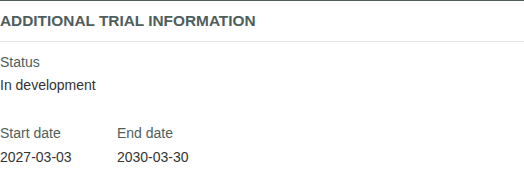
The registry, last updated October 7, lists the study in development, with a planned March 2027 start. It is a usual-care comparison, not a placebo trial. Those details could change before recruitment. Registered design
What do GLP-1 addiction studies show so far?
A 2026 Lancet trial randomized 108 adults with alcohol use disorder and obesity to semaglutide or placebo for 26 weeks. Both groups also received cognitive behavioural therapy.
The percentage of heavy-drinking days fell more with semaglutide. The adjusted difference below is measured in percentage points, not a relative percentage reduction. Authors’ abstract
13.7 percentage points
Adjusted benefit over placebo in heavy-drinking days.
95% confidence interval: 5.4 to 22.0 points.

Of the 108 participants, 88 completed the intervention. The analysis included all randomized participants and addressed missing data through imputation. Gastrointestinal adverse effects were more frequent with semaglutide.
That gives the addiction hypothesis experimental support in a specific population. It does not tell us whether people will have fewer criminal-justice encounters.
A separate BMJ observational analysis used records from 606,434 US veterans with type 2 diabetes. GLP-1 initiation was associated with fewer new substance-use disorders than initiation of SGLT-2 inhibitors. Among 524,817 without a recorded substance-use disorder in the preceding year, the estimated three-year net risk difference for the composite outcome was 6.61 fewer cases per 1,000 people. That is an association from health records, not randomized evidence or a crime endpoint.
What did the GLP-1 violence study actually find?
The Criminology study analysed 821 people who had used GLP-1 medicines, comparing 597 current users with 224 former users. Medication status was measured at the survey, while violent behavior was self-reported over the previous year.
In the model without interaction terms, current use was not significantly associated with the violence score: incidence-rate ratio 0.674, with a 95% confidence interval of 0.358 to 1.271.
The more interesting finding concerned how impulsivity and alcohol use related to violence. Those associations were weaker among current users. The reported 62% and 52% attenuation figures describe these relationships; they are not percentages by which the drugs were shown to cut crime. The alcohol finding was also less stable across sensitivity checks. Results and limitations
That pattern is worth testing prospectively. The survey cannot establish whether medication caused it, particularly when reasons for stopping treatment were not measured.
Why this could matter beyond weight loss
If addiction treatment helps people stay employed and spend less time in jail, the benefit could extend far beyond a clinical score. That is the possibility this trial makes testable: measuring substance use, employment and justice outcomes together, rather than assuming progress in one will automatically improve the others. Registered outcomes
It also opens a bigger question for GLP-1 research: could some medicines already studied for metabolic health become useful additions to addiction care? The alcohol-use result gives that idea a reason to be taken seriously. The proposed crime-prevention benefit is the next hypothesis to test.
Random assignment should make the groups more comparable at baseline. The eventual results will still need to show how many people received treatment, stayed in follow-up and contributed outcome data.
The justice measures also need careful interpretation. Charges and jail bookings measure contact with the system; they are not convictions or a direct count of every criminal act. Substance use, employment and justice outcomes should each be reported even if they move in different directions. These are our priorities for reading the eventual results, not predicted findings.
For peptide research, the evidence boundary matters. TitrateLab brings together published research and public lab reports, but a report on identity, purity or quantity cannot demonstrate a behavioral treatment effect. Our COA verification guide explains what those documents can support; the semaglutide research page provides a separate route into compound evidence.
Evidence and method
This is a synthesis of the registered trial plan, the investigators’ announcement and prior research, not new clinical data. BMJ’s news-page full text was inaccessible during this review; we verified its bibliographic record and examined the underlying primary sources directly. The Lancet numerical findings above were checked against the authors’ published abstract.
Prepared by TitrateLab with AI-assisted source checking and drafting. Reviewed October 22, 2026. No independent clinical review is claimed. Recheck when the protocol or recruitment status changes. For methodology and corrections, see how TitrateLab handles evidence.
