Who Lilly sued and what the case covers
Eli Lilly and Company filed the complaint on October 8, 2026, against William “Ian” Brown, doing business as LiveWell Peptides, in the Northern District of Texas, Dallas Division. The case number is 3:26-cv-03514-M. Lilly describes LiveWell as a Dallas-based online seller offering products represented as containing retatrutide. Complaint, pages 1 and 4-6.
Lilly’s central allegation is that LiveWell sells those products for human use while presenting them as research materials. The company asks the court to stop the sales and award monetary relief. The filing is a civil complaint brought by Lilly, the developer of retatrutide; it is not an FDA enforcement action or a judgment against LiveWell. Pages 1-4 and 33-34.
Why Lilly challenges the research-only label
Lilly argues that the overall sales presentation indicates human use, regardless of the research-only disclaimer. Its examples span the store, affiliated promotions and the owner’s social media activity. Paragraphs 42-51, pages 15-20.
| Material cited in the complaint | What Lilly argues it shows |
|---|---|
| Product descriptions discussing receptor activity, metabolic pathways and Lilly’s clinical research | The seller uses the molecule’s potential benefits and Lilly’s research to attract consumers. |
| Vial-preparation instructions and a linked bacteriostatic-water listing | The store helps consumers prepare the product for injection. |
| Influencer discount codes, fitness posts and company responses to personal-use accounts | The company promotes or endorses consumer use despite its disclaimer. |
| The owner’s posts discussing peptide benefits, administration and educational resources | Human use is part of the business’s public presentation. |
These are Lilly’s characterizations of the cited material. Some examples concern peptides generally, rather than a documented retatrutide transaction. The complaint combines them to argue that LiveWell’s business targets individual consumers seeking weight-management and metabolic-health products. Paragraphs 47-51.
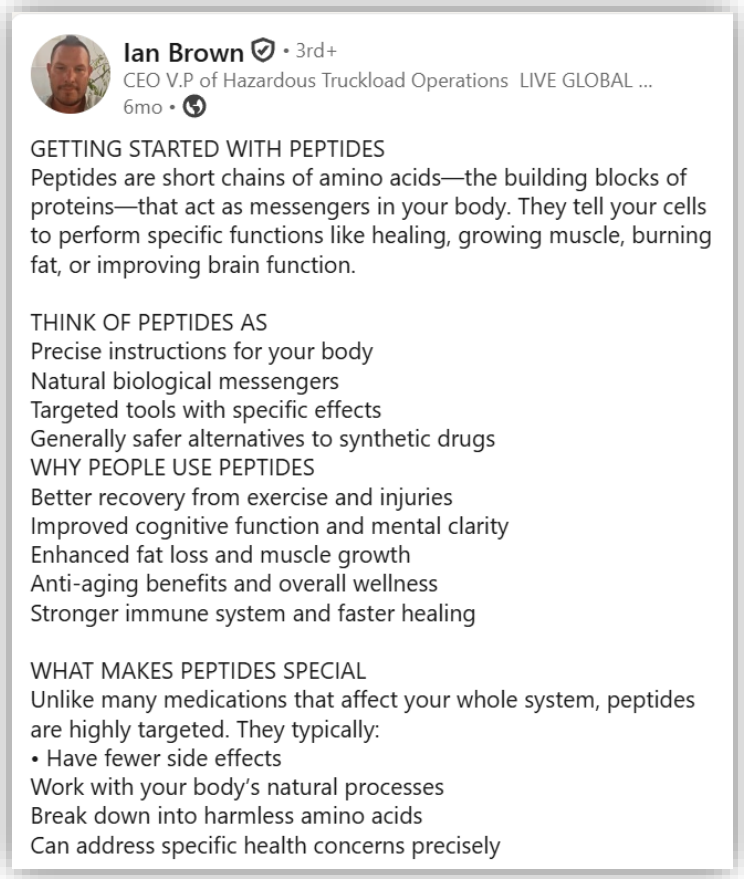
The post reproduced below describes peptides as “Generally safer alternatives to synthetic drugs.” Lilly uses the owner’s broad health claims as part of its human-use argument. The statement is marketing material reproduced in the complaint, not a clinical safety finding.
The filing also points to ordinary store features, including discounts, shipping offers and age verification. It presents those features alongside the marketing evidence; it does not supply a court finding that a shopping cart or discount alone establishes unlawful human-use sales. Paragraph 51.
What FDA says separately about retatrutide
FDA’s public guidance states that retatrutide is not a component of an FDA-approved drug, has not been found safe and effective for any condition, and cannot be used in compounding under federal law. The agency also warns about products falsely sold as research materials while being marketed directly to consumers for human use. FDA guidance, reviewed October 9, 2026.
That is the agency’s regulatory position. Whether the conduct Lilly attributes to LiveWell occurred, and whether it establishes liability under the laws pleaded, are separate questions in the lawsuit.
Eight state-law claims, with no patent claim pleaded
The complaint brings eight causes of action covering Alaska, Colorado, Connecticut, North Carolina, South Carolina, Tennessee, Texas and Washington. Seven invoke state consumer-protection or unfair-trade-practices statutes; the Texas claim invokes common-law unfair competition. Lilly links each claim to an alleged violation of that state’s restrictions on selling unapproved new drugs. Pages 24-32.
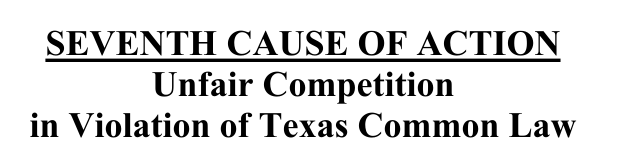
The filing does not plead patent infringement. Its stated theory is that allegedly unlawful retatrutide sales give LiveWell an unfair competitive advantage and injure Lilly.
The $75,000 figure on page 6 concerns the amount-in-controversy requirement Lilly invokes for federal diversity jurisdiction. It is not a damages award or a fixed $75,000 demand. The request for relief does not quantify total damages. Paragraph 13 and pages 33-34.
The commercial harm Lilly alleges
Lilly says the sales divert consumers from its approved medicines, including Mounjaro, Zepbound and Foundayo. It also argues that adverse experiences with grey-market retatrutide could damage the reputation of a future Lilly retatrutide medicine, if approved. Paragraphs 60-65, pages 22-24.
Lilly puts its competition argument directly: the alleged sales “are costing Lilly sales.” The complete paragraph supplies the context.
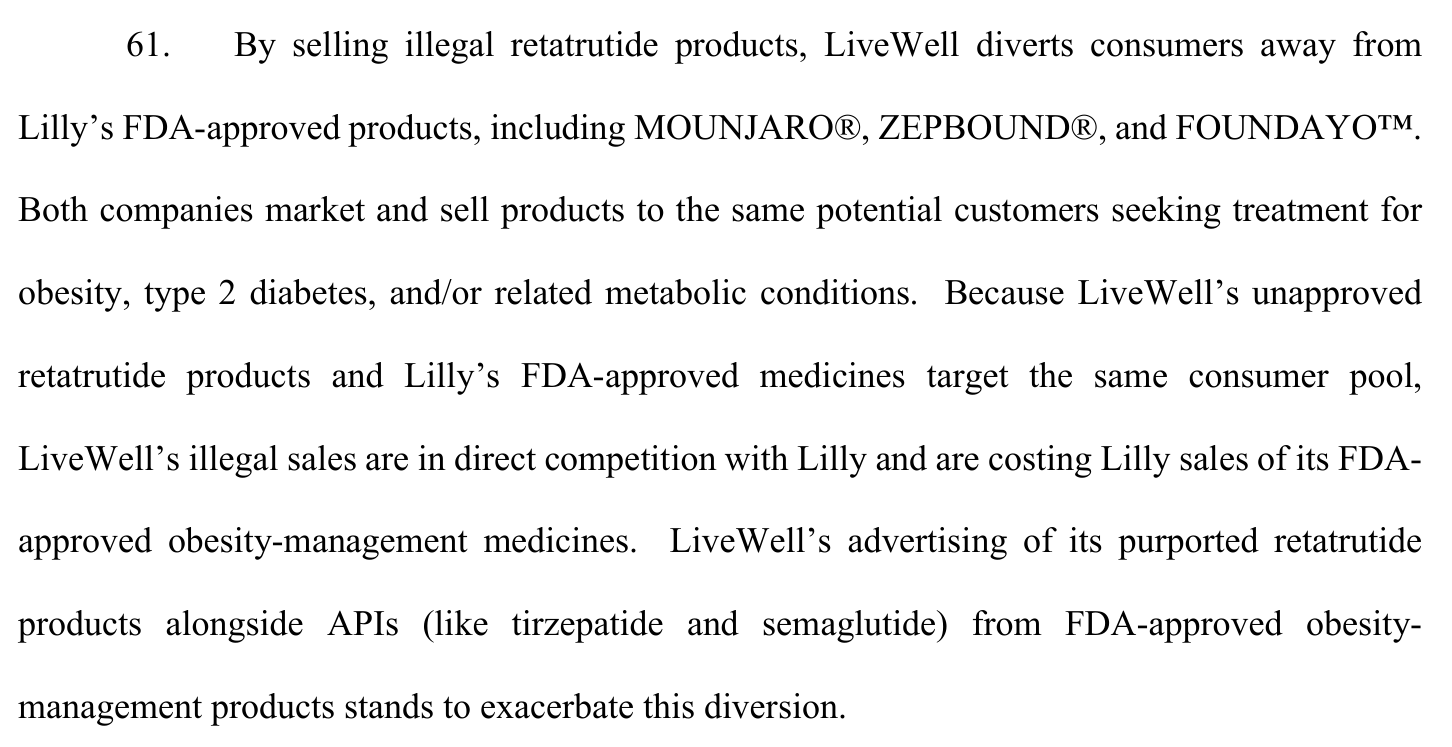
These commercial interests are explicit in the complaint. Lilly presents consumer risk, lost sales and potential damage to its future market as connected reasons for court intervention. The filing does not quantify how much revenue LiveWell allegedly diverted.
What Lilly wants the court to order
The requested permanent injunction would prohibit LiveWell and specified associated persons from marketing, advertising, distributing, dispensing or selling products containing or purporting to contain retatrutide. Lilly also requests declarations that the conduct violates the pleaded state laws, monetary damages, disgorgement of profits, interest, attorneys’ fees and costs. It demands a jury trial on issues eligible for one. Pages 33-34.
The requested wording reaches products “containing or purporting to contain retatrutide.” The separate monetary request includes disgorgement of profits.


The requested injunction is directed at the defendant and those covered by its terms. This complaint does not itself order a nationwide shutdown of peptide sellers or prohibit every product LiveWell offers.
What the complaint does not establish about product quality
The filing’s discussion of adverse events and contamination draws on Reddit accounts and reporting about the wider grey market. It presents no LiveWell-specific laboratory results establishing the identity, potency, sterility or contamination of a sampled vial. Those broader sources cannot by themselves attribute a particular injury or contaminant to LiveWell. Paragraphs 39-41, pages 13-15.
That limitation does not resolve whether the products were lawfully marketed or establish their quality. Marketing evidence, laboratory measurements and clinical outcomes answer different questions.
For the testing side, TitrateLab’s retatrutide purity and amount analysis distinguishes reported purity from measured peptide quantity. Our endotoxin report review examines a separate contamination measure. Neither review establishes the contents of LiveWell’s products. The guide to verifying a peptide COA explains how to assess a certificate and its connection to a particular vial.
An answer from the defendant, an amended complaint or a substantive court order could change the account of this dispute. None is included in the complaint reviewed here; this article does not represent a complete docket-status check.
Sources and review method
TitrateLab reviewed all 35 pages of Document 1, filed October 8, 2026, including the embedded screenshots, and checked FDA’s public GLP-1 guidance on October 9. Page references use the court-stamped page numbers. The images are direct crops from that PDF, with no rewritten text or added highlighting; full-page links retain the surrounding context.
This is a document review, not independent testing of LiveWell products or authentication of every website and social post cited by Lilly. The reviewed record does not include LiveWell’s response. Lilly is both the plaintiff and the developer of retatrutide, with commercial interests described above.
Prepared with AI-assisted retrieval and drafting, with claims checked against the cited documents. See TitrateLab’s methodology. Send corrections with supporting sources to [email protected].
