Same factory, different record
It often takes one search to connect a seller’s certificate to a Chinese supplier. Some suppliers print their own lot numbers on every vial, and those numbers reappear on certificates that their customers order. Across the corpus, 106 printed codes link 102 U.S. clients to 45 international suppliers.
Sellers whose own labels carry a supplier’s code
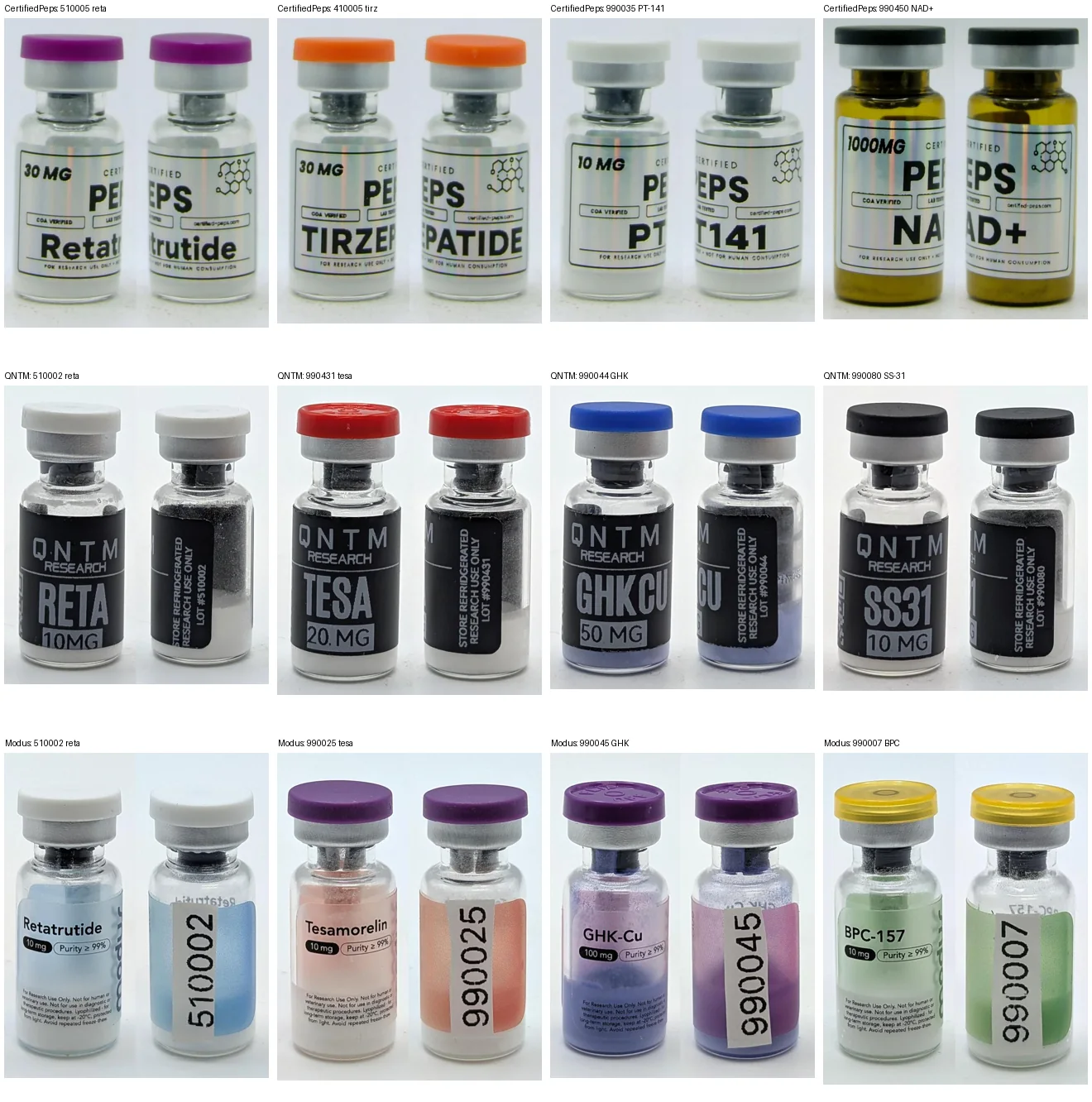
LOT #510002, #990431, #990044, #990080; Modus stickers 510002, 990025, 990045, 990007. Full-size image.The strongest evidence is a seller’s own branded vial printed with a supplier’s code. Freedom Diagnostics certificates include a photo of the tested vials, so this evidence is often public. Each of the sellers below had certificates carrying another supplier’s codes:
- QNTM Research prints ERP’s numbers on its own black label:
LOT #510002on retatrutide 10 mg,#990431on tesamorelin 20 mg,#990044on GHK-Cu 50 mg. Eleven of its certificates, from August 2026, carry ERP-style codes. Three of those codes appear in ERP’s own test record for the same compound. The cap colors also match ERP’s vials for those codes: white, red and blue.
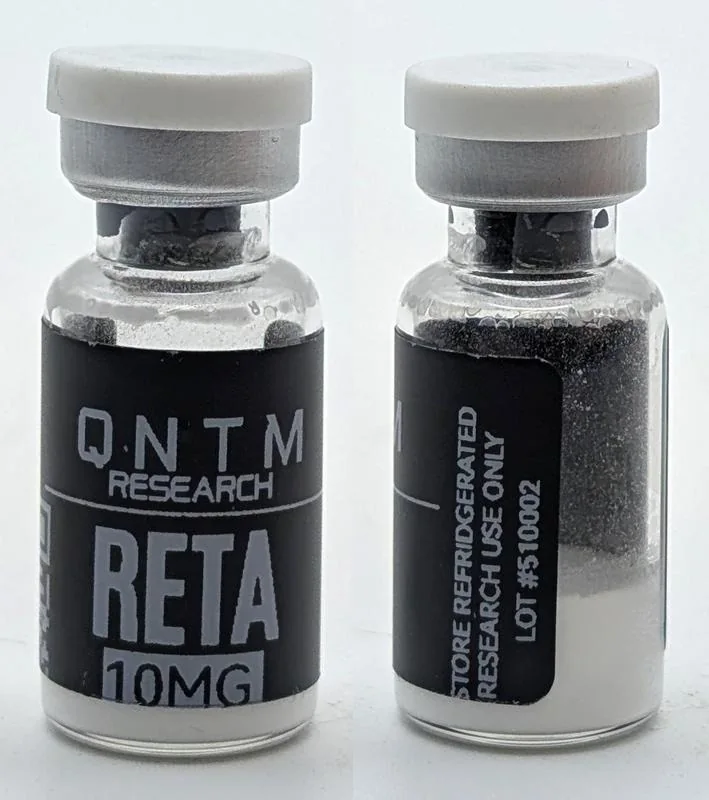
LOT #510002; white cap, silver crimp. Photo from the certificate, tested Aug 2026. Original source · Full-size image.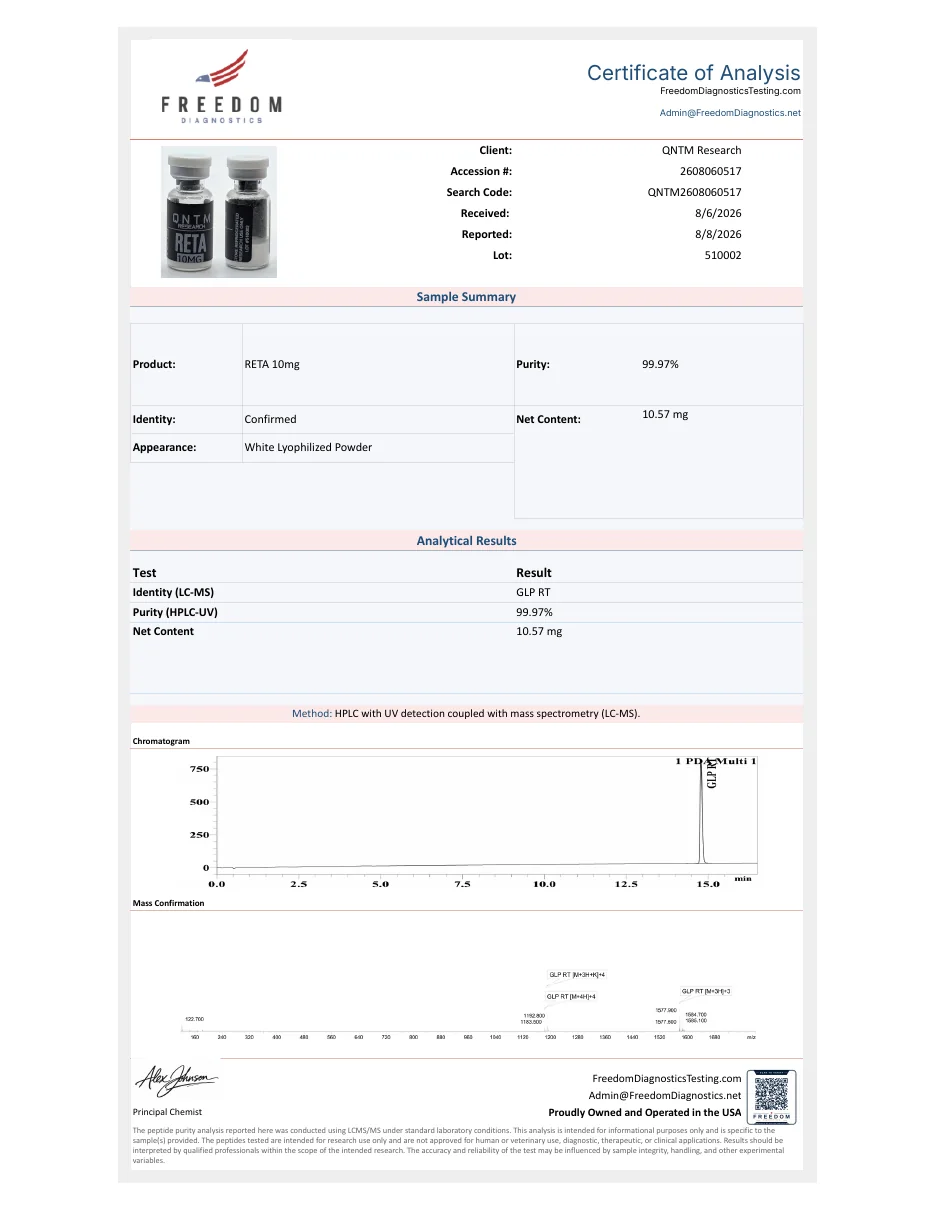
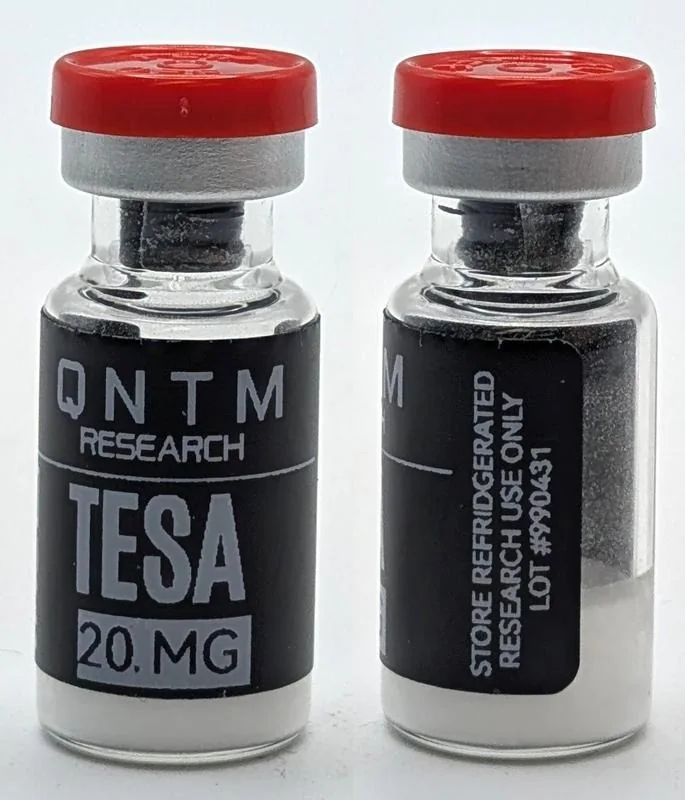
LOT #990431; red cap. Original source · Full-size image.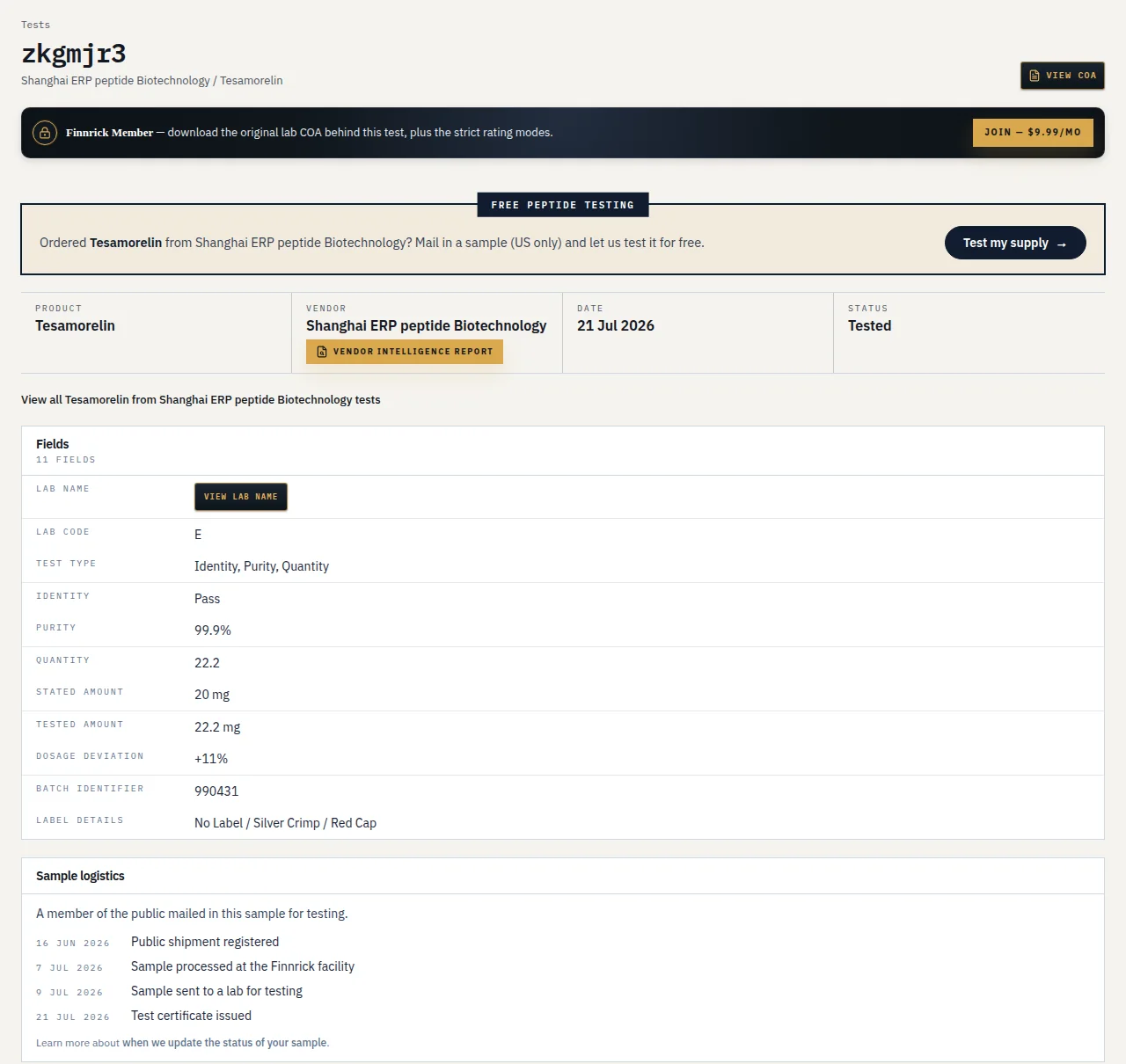
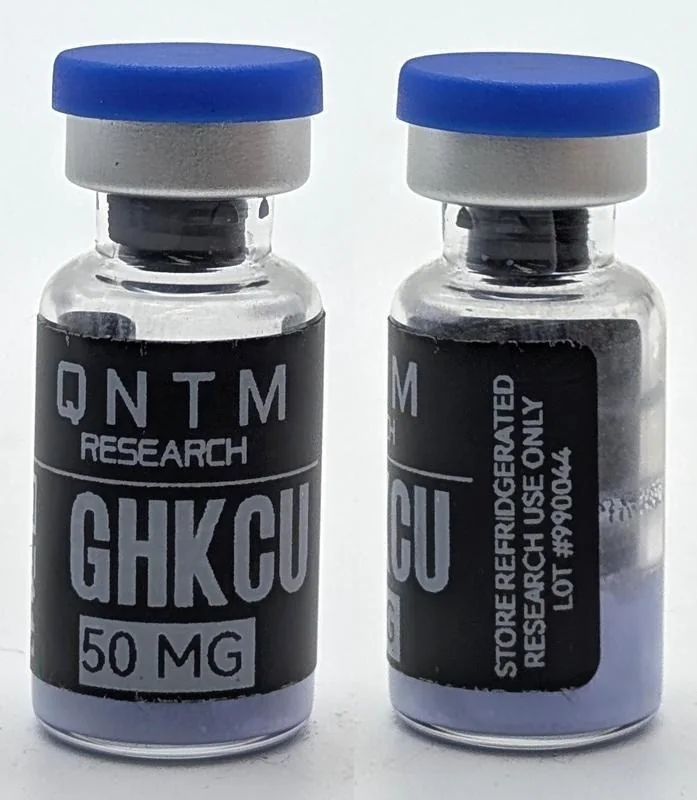
LOT #990044; blue cap. Original source · Full-size image.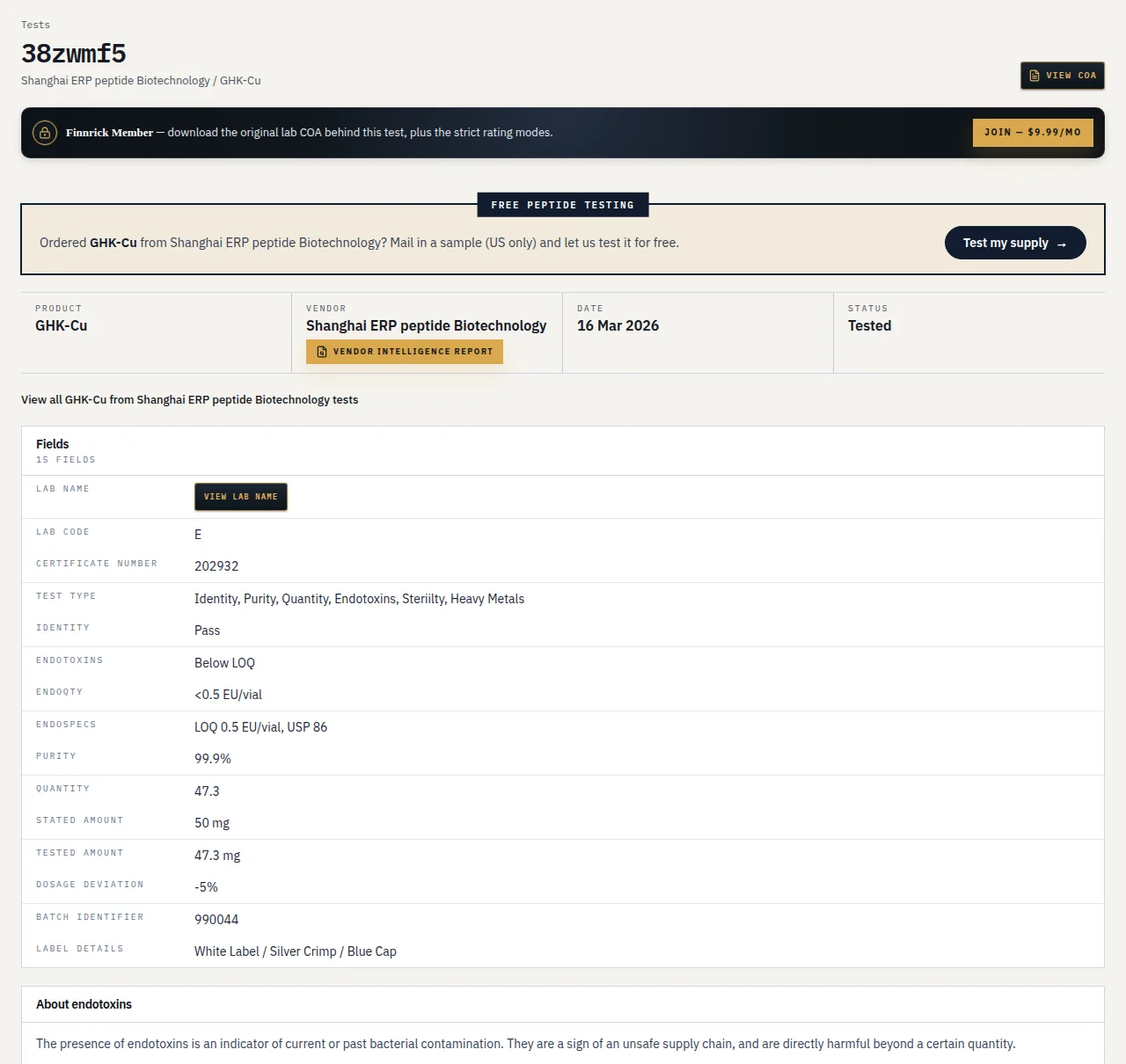
- Modus Club (modusclub.co, which ships by USPS) adds a sticker with ERP’s code to its own label, and its product pages list the same code as the “lot number”:
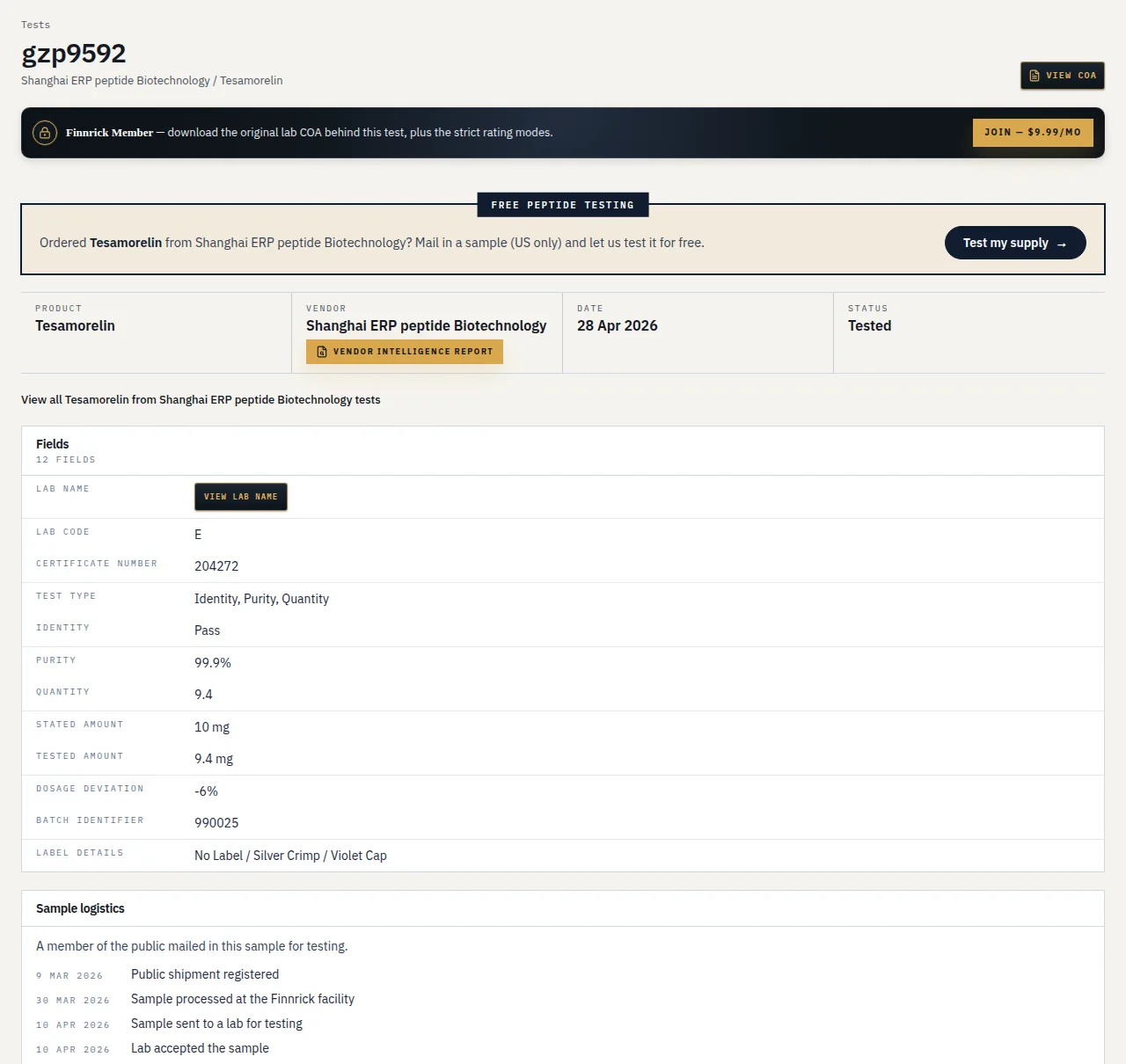
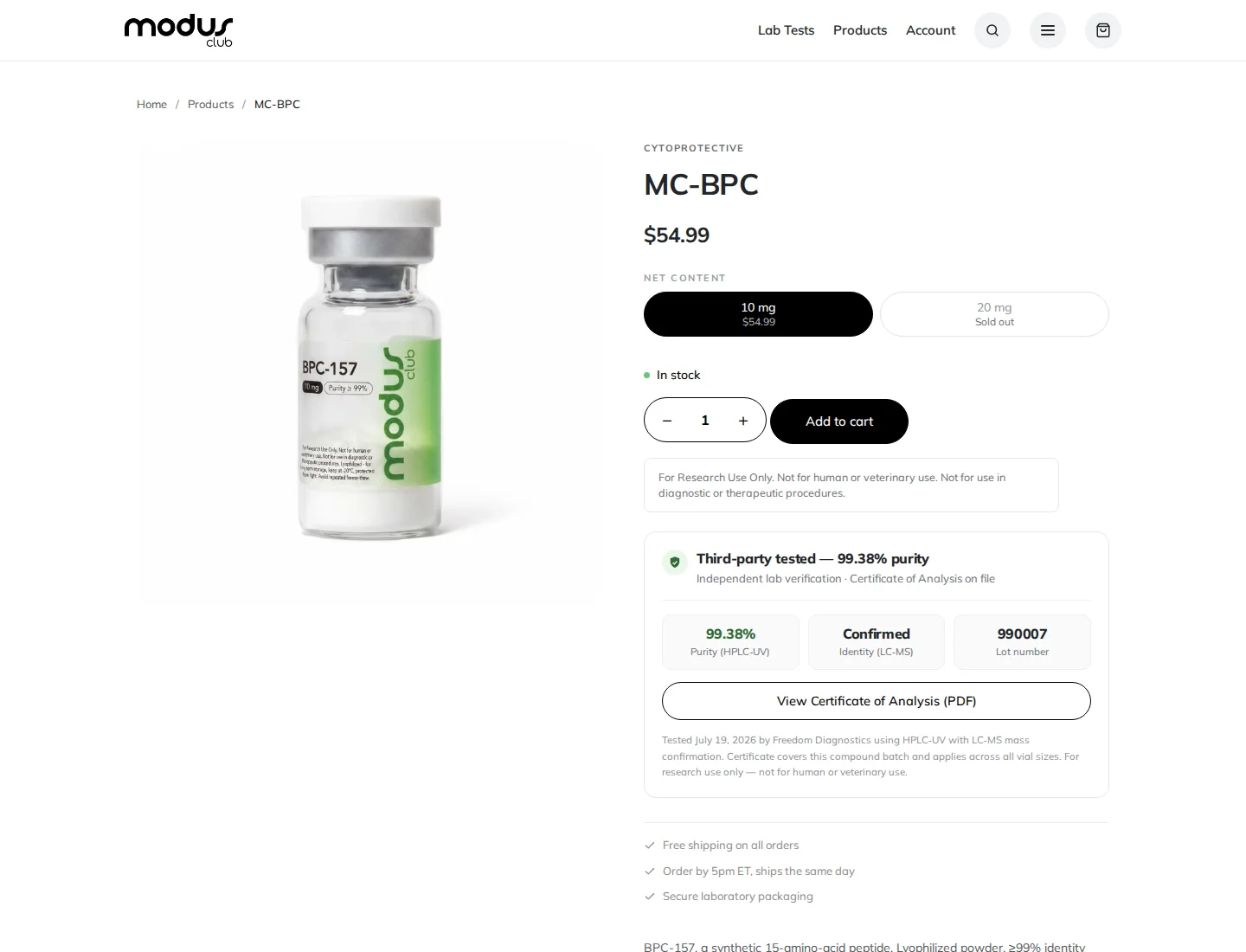
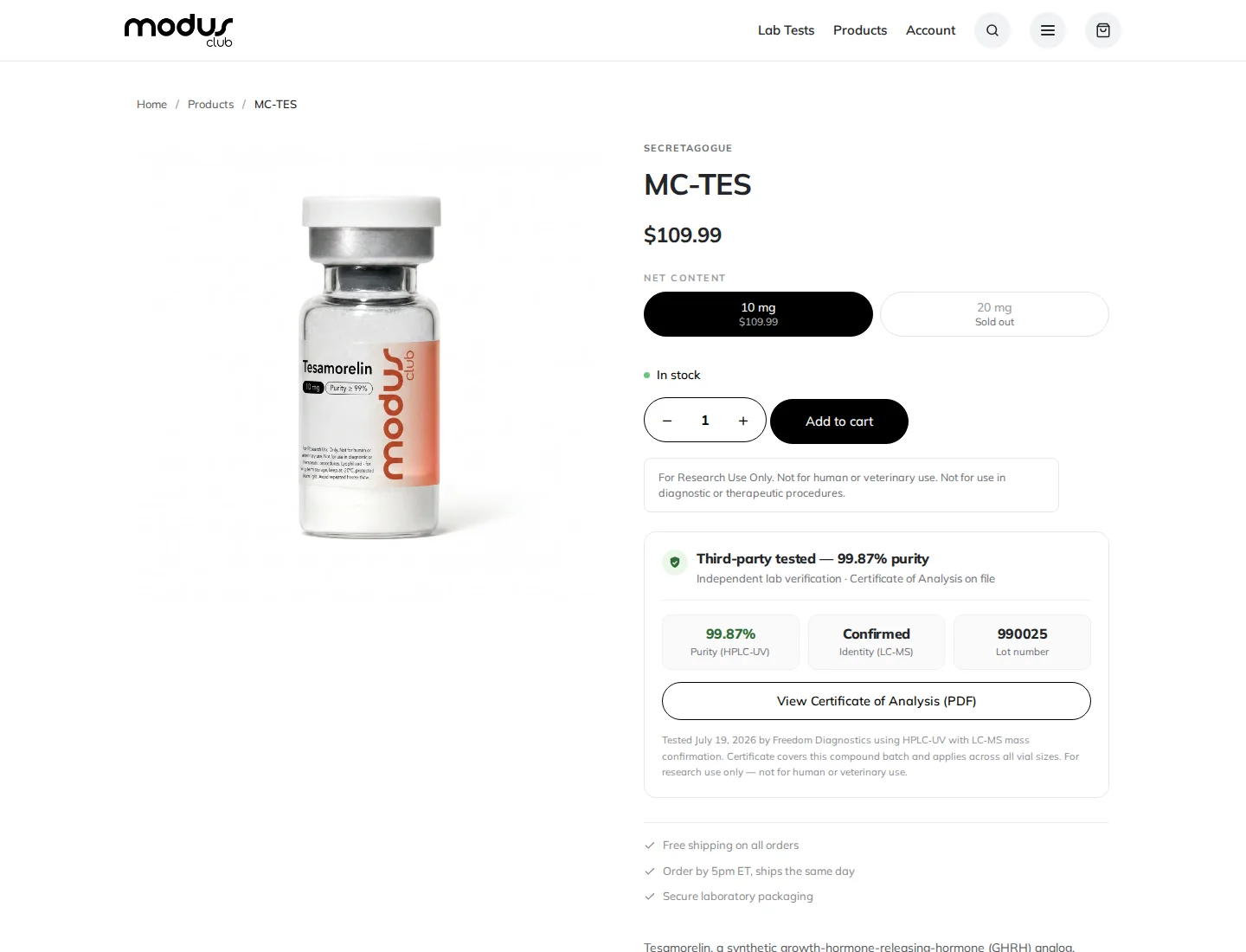
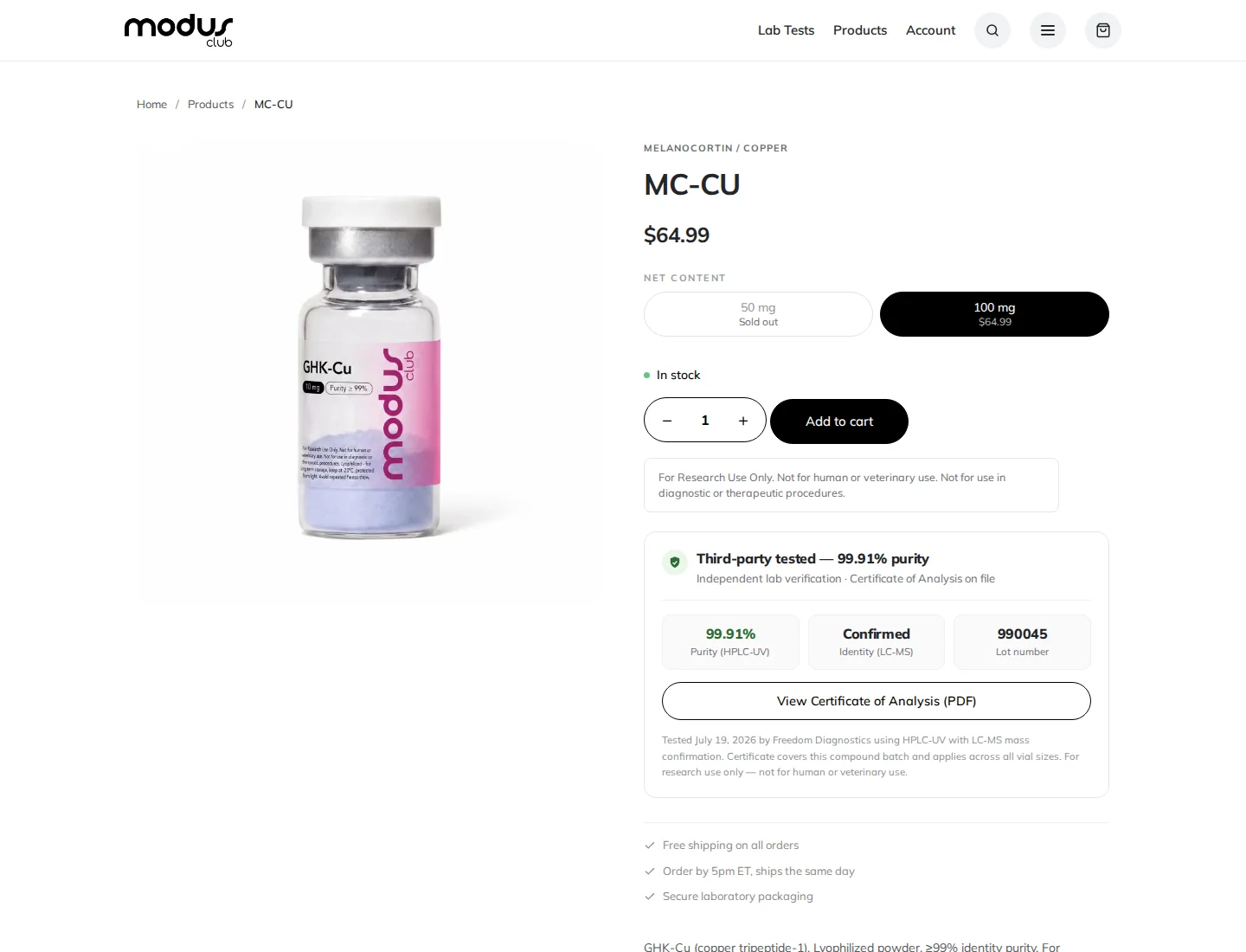
510002retatrutide,990025tesamorelin,990045GHK-Cu and990007BPC-157, all tested in July 2026.
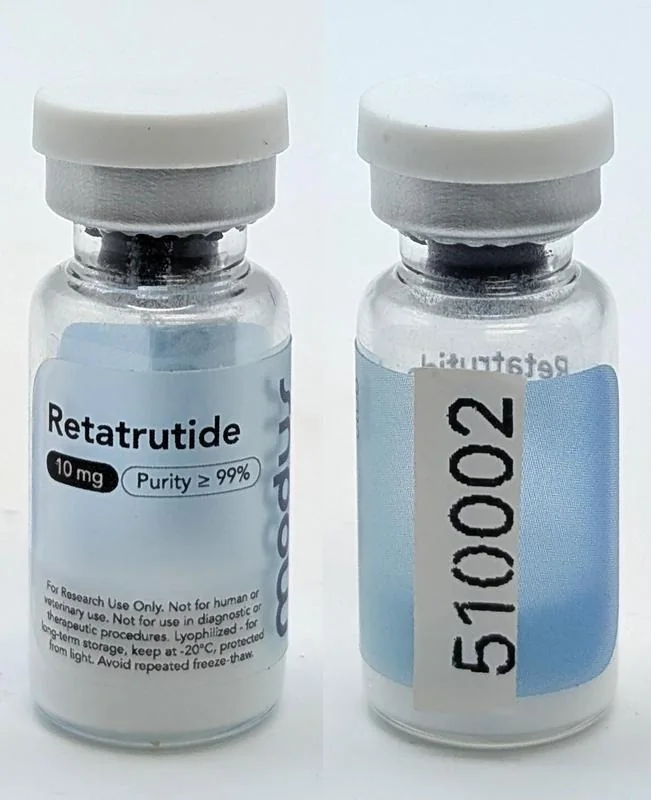
510002 sticker; white cap. Original source · Full-size image.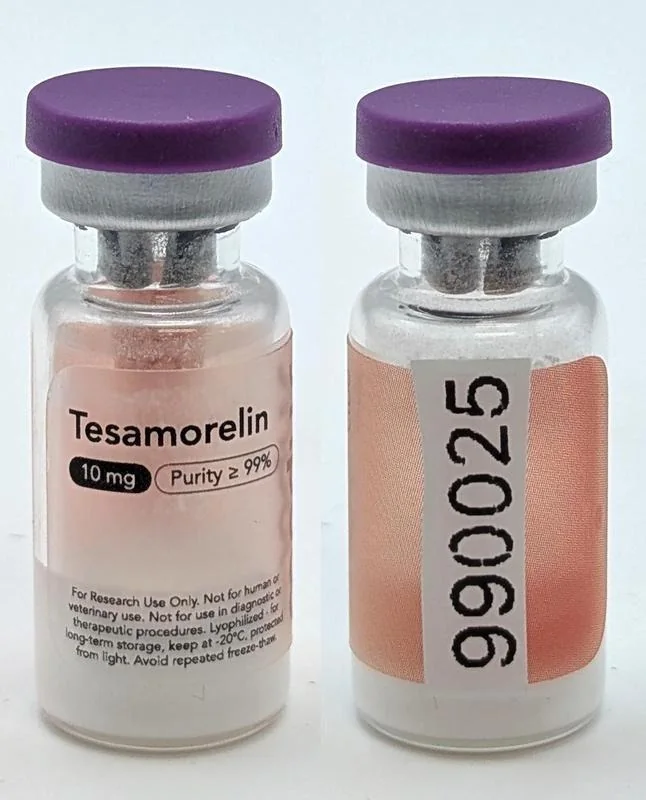
990025 sticker; violet cap. Original source · Full-size image.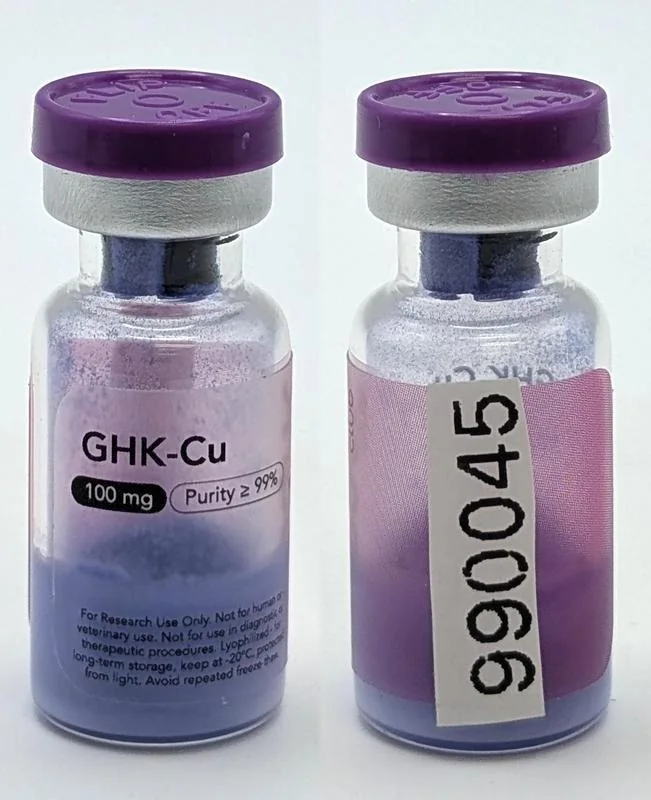
990045 sticker. Original source · Full-size image.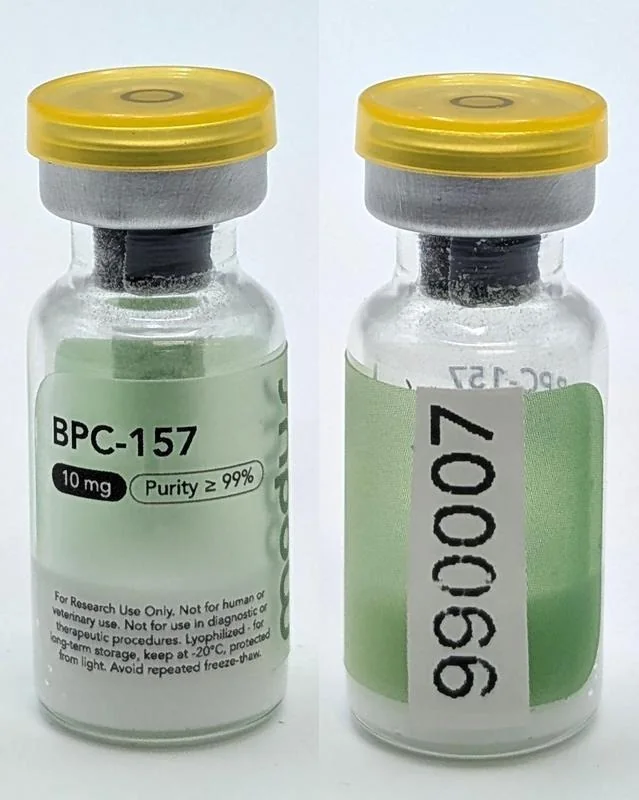
990007 sticker; clear yellow cap. Original source · Full-size image.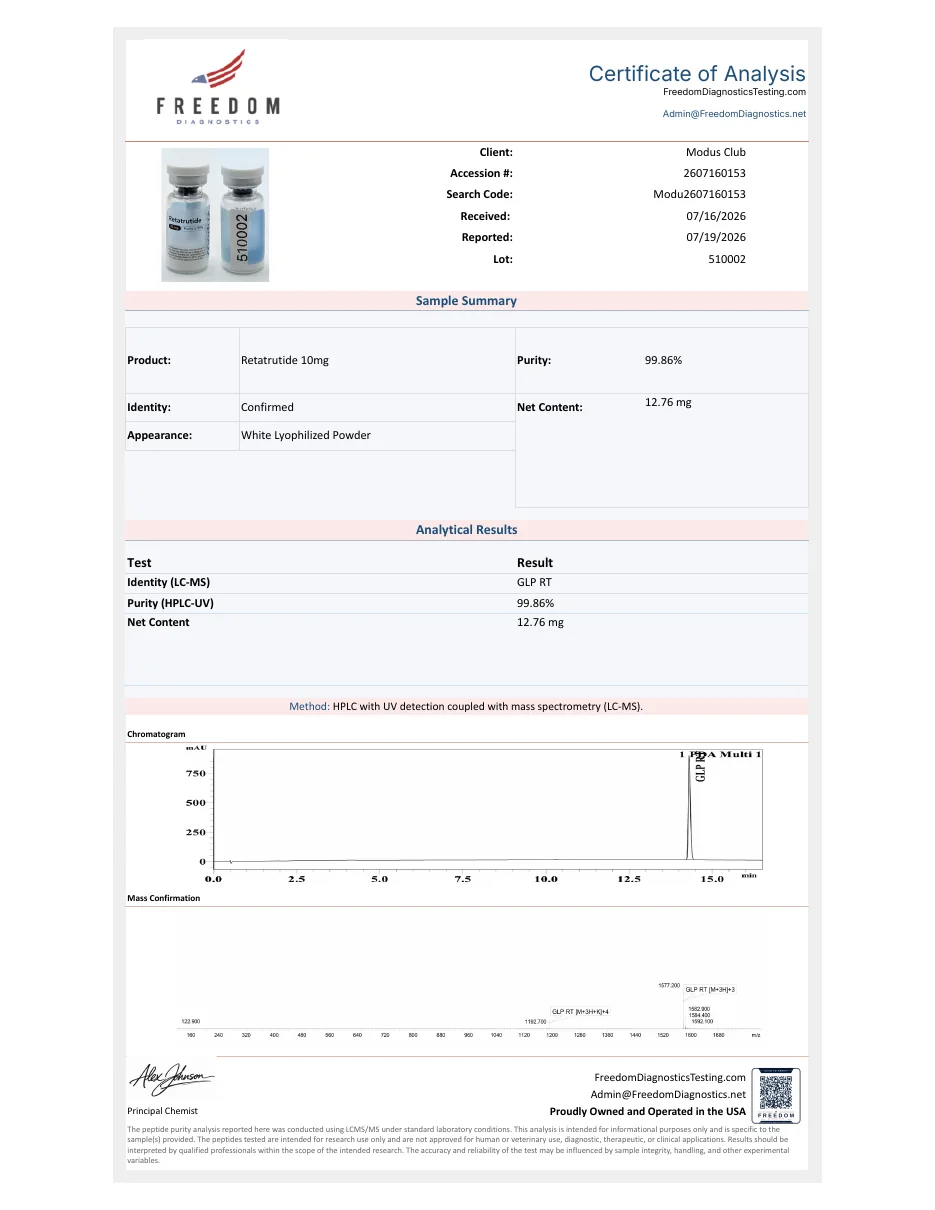
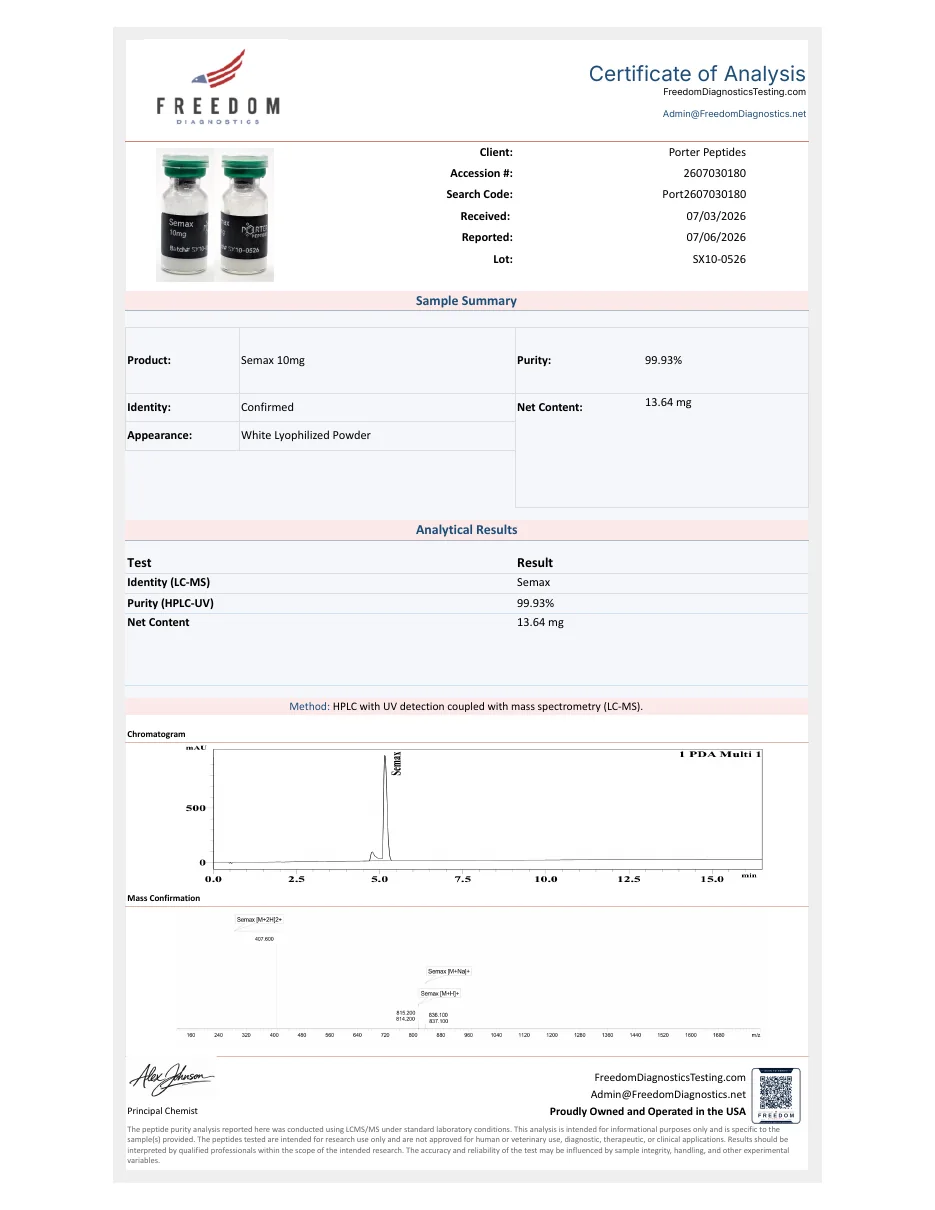
- Porter Peptides (porterpeptides.com) prints UTHER’s dated lot numbers on its own label, for example
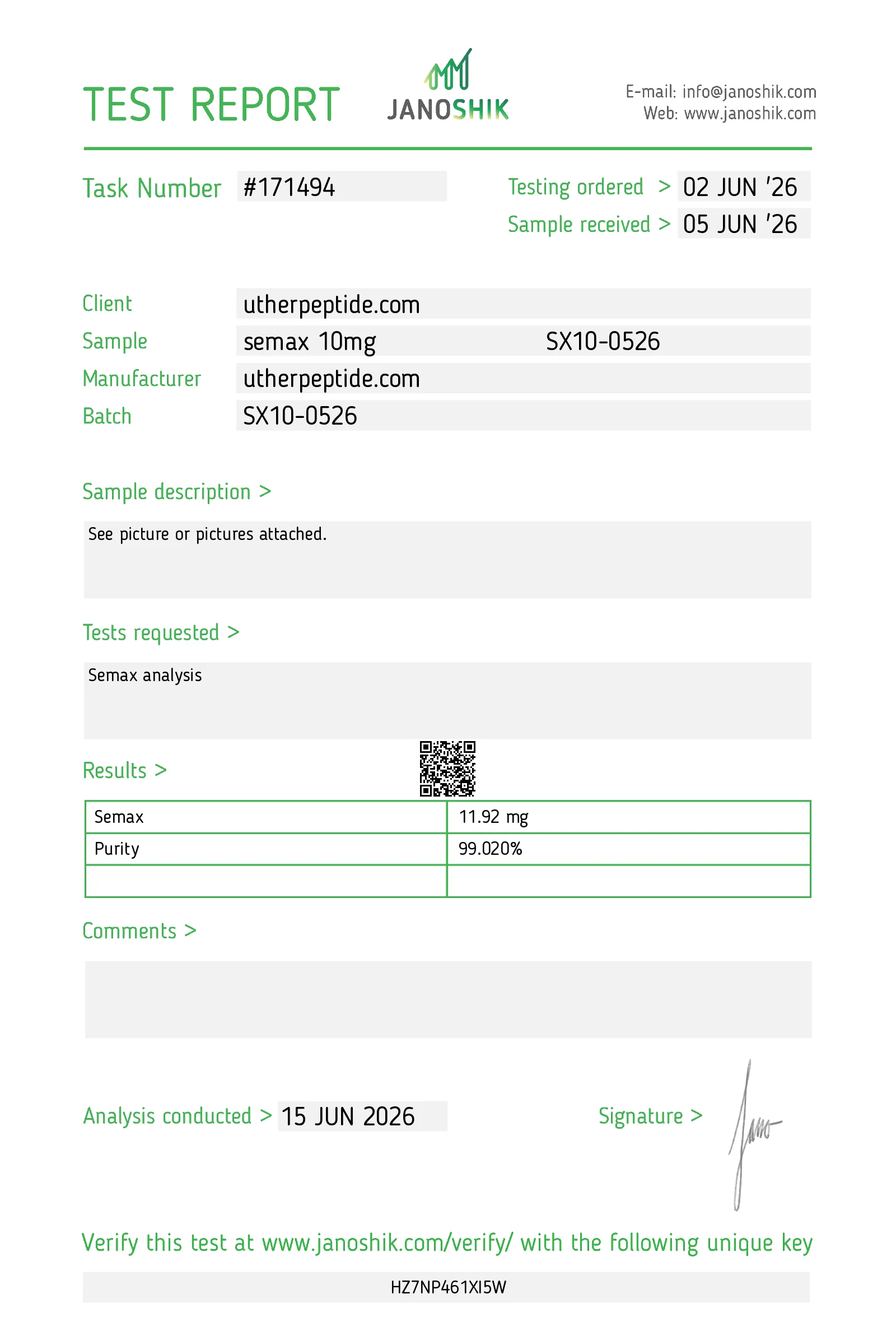
Batch# SX10-0526on semax. UTHER, a Chinese supplier, codes each lot by product, dose and date:SX10-0526is semax, 10 mg, lot of May 26. UTHER published its own Janoshik report on that lot. Porter’s certificates from May to August 2026 carry seven UTHER lots. Its older certificates from a second laboratory go further: lot numbers such asUTBP10120625put the letters “UT” in front of UTHER’s own lot code, here BPC-157BP10-1206, which UTHER had tested in January 2026.
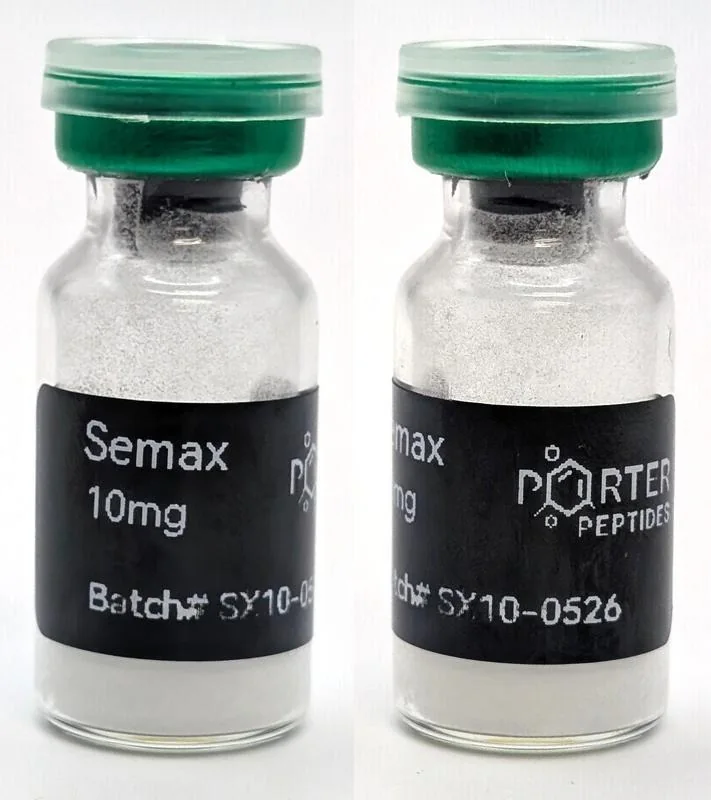
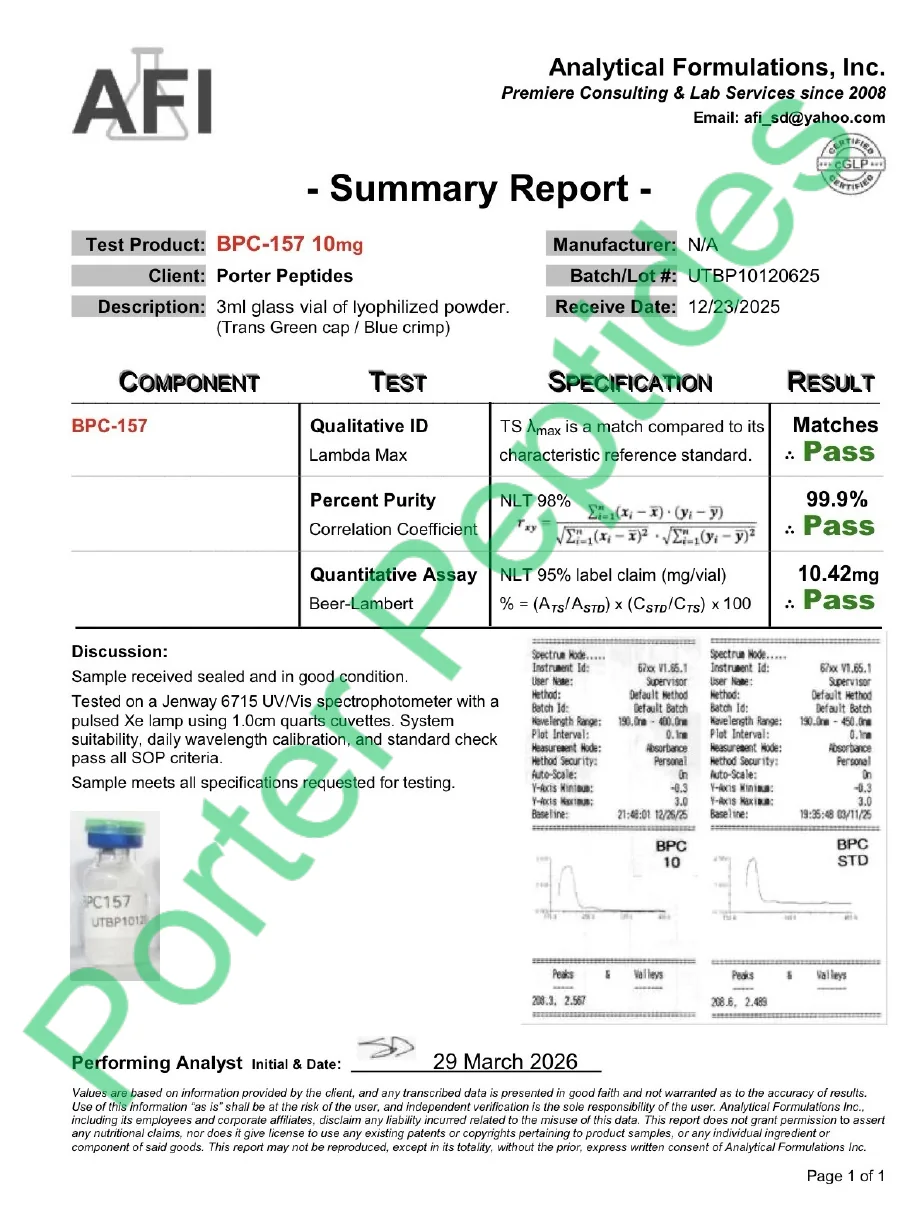
UTBP10120625, "Trans Green cap / Blue crimp"; the vial label shows the same lot. Original source · Full-size image.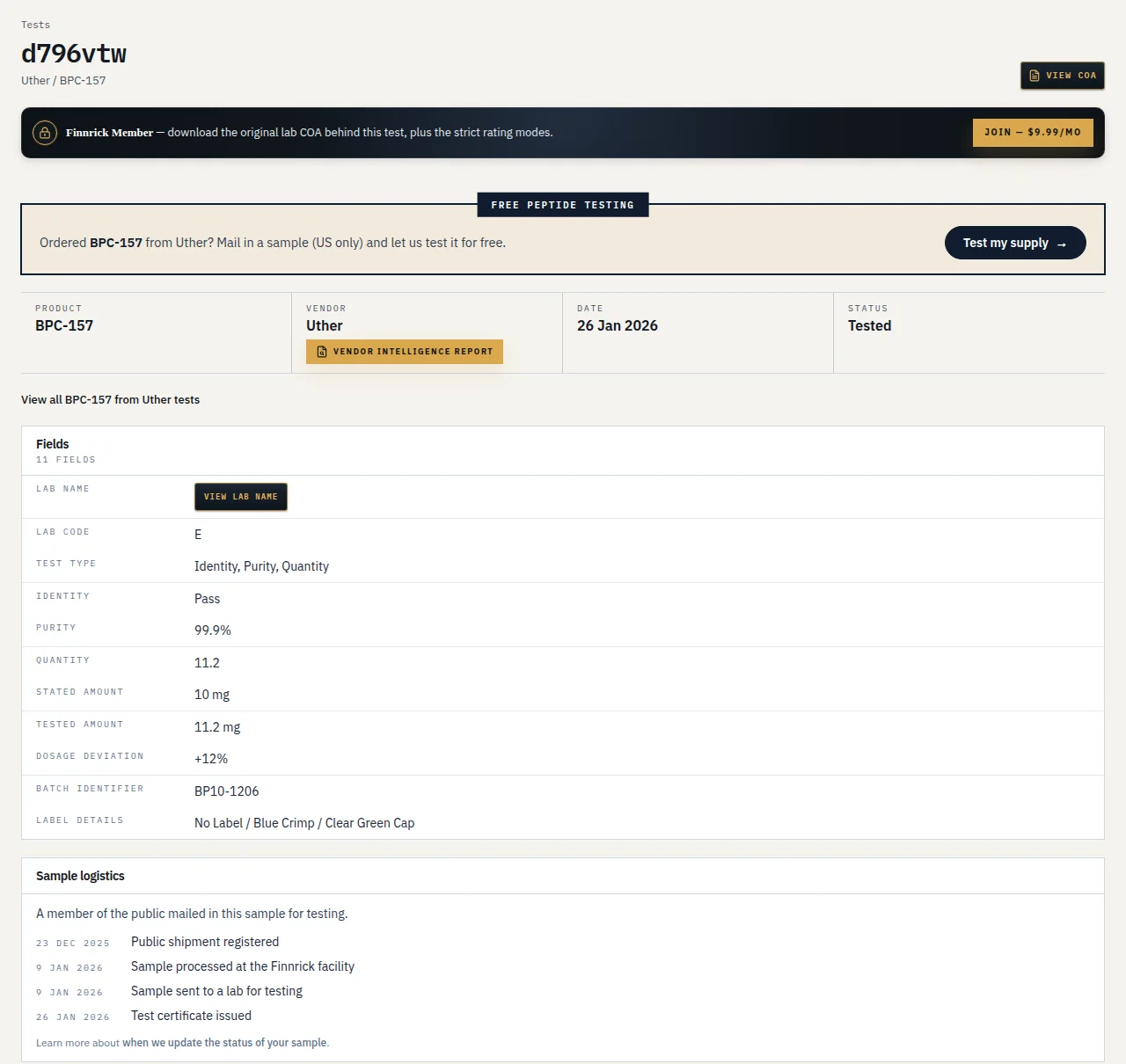
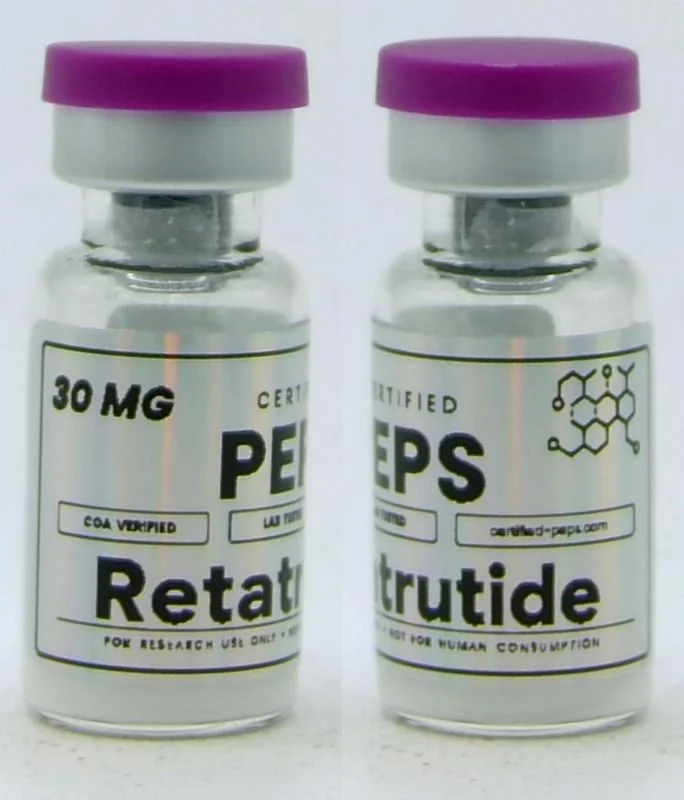
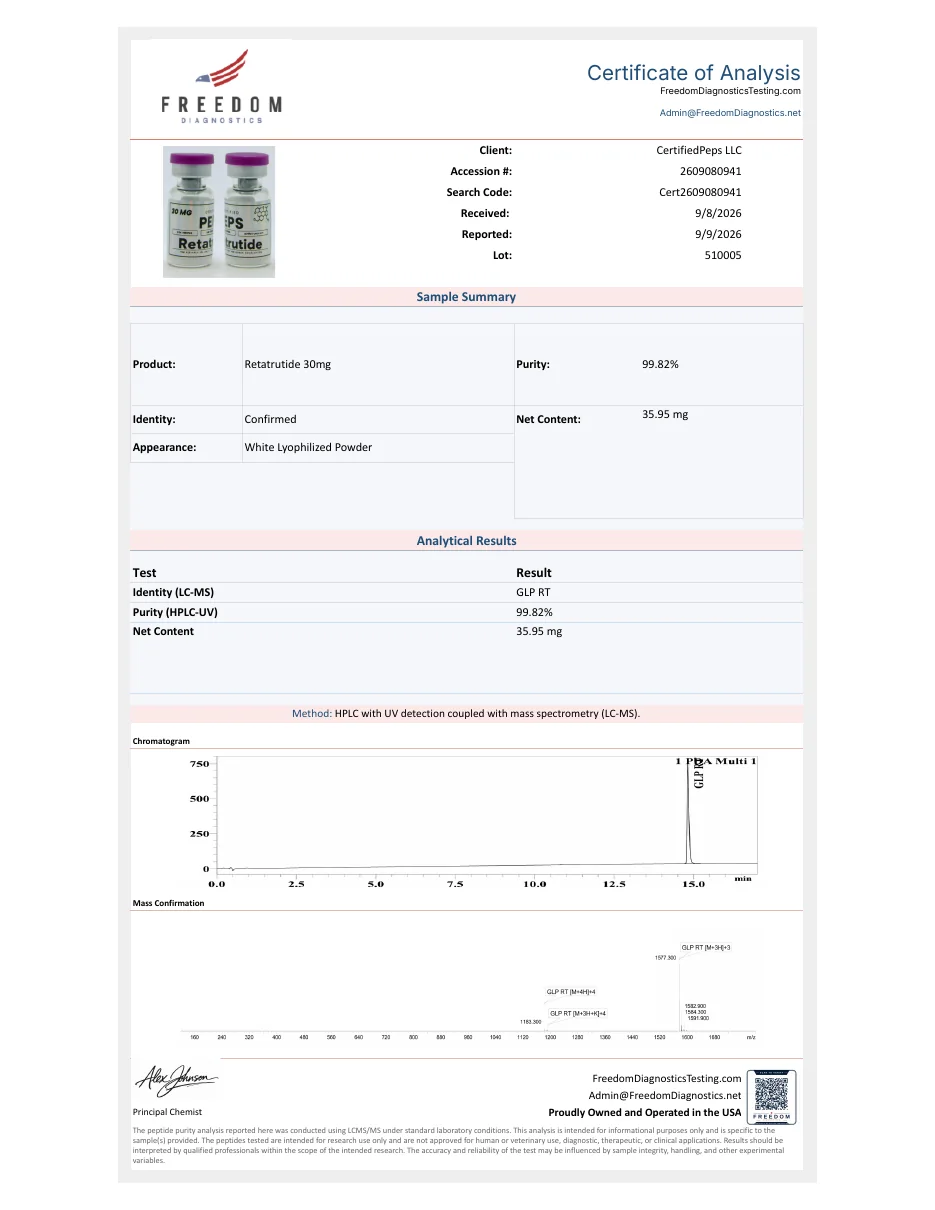
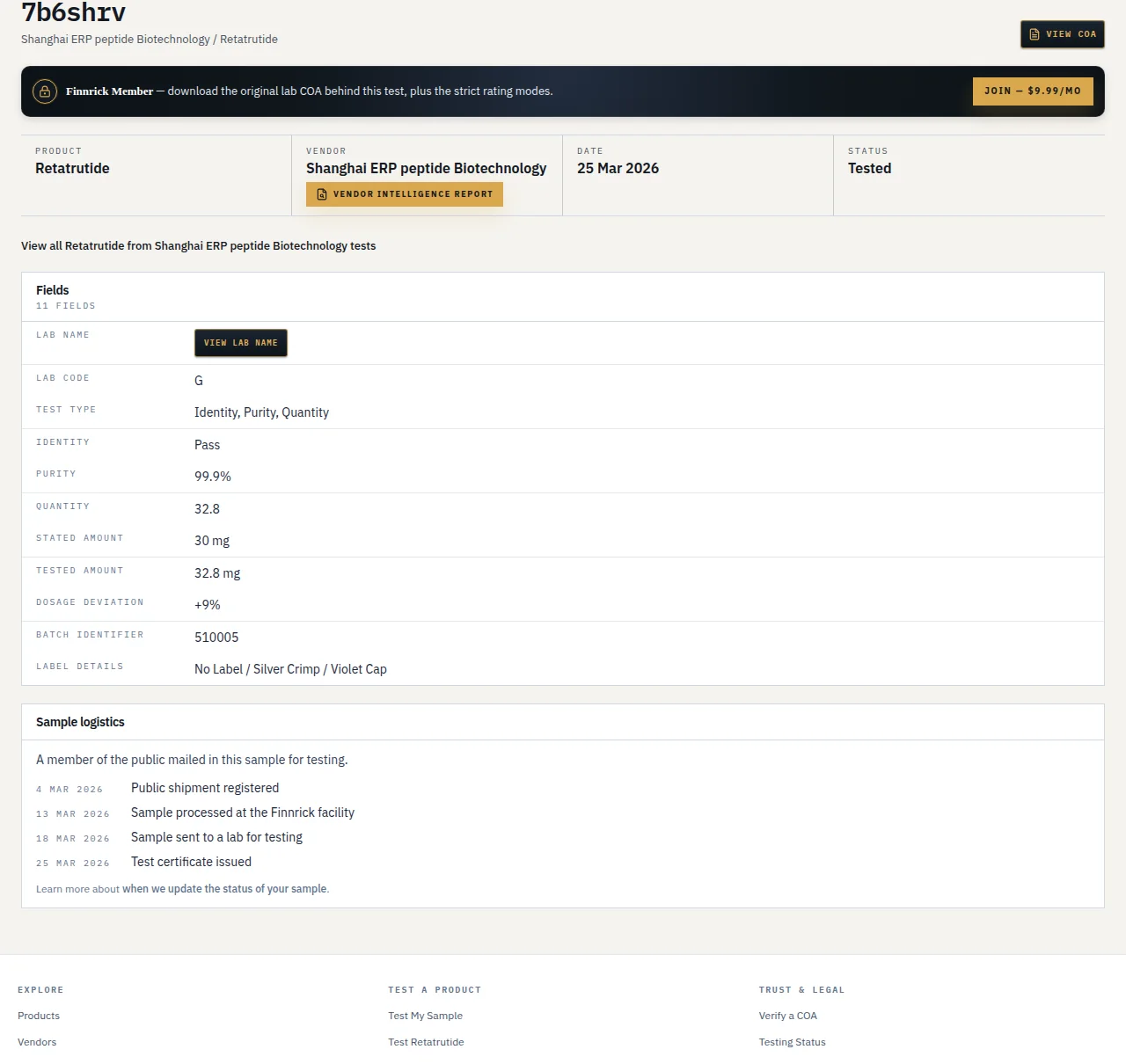
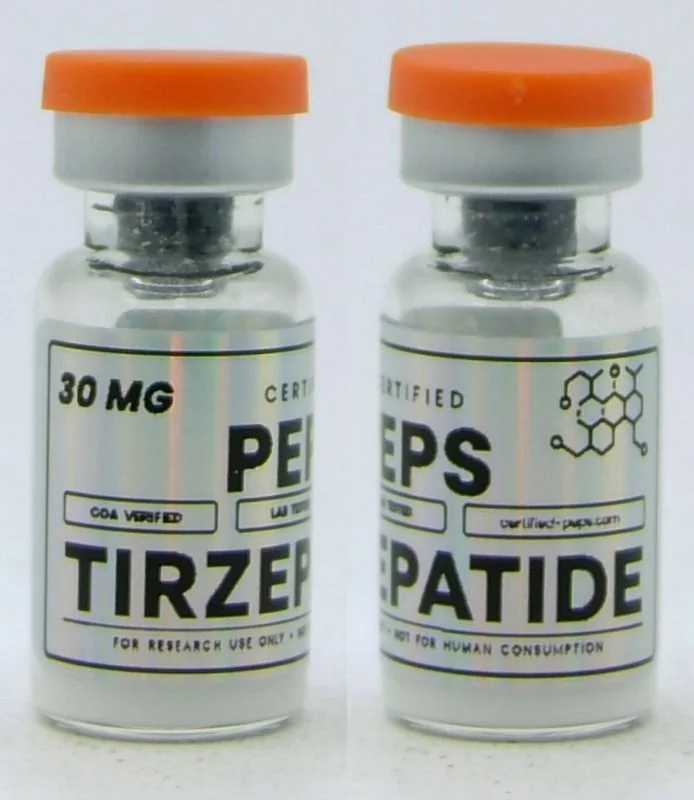
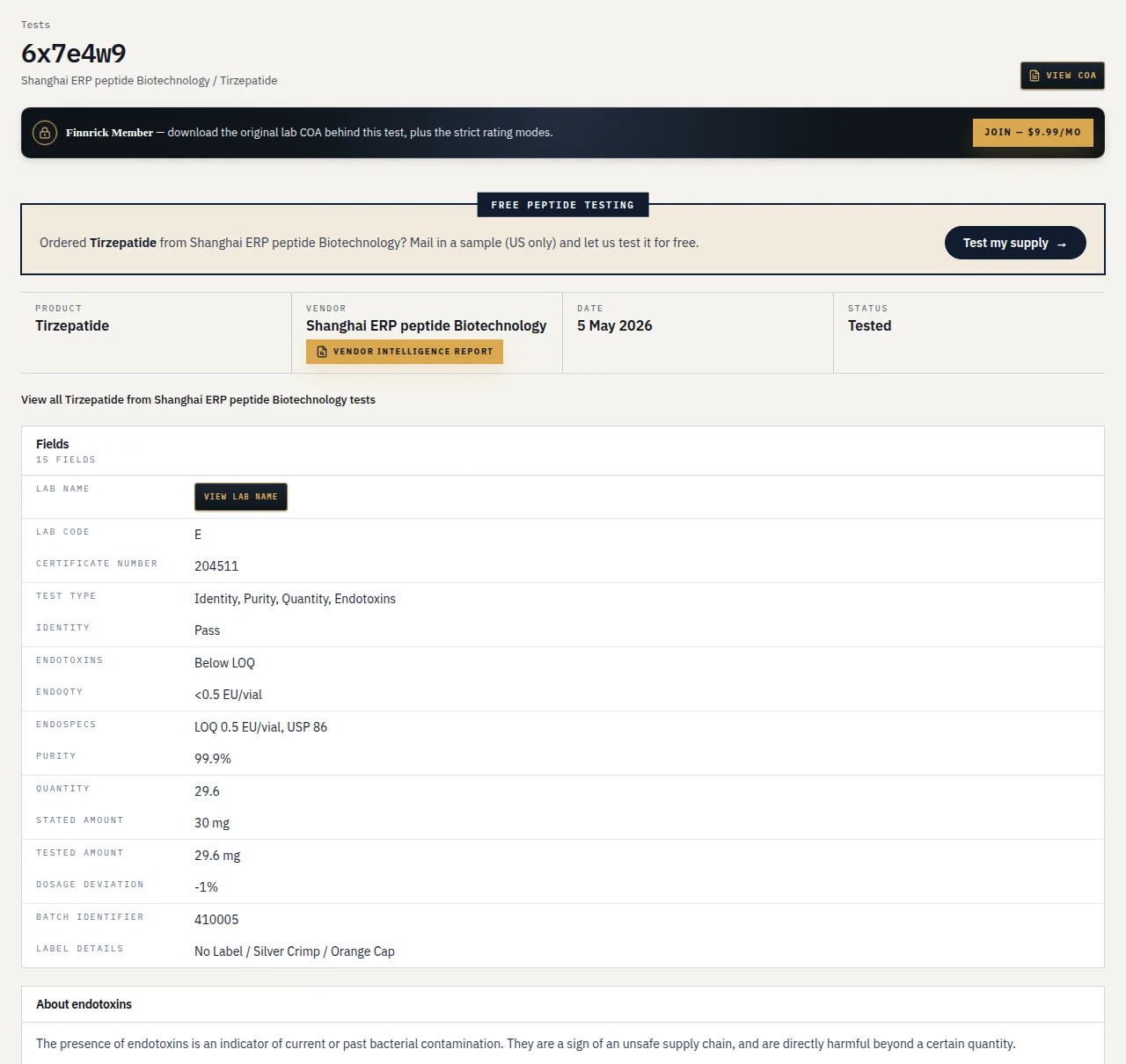
BP10-1206 on Finnrick, January 2026, the lot Porter labels UTBP10120625. Captured Sep 18, 2026. Original source · Full-size image.- CertifiedPEPS LLC, which lists an address in Allen, Texas on its website, recorded ERP-style lot numbers on the certificates for 16 products tested in September 2026, including
510005retatrutide 30 mg and410005tirzepatide 30 mg. The codes do not appear on its labels in the photos. The cap colors match ERP’s vials for the same codes: violet and orange.
We sort supplier links into three levels of evidence:
- Strong. The seller’s own label shows the supplier’s code, and the supplier’s test record uses the same code for the same compound.
- Moderate. The seller’s certificate lists the supplier’s code as its lot, and the packaging matches.
- Weak. Only a certificate client name matches. We do not treat that as evidence that the client sells anything.
Even strong evidence shows that a product came from a supplier’s line. It does not show when or how the seller bought it.
A certificate’s client is not always a seller
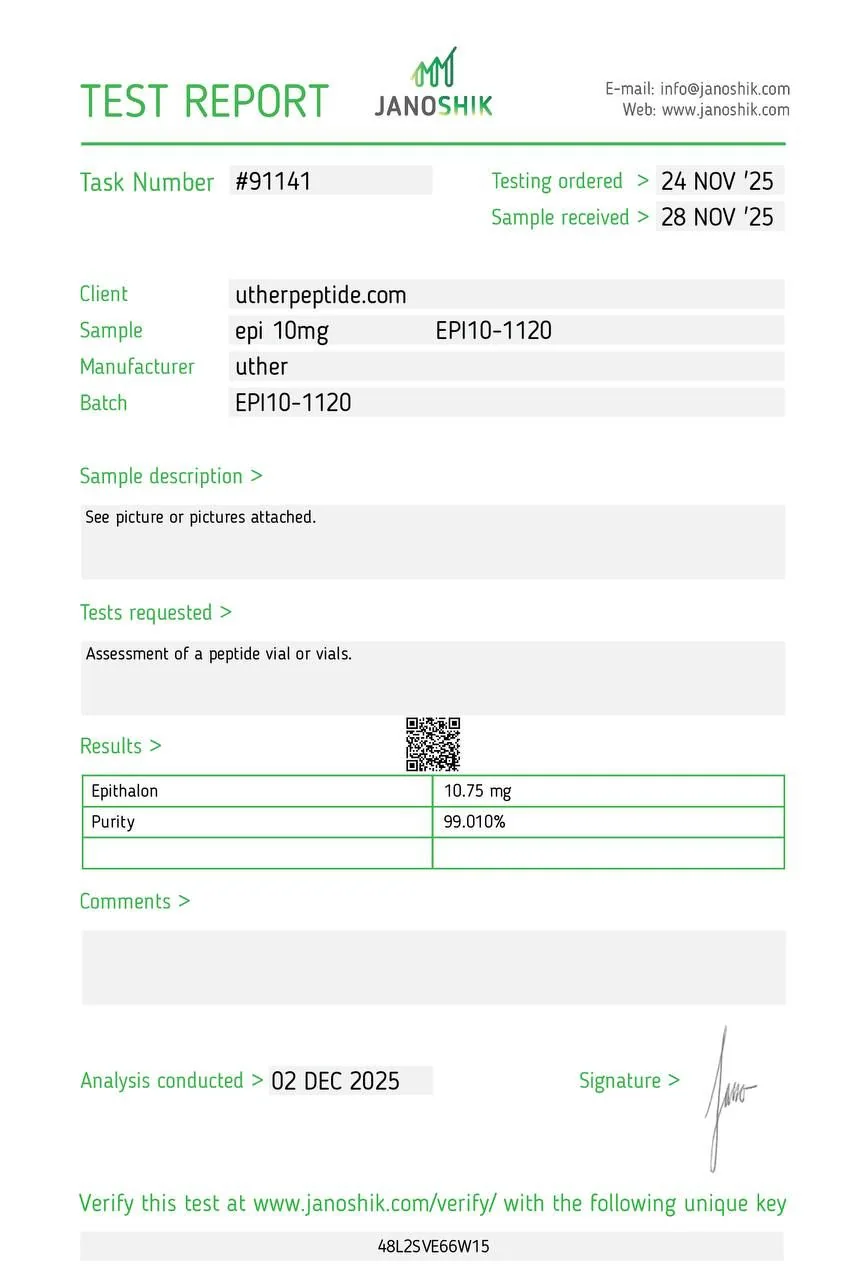
Certificates name whoever ordered the test, and that can be a buyer or group organizer. One Freedom client, listed only as ELJ, commissioned certificates for 18 UTHER lots between December 2025 and June 2026, including epithalon EPI10-1120 and adamax ADAM10-0210. The vials in its photos carry UTHER’s plain factory labels, and we found no ELJ storefront. ELJ may be a buyer testing supplier vials rather than a reseller, so we do not describe it as one.
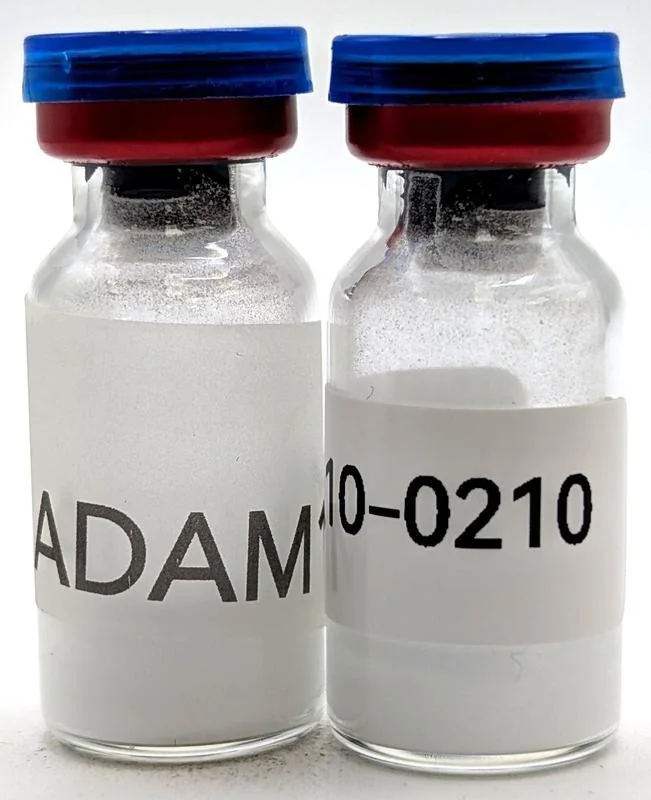
ADAM10-0210), with no seller brand. Original source · Full-size image.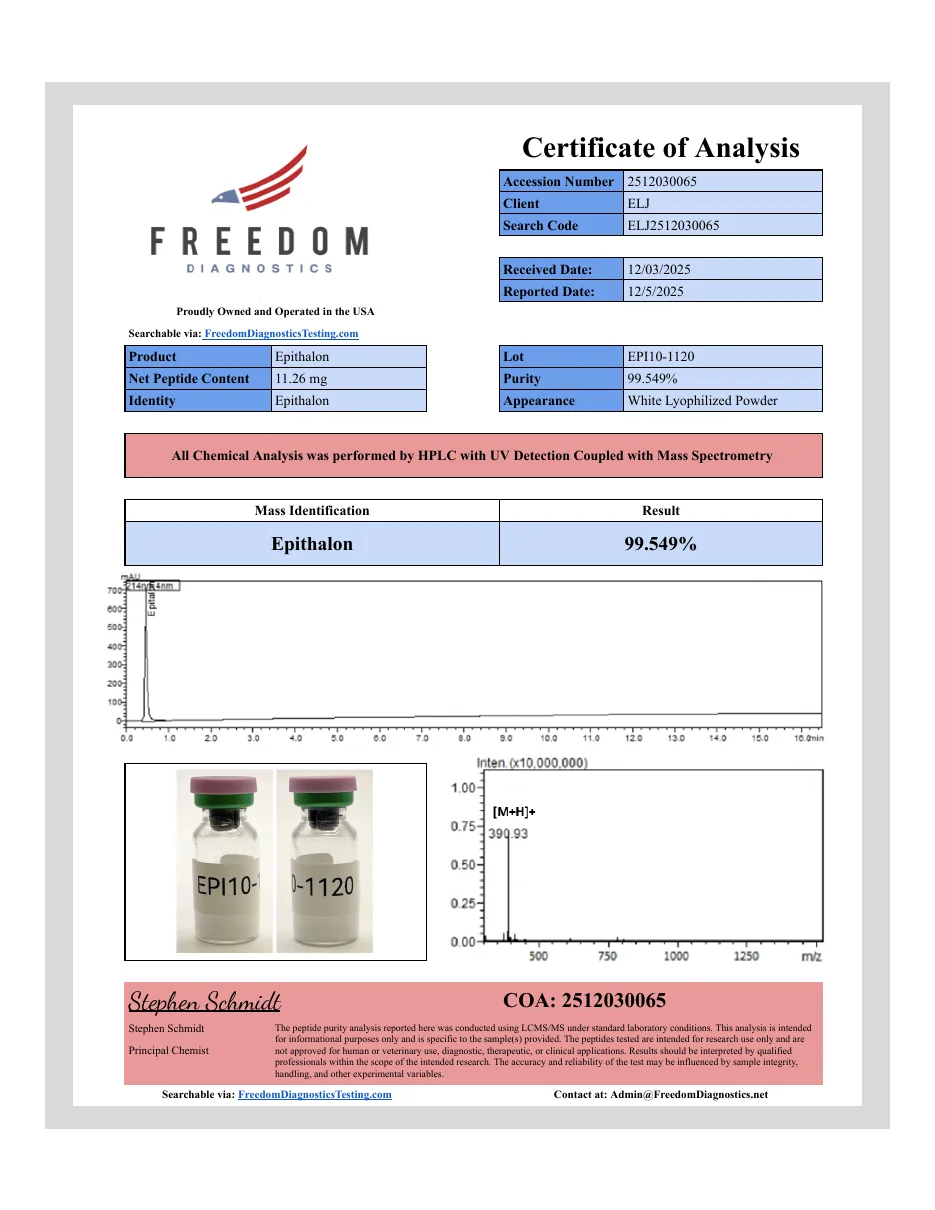
ERP: product codes, not lots
Codes from Shanghai ERP Peptide Biotechnology (ERP), which WBS also prints, appear on certificates for 12 U.S. clients, including:
- T-GLP and LSM Peps, with retatrutide
510002; - Praetorian Labs, with retatrutide
510005(we have not confirmed that it is connected to the Praetorian Peptides website);
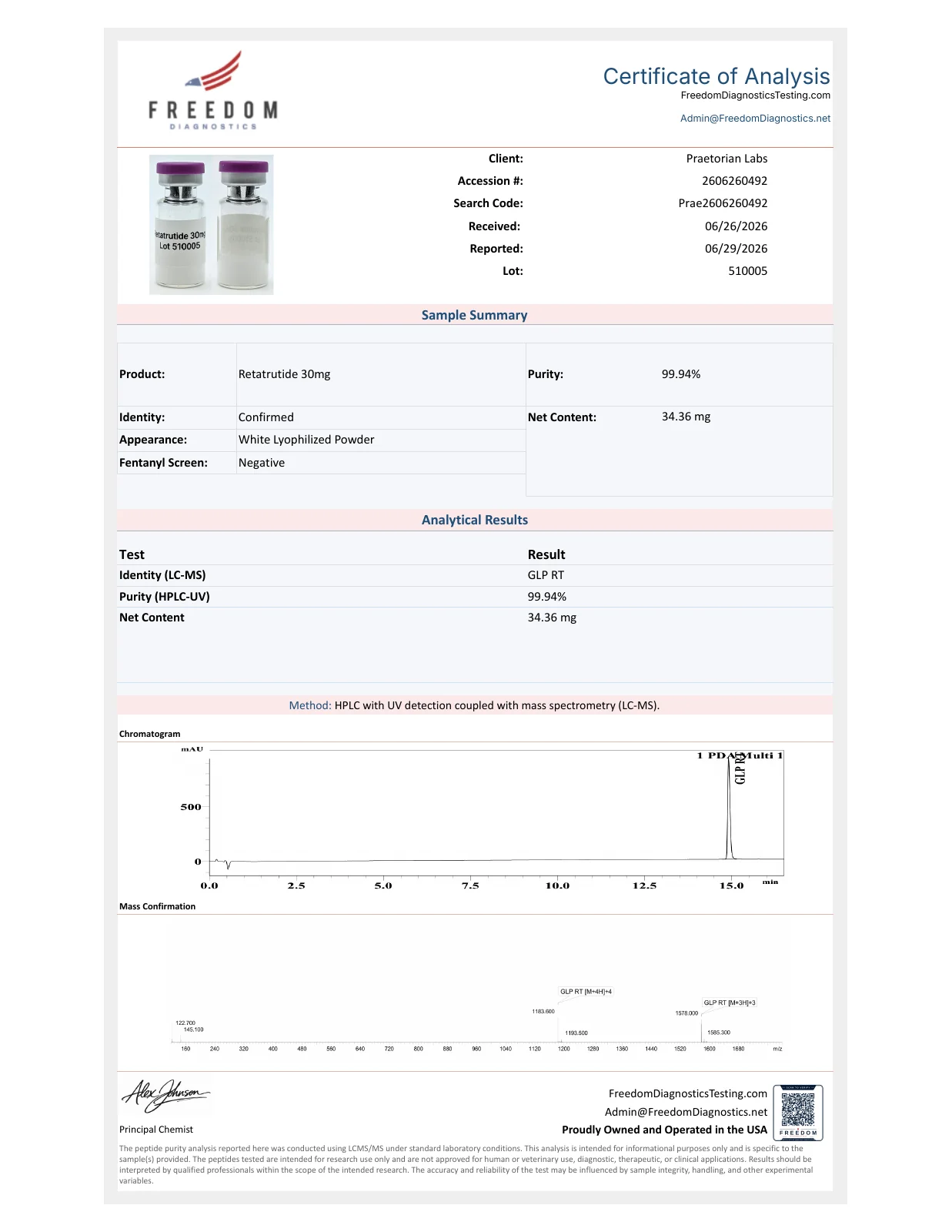
- Apex Peptides, with tesamorelin
990025.
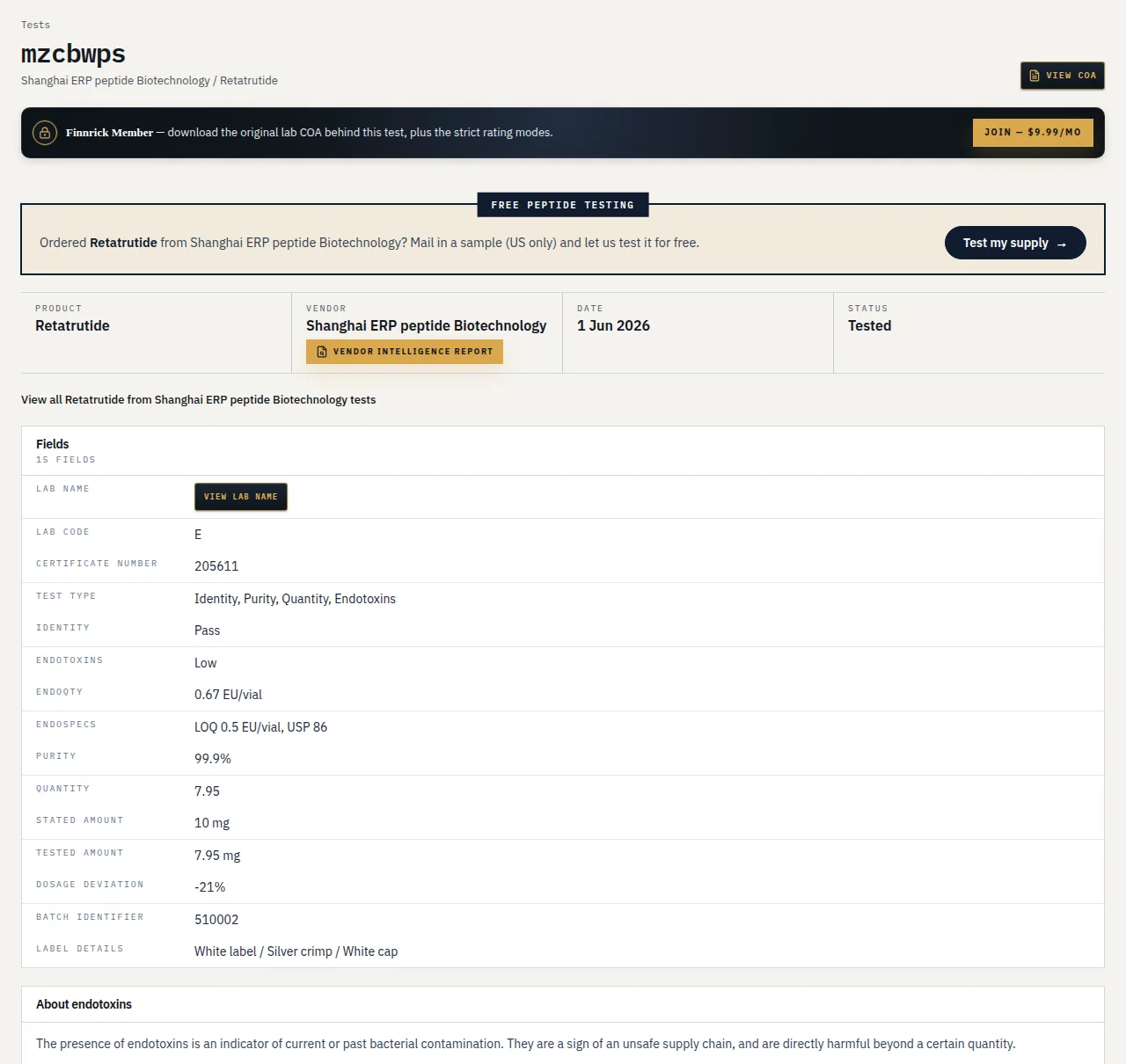
ERP’s numbers identify a product, not a production lot. 510002, 510004, 510005 and 510006 correspond to retatrutide at 10, 20, 30 and 60 mg, and the same code appears for seven months. They show where a product came from, but not that two vials came from one production run.
Popular U.S. sellers and their likely suppliers
Printed codes are only one signal. We also compare cap and crimp colors, compound and labeled dose, test dates, purity and the measured fill, comparing fill only between results from the same laboratory. We count a packaging match only when few international suppliers in our records use that combination.
| U.S. seller | Likely supplier | Evidence | Level | Seller’s own certificates that failed | Customer-sent vials of the supplier that failed |
|---|---|---|---|---|---|
| QNTM Research | ERP | Its label prints ERP lot numbers; 3 lots appear in ERP’s record, with cap colors that match ERP’s vials | Strong | 0 of 12 | 9 of 166 (5.4%) |
| Modus Club | ERP | ERP codes stickered on its own label; 4 lots, with cap colors that match ERP’s vials | Strong | 0 of 4 | 9 of 166 (5.4%) |
| Porter Peptides | UTHER | Its label prints UTHER lot numbers; 11 lots appear in UTHER’s own test record, and 3 more carry a “UT” prefix in UTHER’s format | Strong | 0 of 41 | 5 of 77 (6.5%) |
| CertifiedPEPS LLC | ERP | ERP-style lot numbers on 16 certificates; cap colors match ERP’s vials | Moderate | 0 of 36 | 9 of 166 (5.4%) |
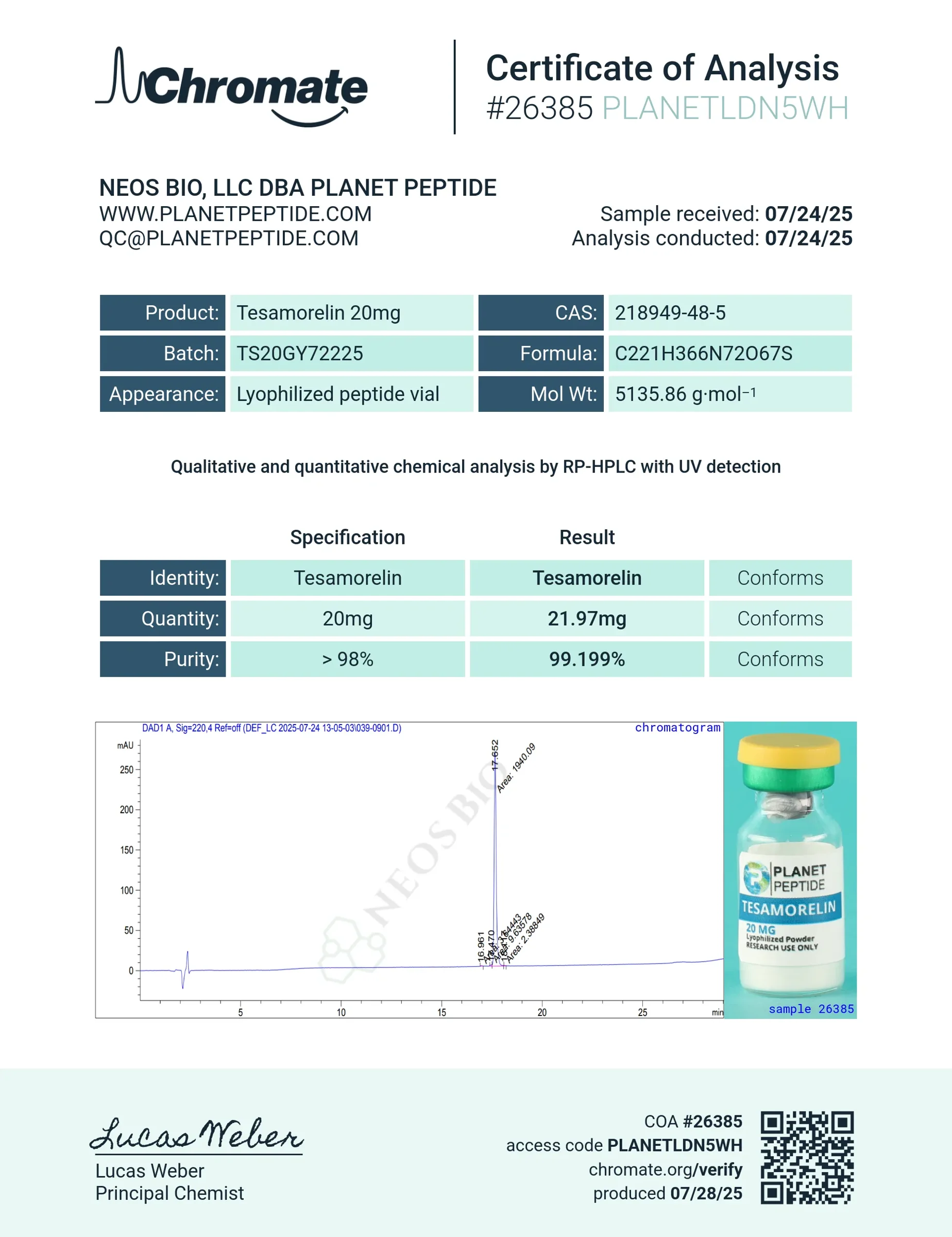
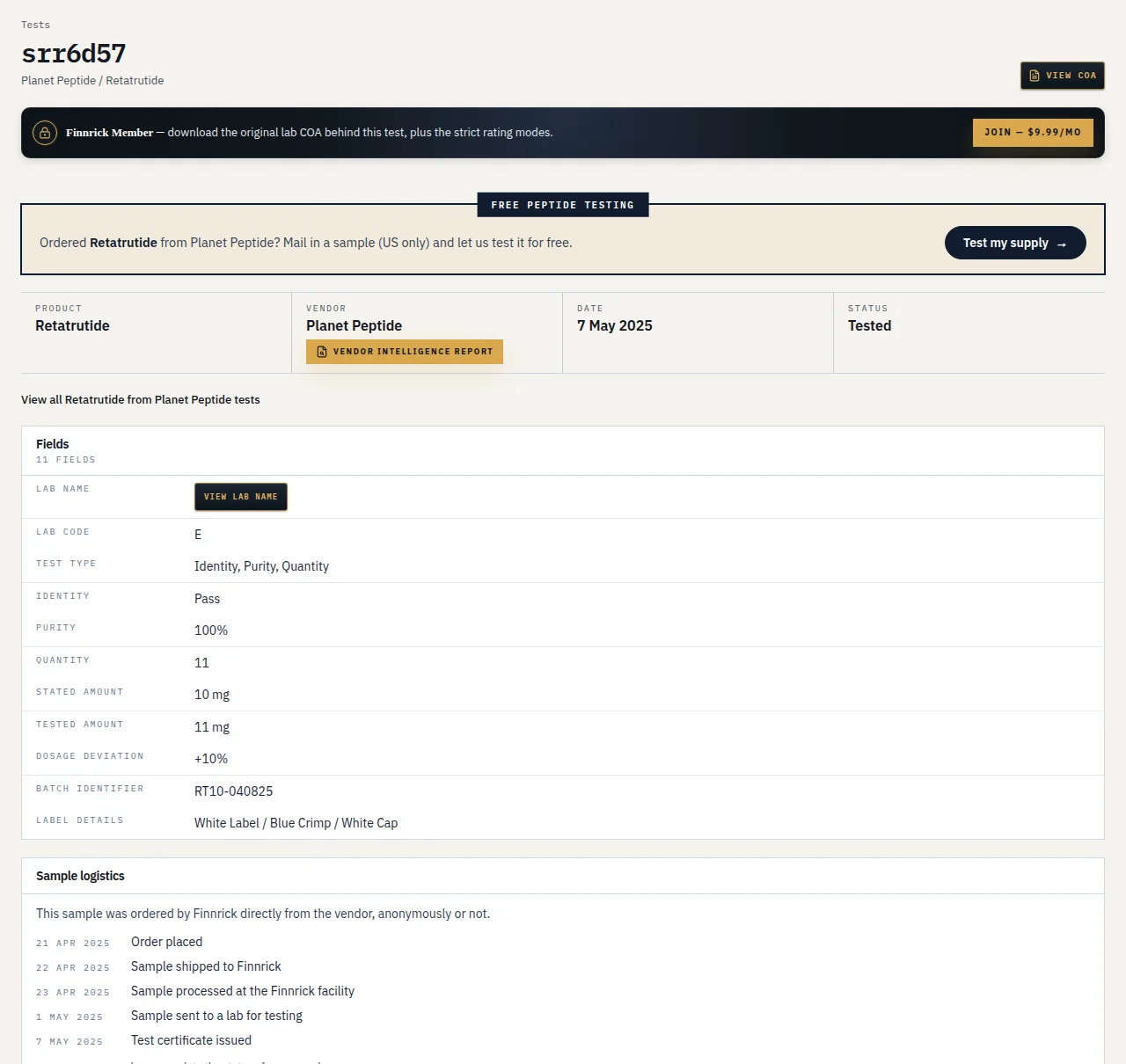
| Planet Peptide | UTHER and others | 11 of its lots use packaging that only one supplier used within four months: 5 UTHER (for example, retatrutide 10 mg with a white cap and blue crimp), plus Ln Peptides, Haikou Mingheng, Zlz and Wuhan Wansheng | Moderate | 2 of 325 | 5 of 77 (6.5%) |
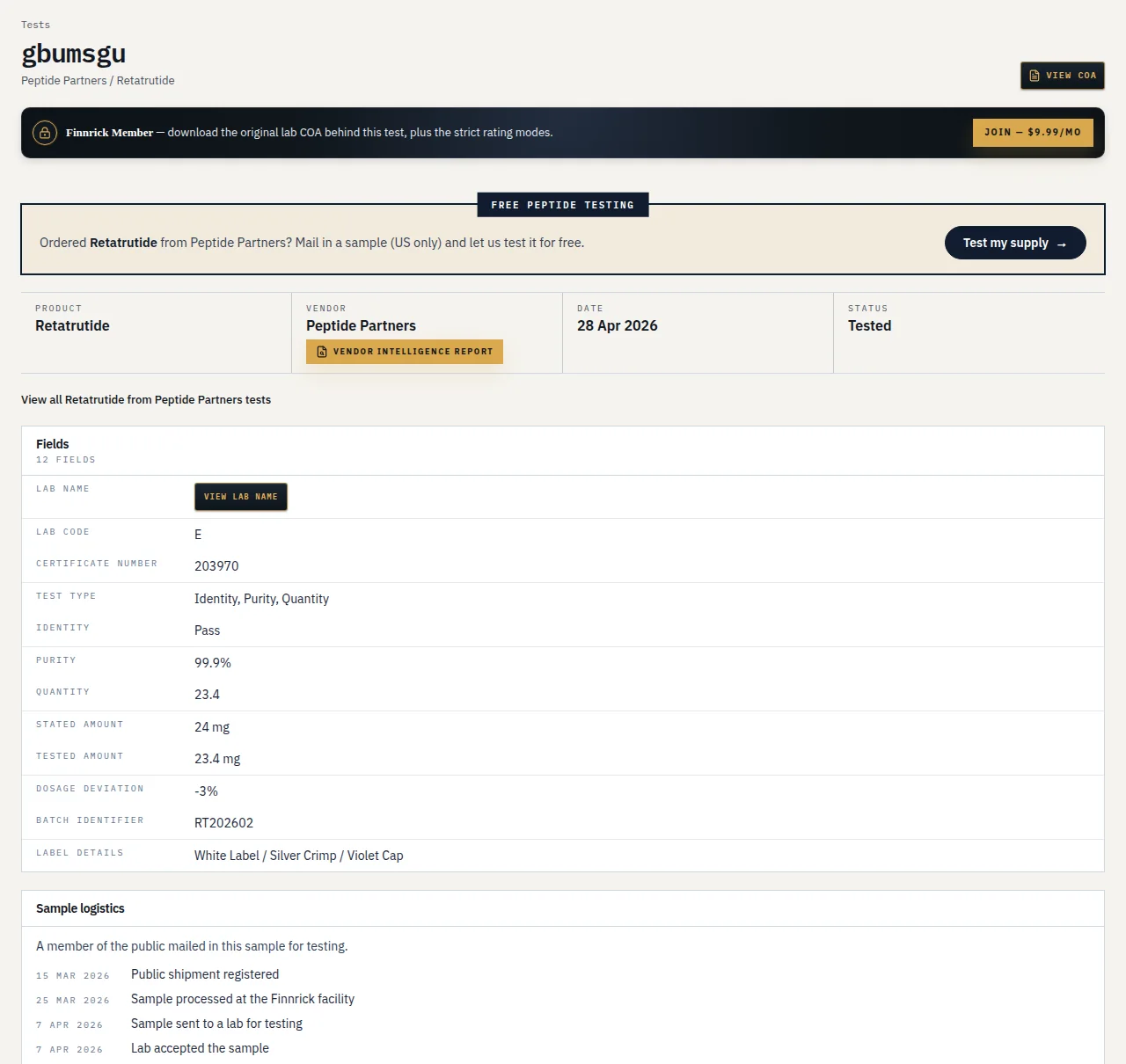
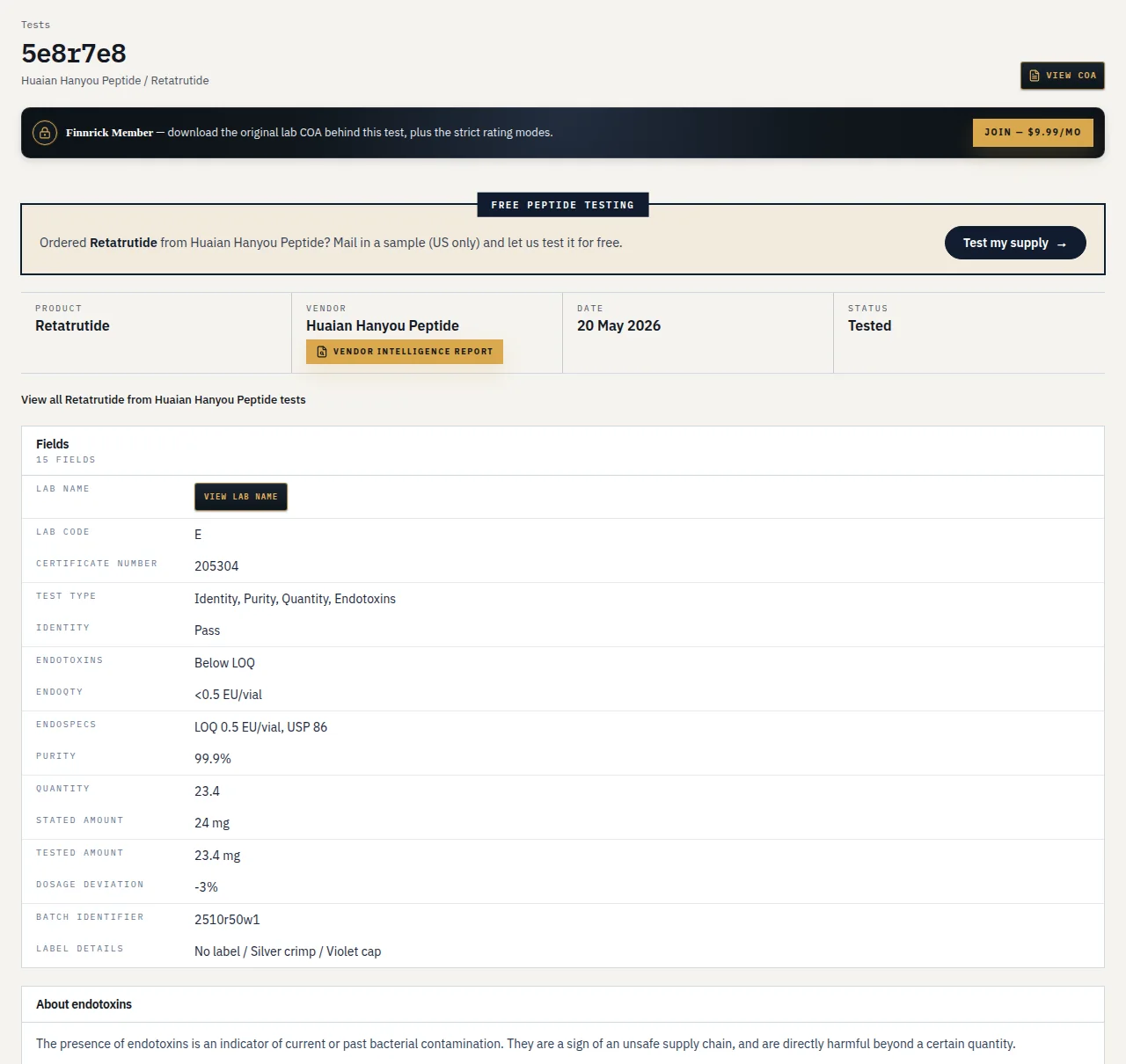
| Peptide Partners | Huaian Hanyou or Qianmiao Peptide | Retatrutide 24 mg with a violet cap and silver crimp; 23.4 mg measured against 23.4 mg for Huaian Hanyou at the same laboratory | Moderate | 0 of 13 | Huaian Hanyou 10 of 65 (15.4%) |
Own certificates are Freedom Diagnostics certificates naming the seller as client, plus Finnrick records the seller sent. Supplier rates cover each supplier’s whole customer-sent record, not only the products linked to these sellers. Levels follow the definitions above. Results reviewed September 18, 2026.
Together, these six sellers’ own certificates failed 2 of 431 times. Customer-sent vials from the suppliers they appear to use failed between 5% and 15% of the time. The sellers’ own customer-sent records are too thin to settle the comparison: Planet Peptide had 12 and Peptide Partners 85, of which 3 failed (3.5%).
Not every popular seller can be traced this way. Nexaph, the U.S. seller whose vials customers sent in most often (239 on Finnrick), ships unlabeled vials in packaging that several suppliers use, so no single supplier stands out. The U.S. clients with the most certificates, such as Peptaris (1,288) and Apex Peptides (507), mostly print their own lot numbers; Peptaris’s match no supplier lot we hold, and Apex matched one ERP code.
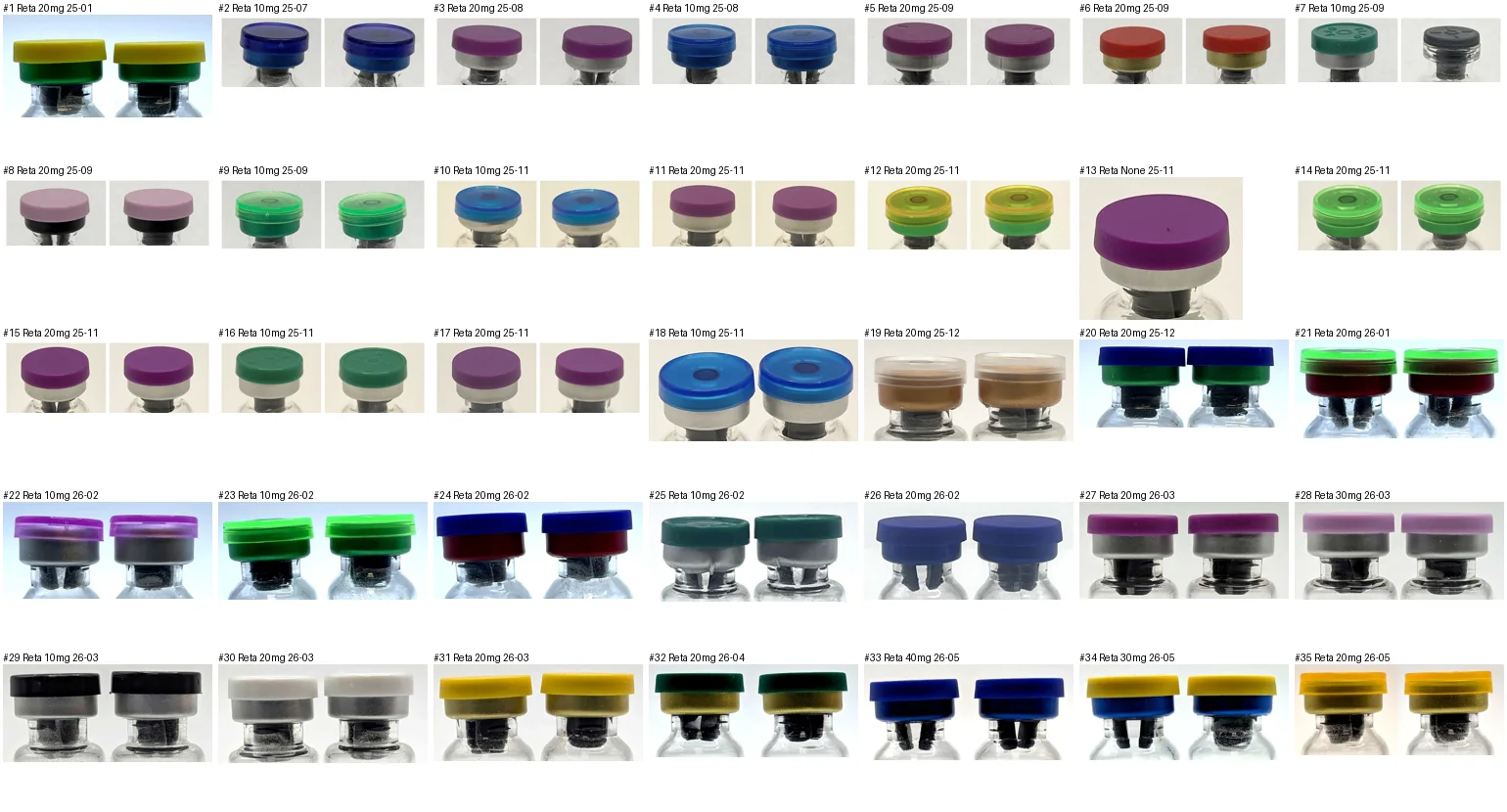
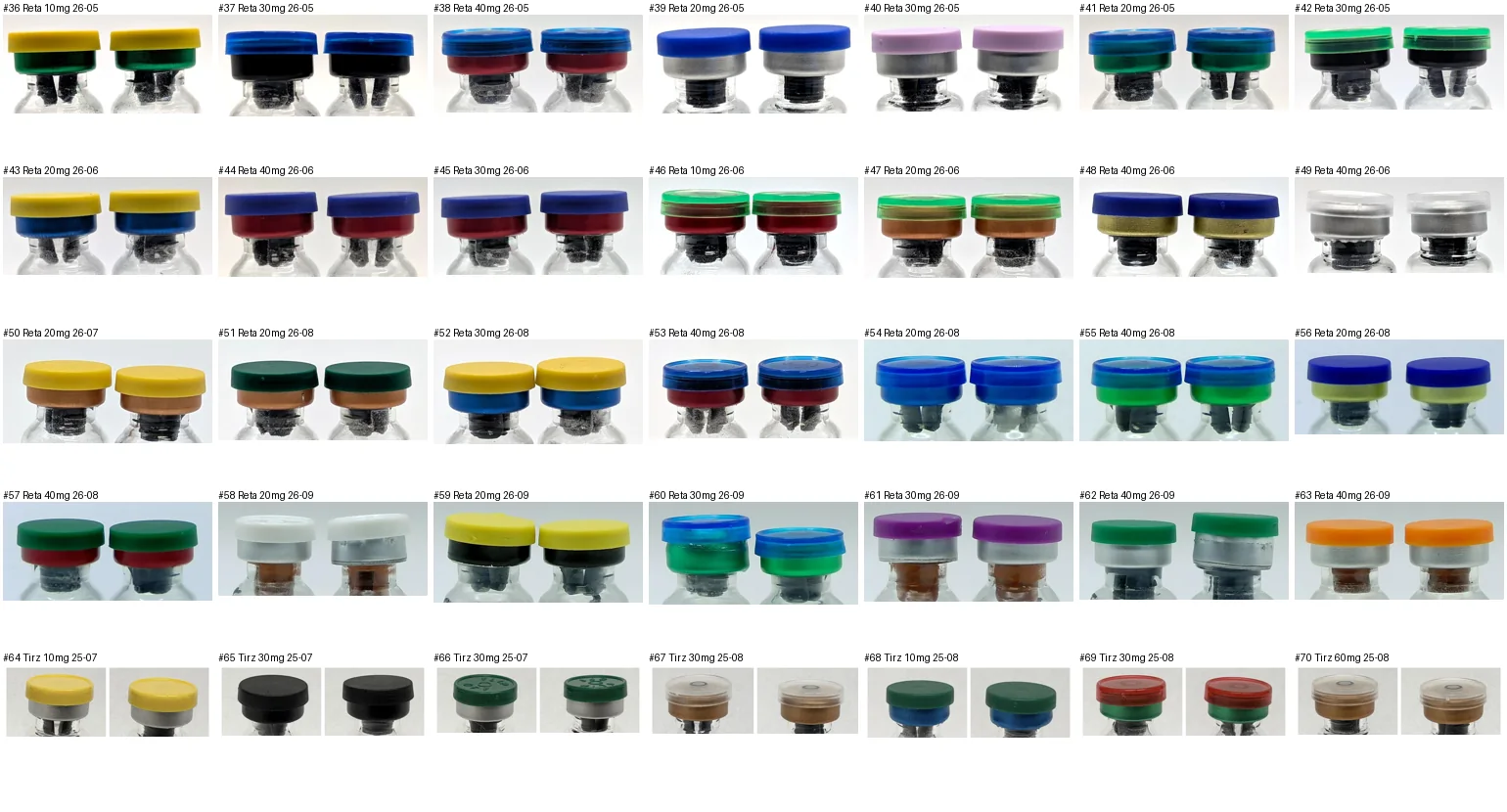
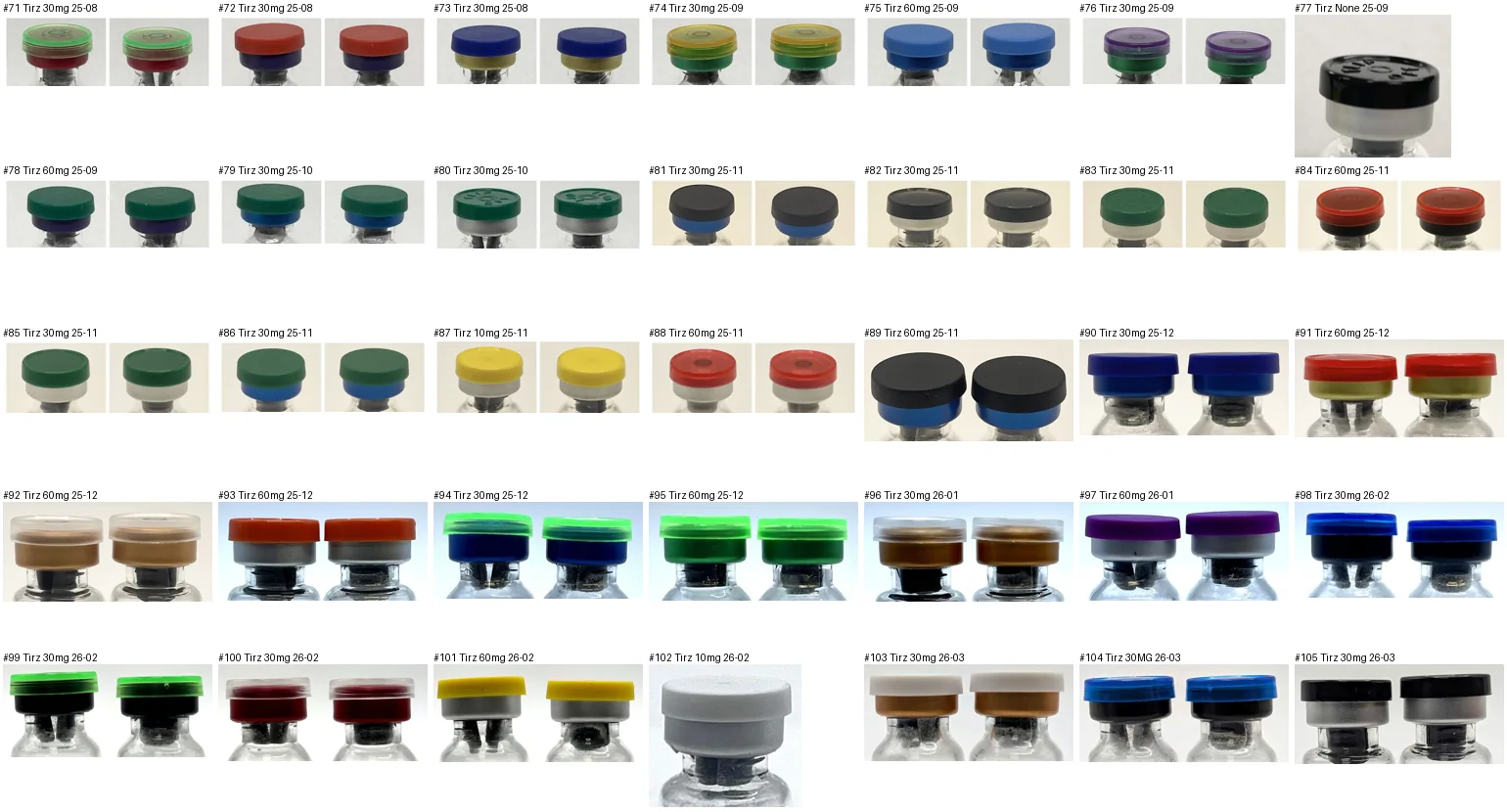
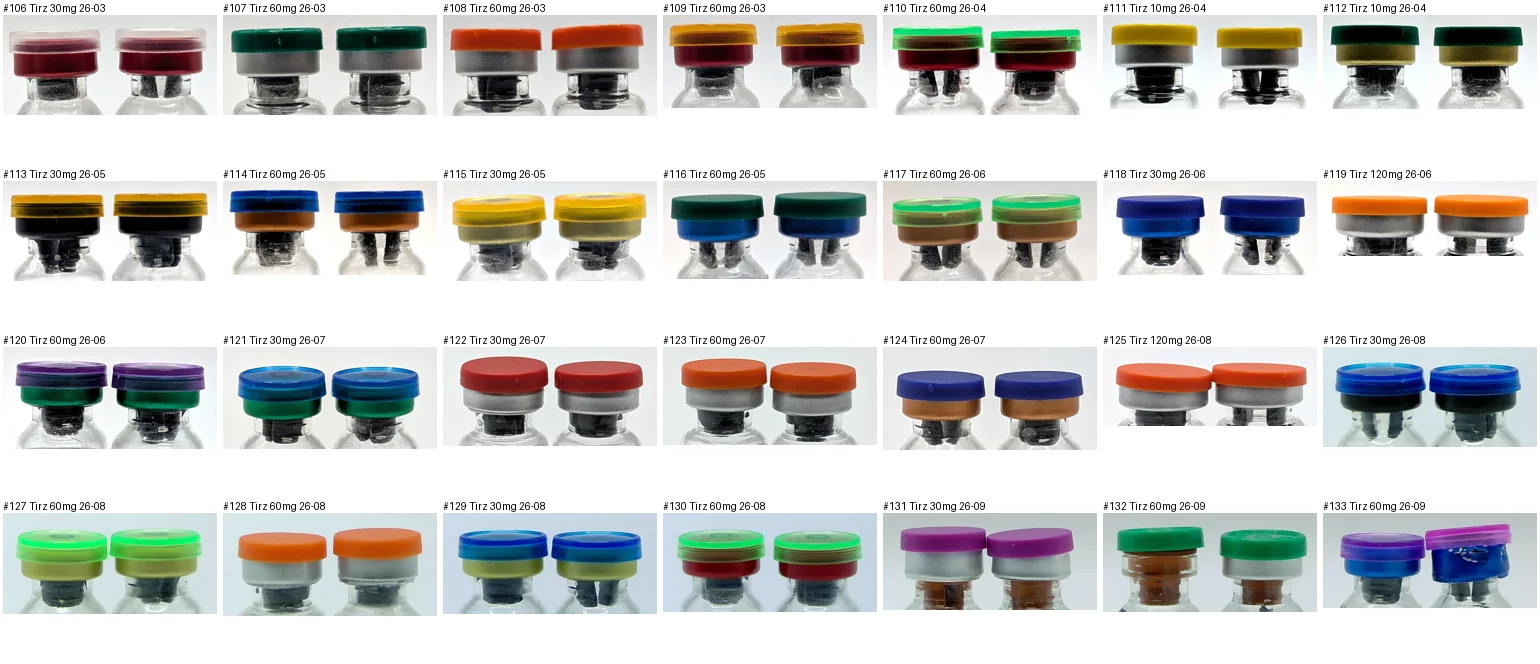
Planet Peptide also shows how widely one seller can source. Its own certificates photograph the vials, and across 133 retatrutide and tirzepatide lots from January 2025 to September 2026 we counted 75 different cap and crimp combinations. Planet’s lot numbers encode the colors: RT10-CLPR12626, for example, is a clear purple cap. The certificates’ client is Neos Bio, LLC, which trades as Planet Peptide at planetpeptide.com from Bradenton, Florida. Its storefront hosts these Freedom certificates as product images, and a Chromate certificate it hosts names the domain. A newer site, planetpeptideus.com, was registered on July 4, 2026 and re-hosts the same certificate images under the Planet name. Planet Peptide’s own site warns that “unauthorized websites and sellers” are using its brand. Buyers should check which domain they are on.
What the same vials cost
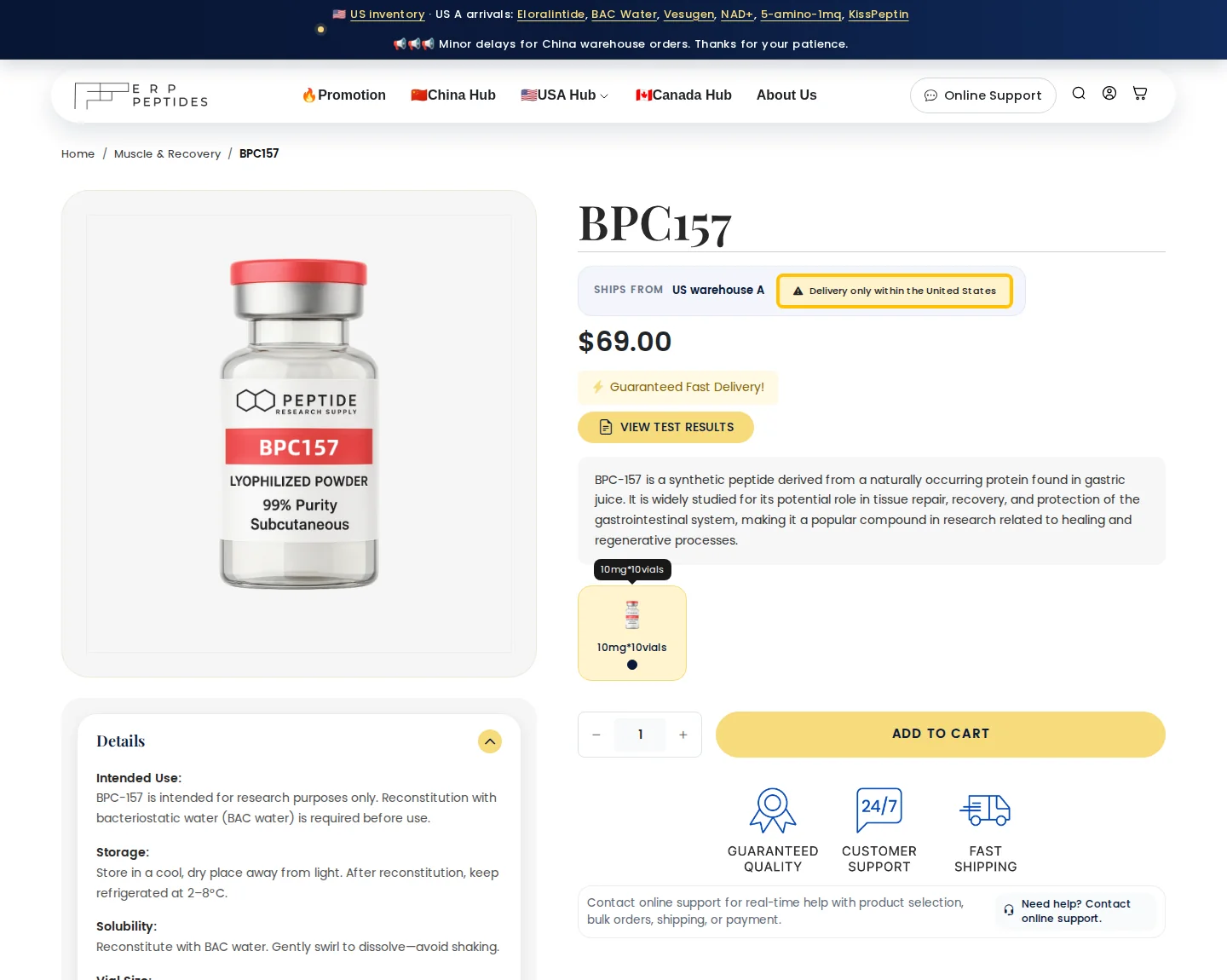
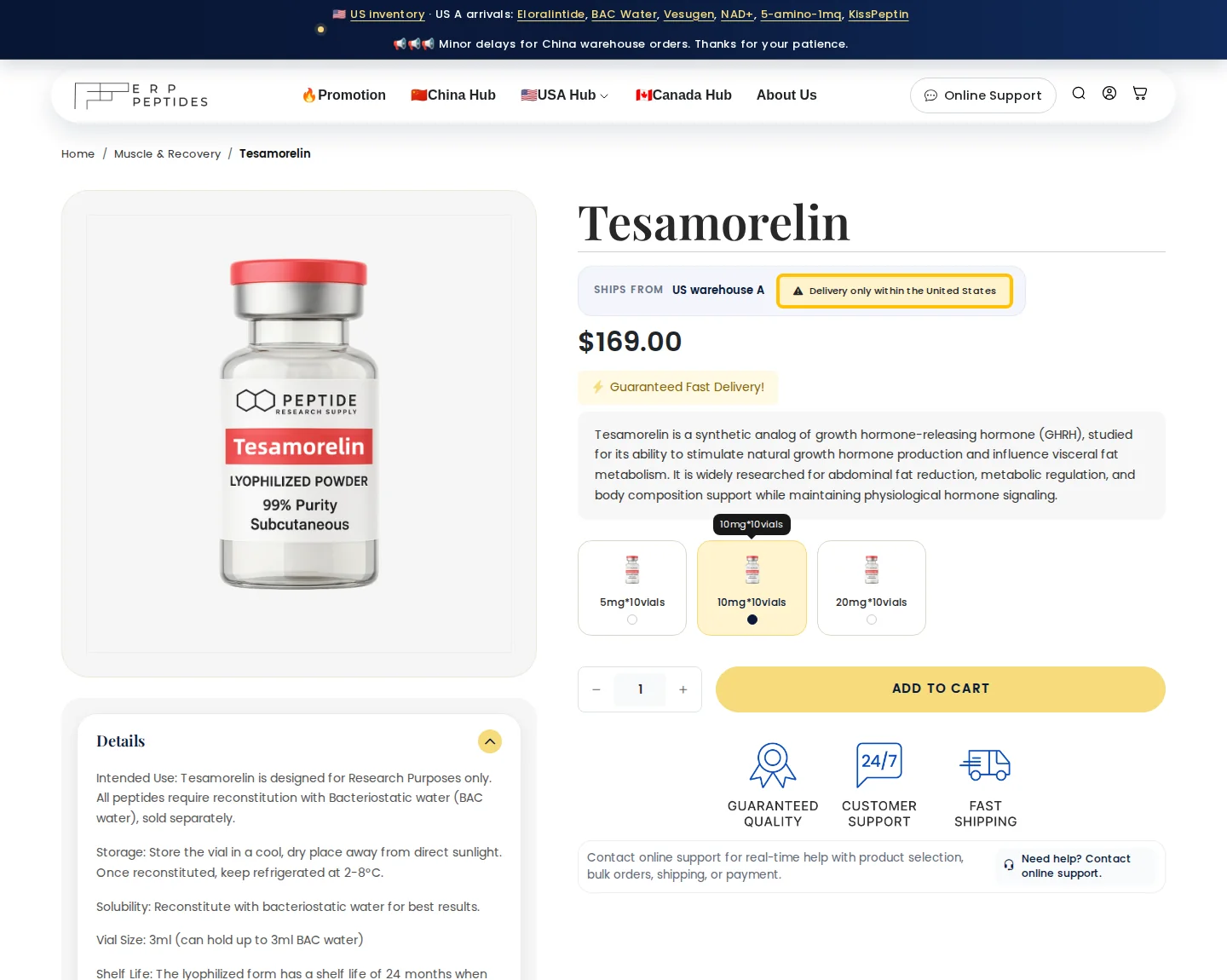
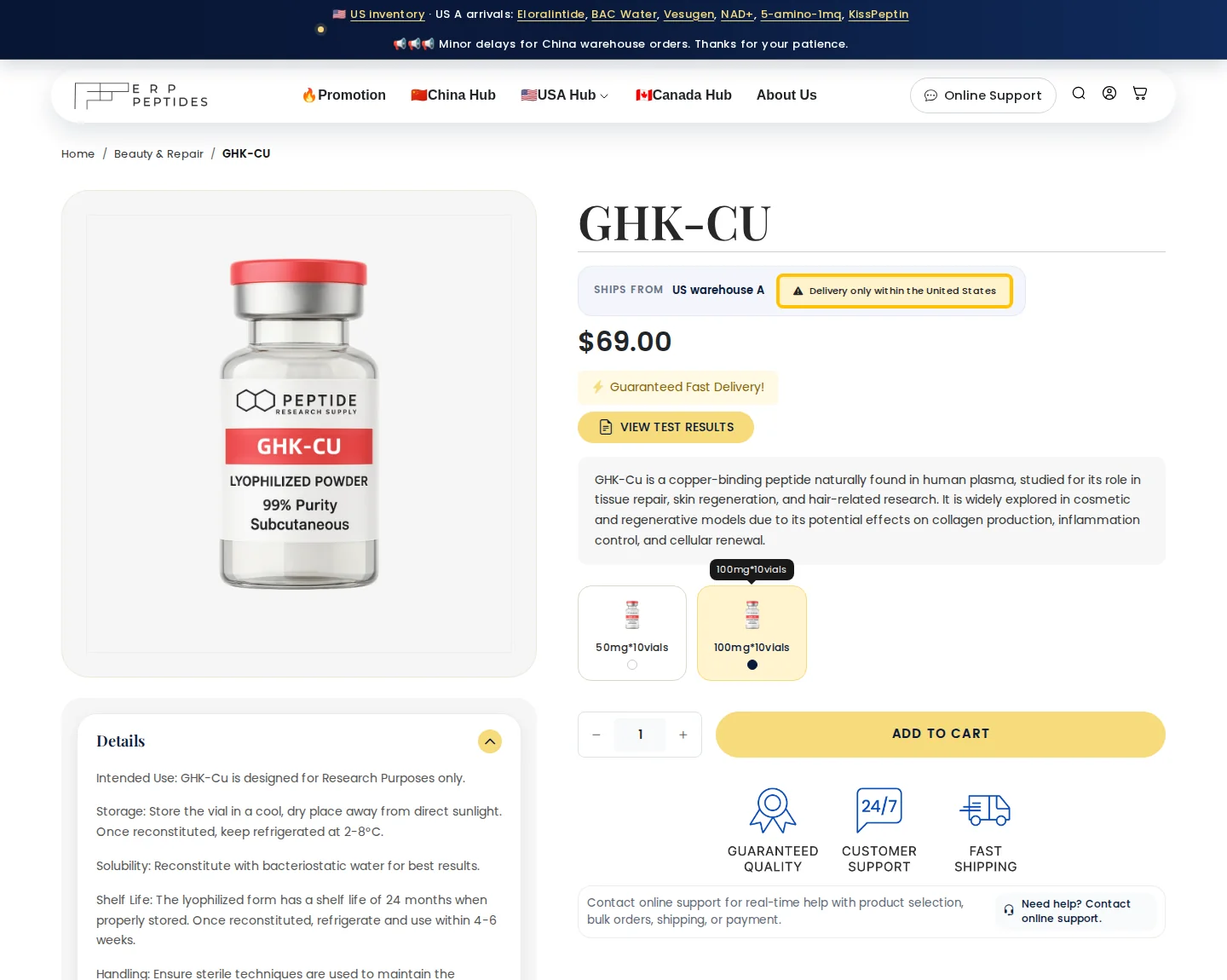
Where we could match a seller’s product to a supplier’s lot, the seller’s price per vial was 6.5 to 12.5 times the supplier’s listed price. The median across 10 products was 9.8 times. Every price below comes from a page captured on September 18, 2026, and shown further down.
| Seller (supplier) | Product | Seller’s price per vial | Supplier’s price per vial | Multiple |
|---|---|---|---|---|
| Modus Club (ERP) | BPC-157 10 mg | $54.99 | $6.90 | 8.0x |
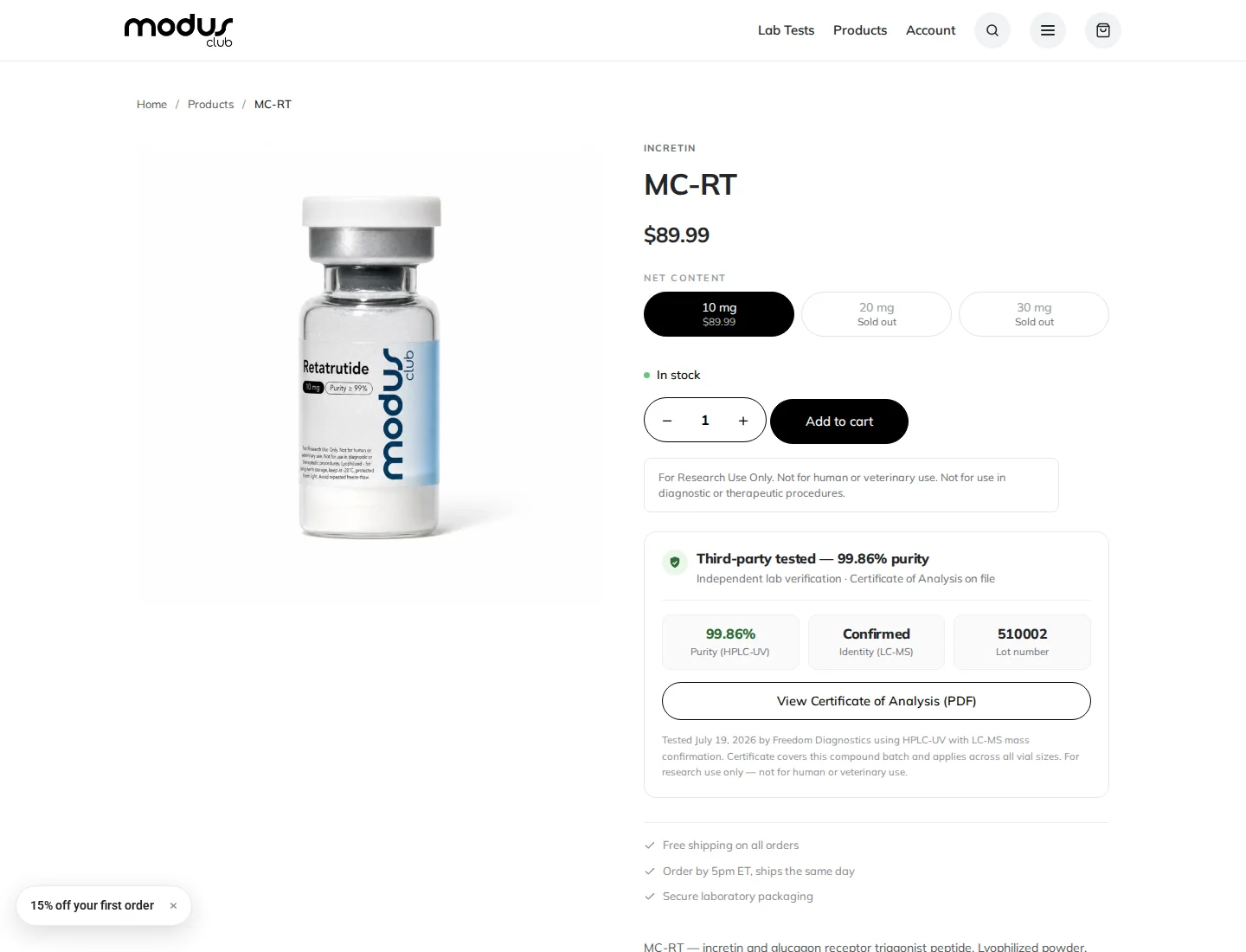
| Modus Club (ERP) | Retatrutide 10 mg, sold as “MC-RT” | $89.99 | $8.90 | 10.1x |
| Modus Club (ERP) | Tesamorelin 10 mg | $109.99 | $16.90 | 6.5x |
| Modus Club (ERP) | GHK-Cu 100 mg | $64.99 | $6.90 | 9.4x |
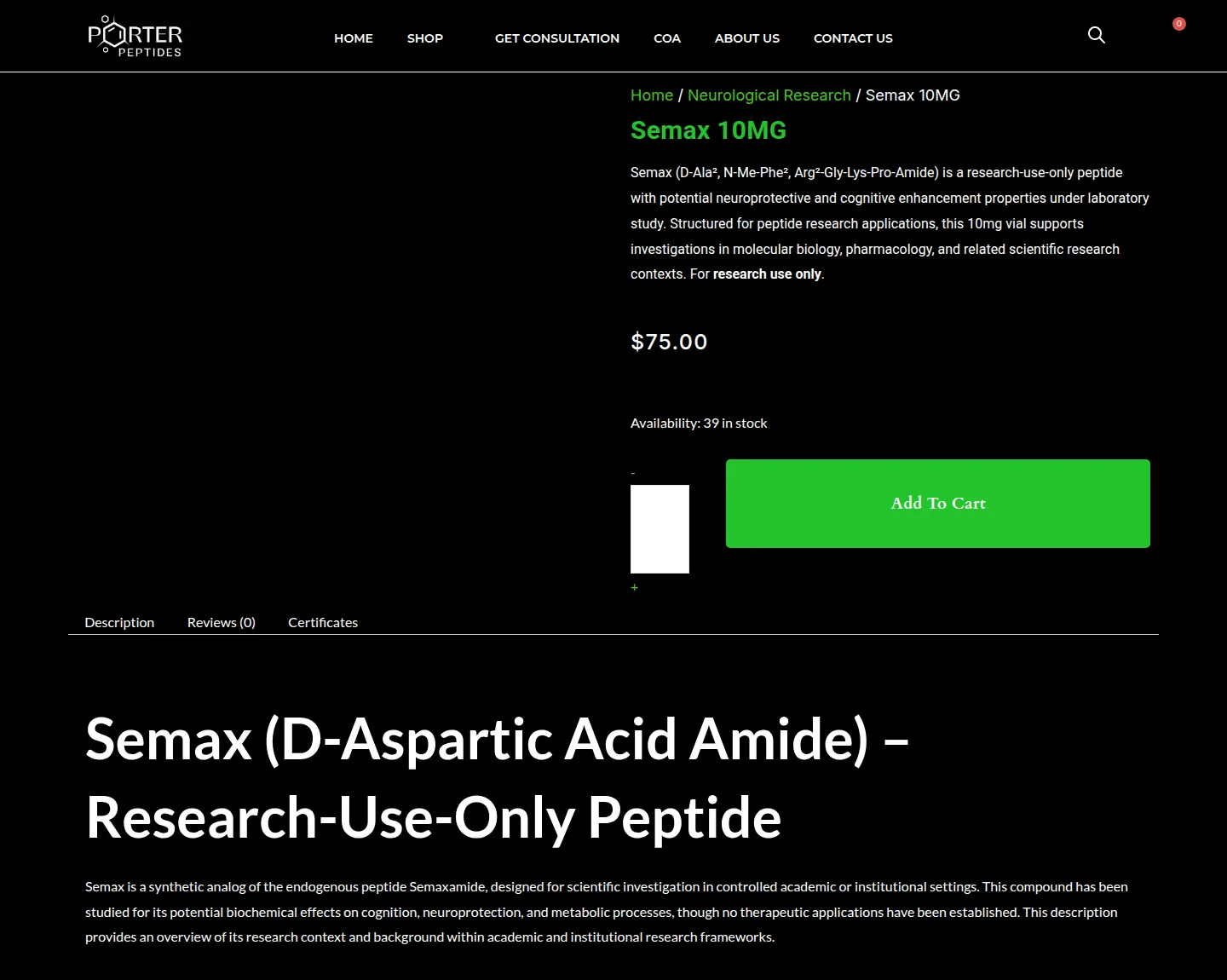
| Porter Peptides (UTHER) | Semax 10 mg | $75.00 | $6.00 | 12.5x |
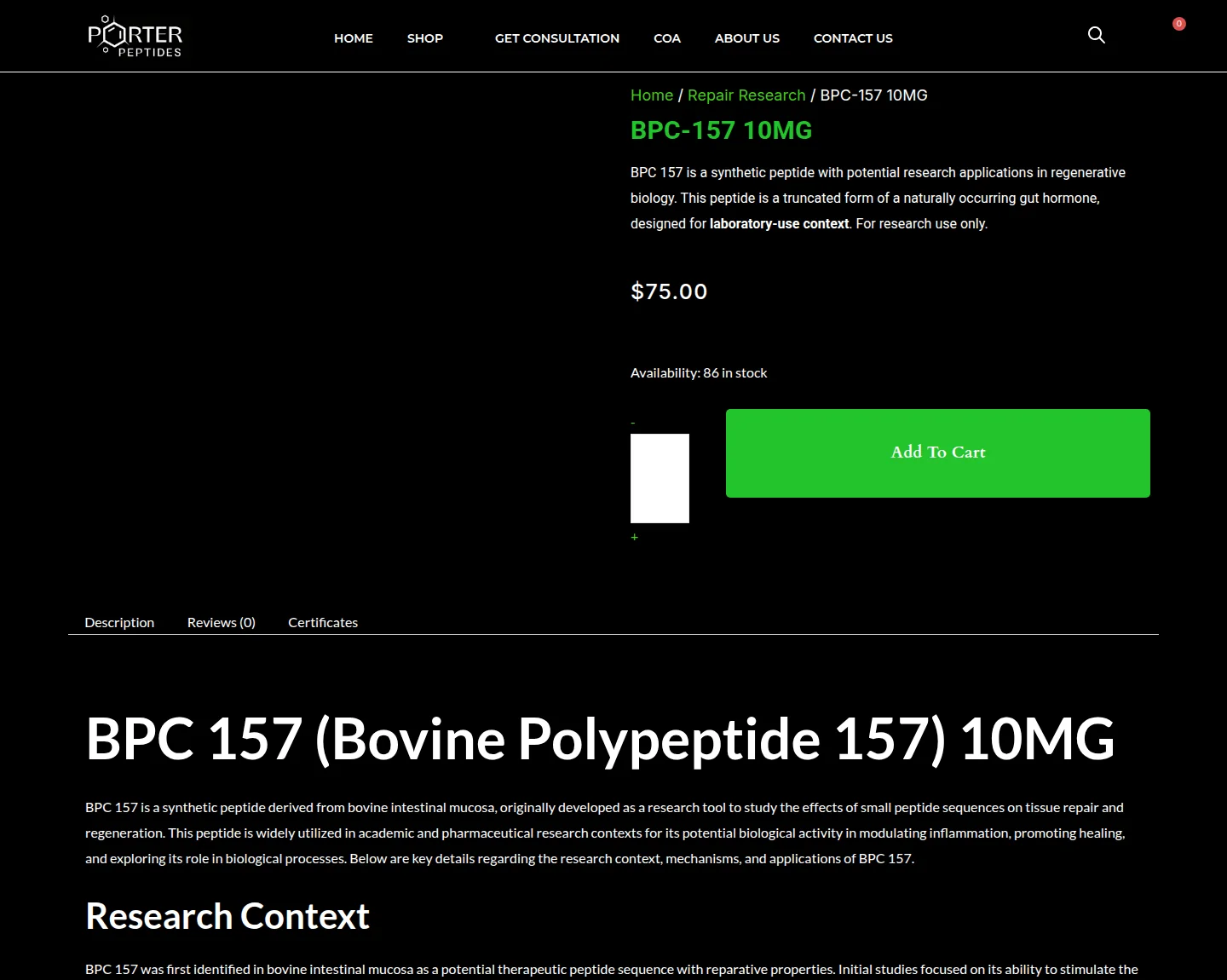
| Porter Peptides (UTHER) | BPC-157 10 mg | $75.00 | $6.50 | 11.5x |
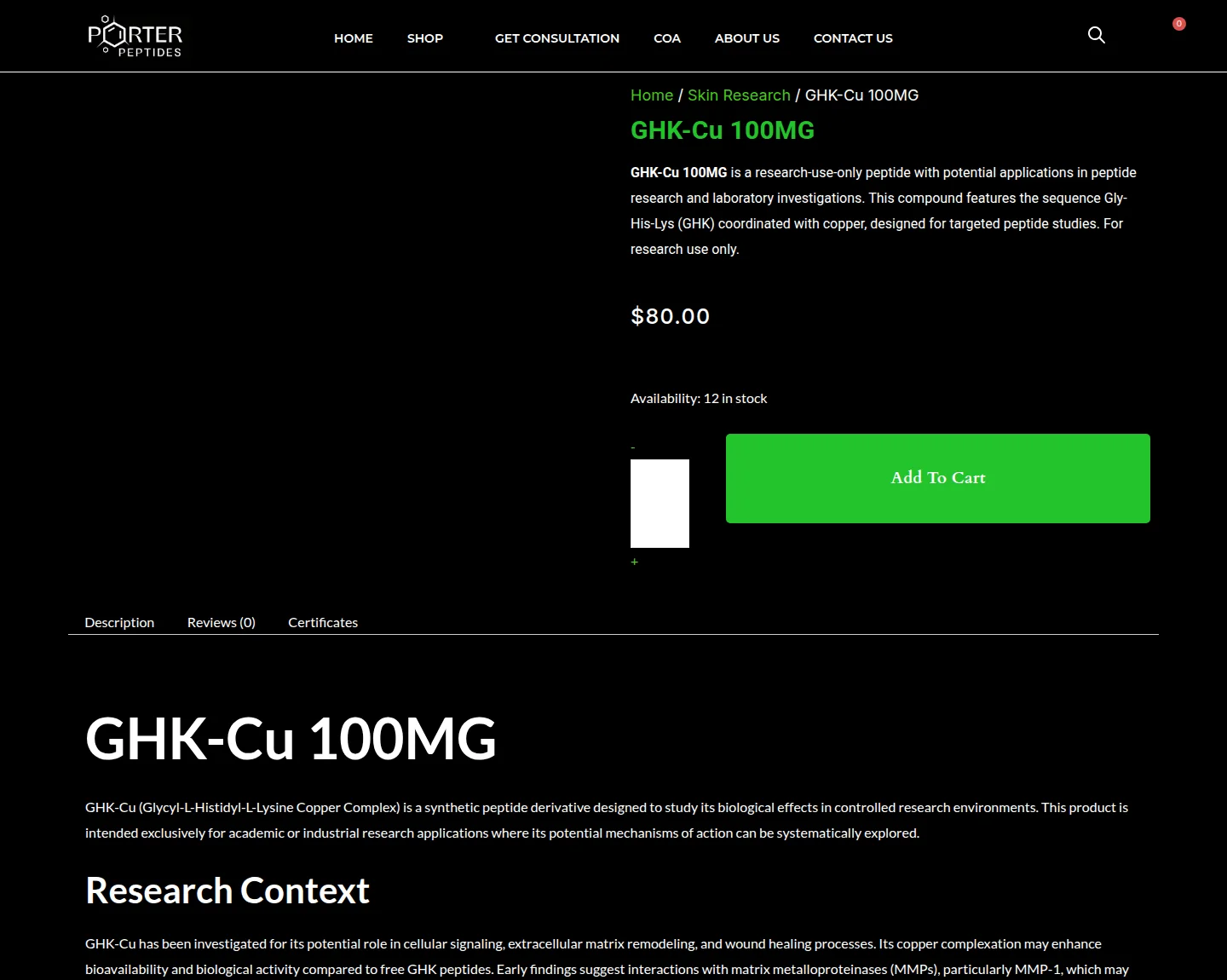
| Porter Peptides (UTHER) | GHK-Cu 100 mg | $80.00 | $7.00 | 11.4x |
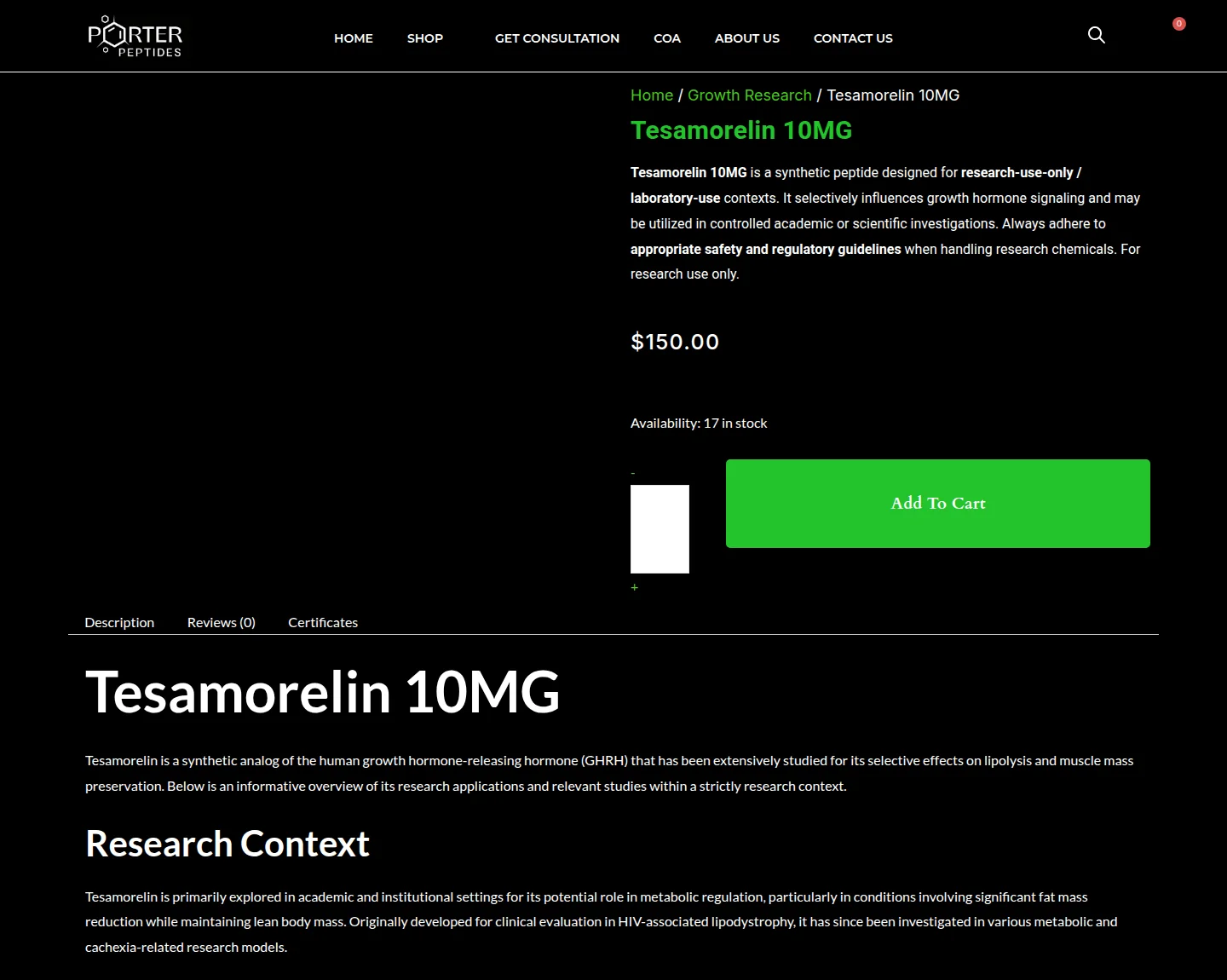
| Porter Peptides (UTHER) | Tesamorelin 10 mg | $150.00 | $14.50 | 10.3x |
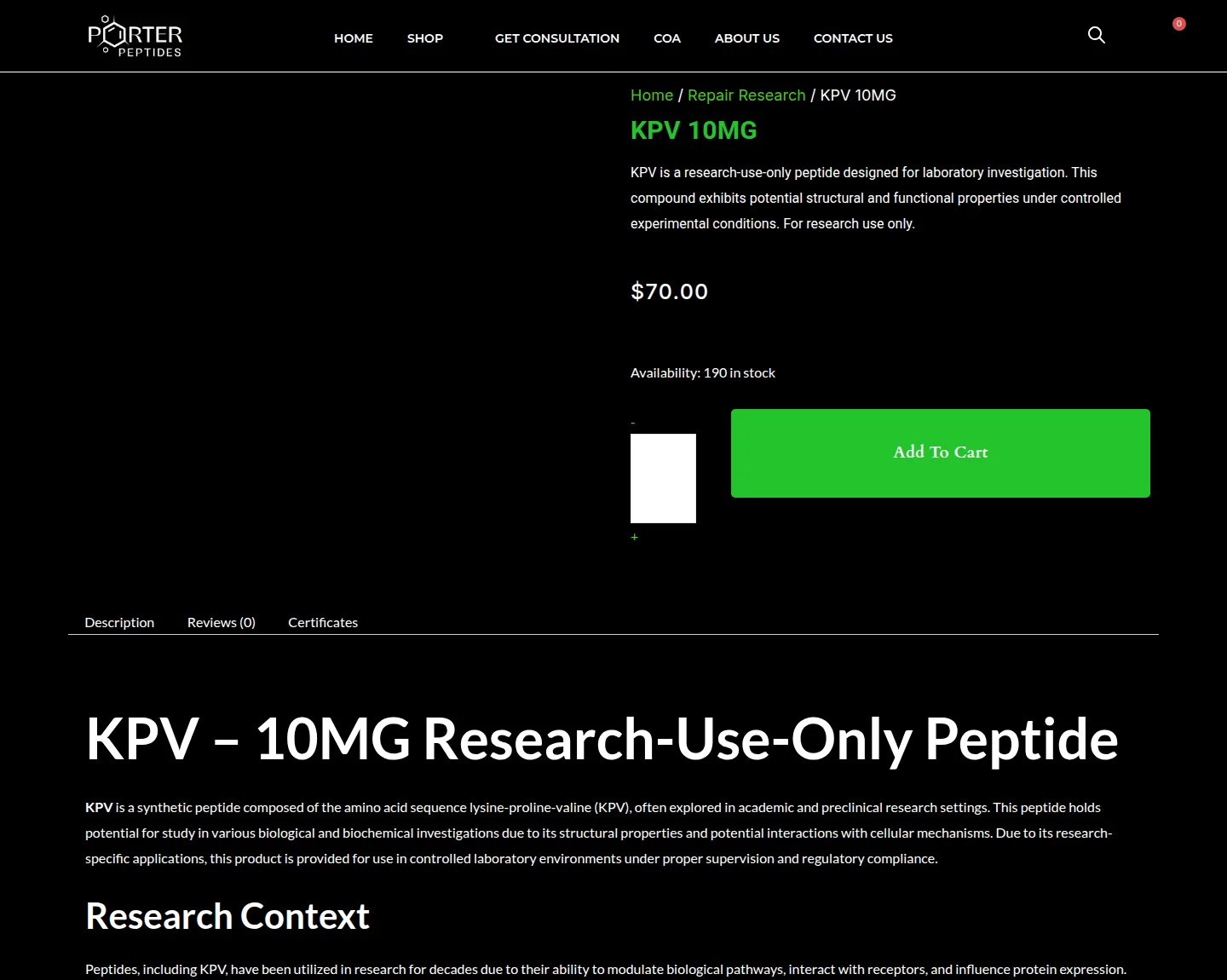
| Porter Peptides (UTHER) | KPV 10 mg | $70.00 | $8.00 | 8.8x |
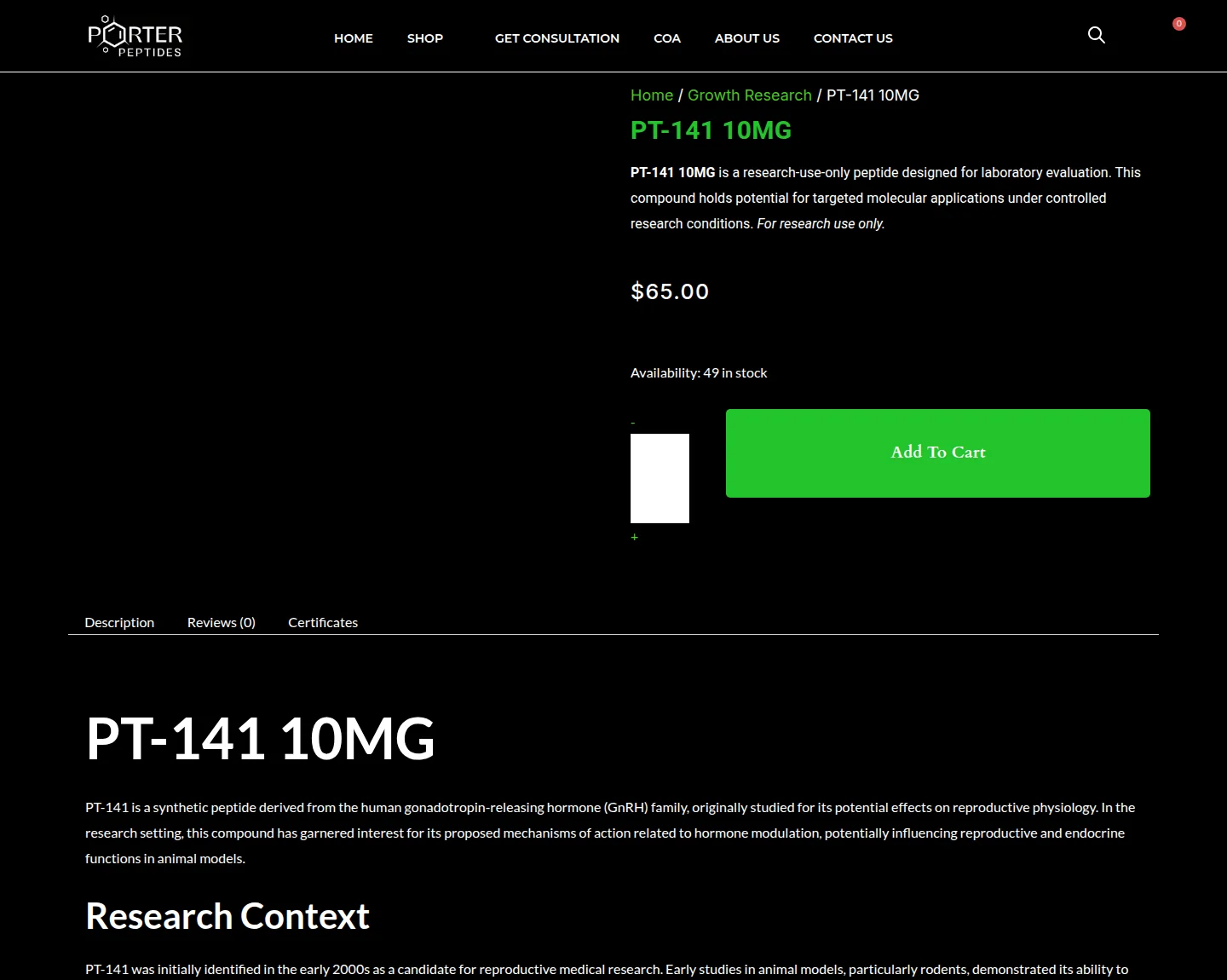
| Porter Peptides (UTHER) | PT-141 10 mg | $65.00 | $7.50 | 8.7x |
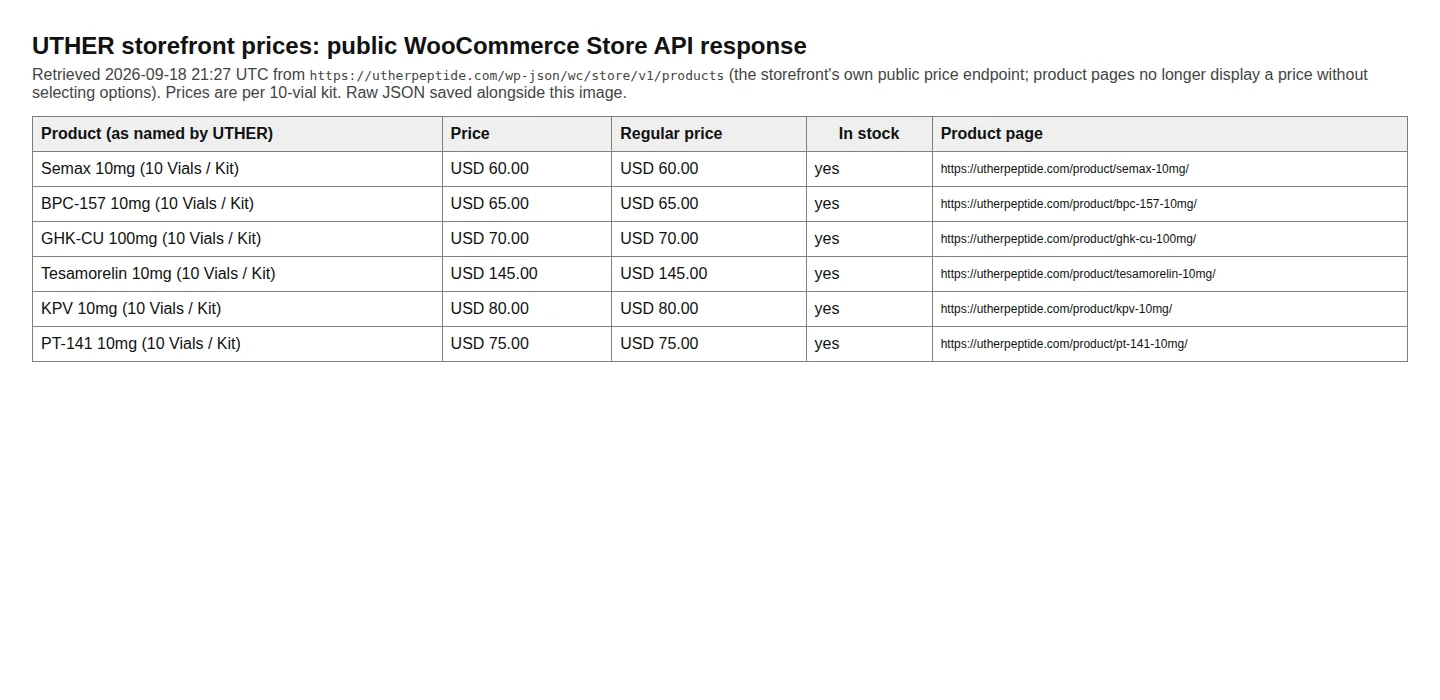
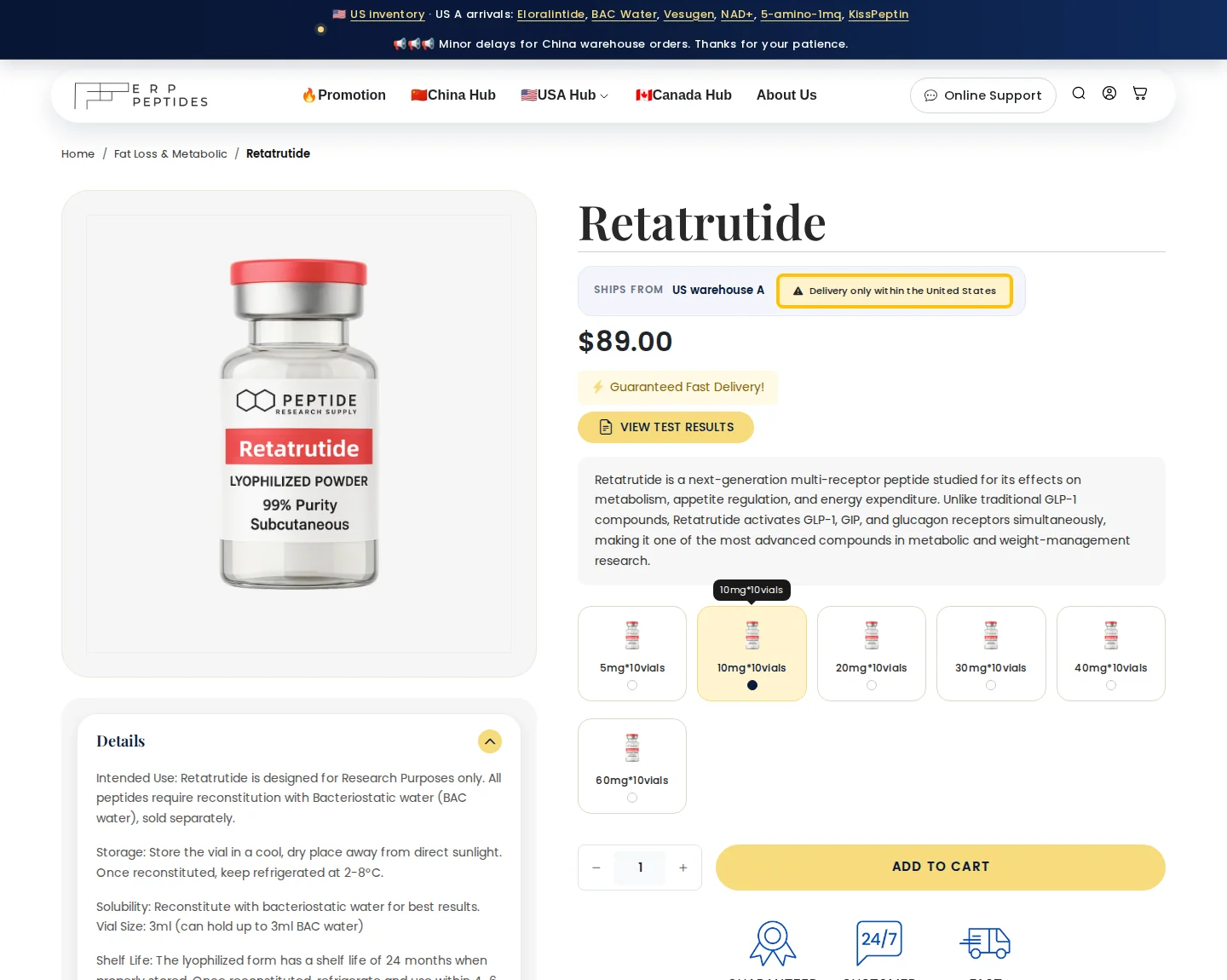
Seller prices are single-vial list prices. Supplier prices are the listed 10-vial kit price divided by 10, excluding shipping, all observed September 18, 2026.
- ERP: its storefront’s kit price with “US warehouse A” selected.
- UTHER: its storefront’s public price data; its product pages no longer show a price until an option is chosen.
- A buyer of one vial cannot get the kit price, and neither figure shows what a reseller actually paid.
For sellers with weaker links, the gap is smaller but still large:
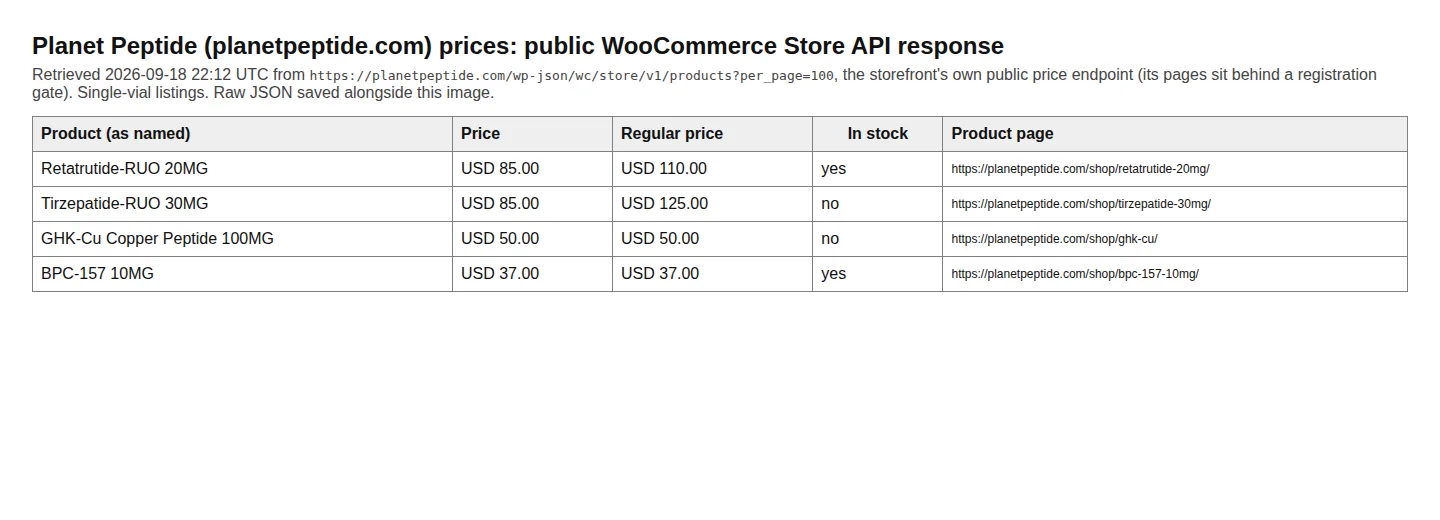
- Planet Peptide (planetpeptide.com) lists GHK-Cu 100 mg at $50 per vial, 7.1 times UTHER’s $7. It lists retatrutide 20 mg at $85 (regular price $110) and tirzepatide 30 mg at $85 (regular $125). On September 1, UTHER listed those at $30 and $22 per vial, a multiple of 2.8 and 3.9. By September 18, UTHER had removed retatrutide, tirzepatide and cagrilintide from its public storefront: the product pages return “404 - Page Not Found” and its price data no longer lists them.
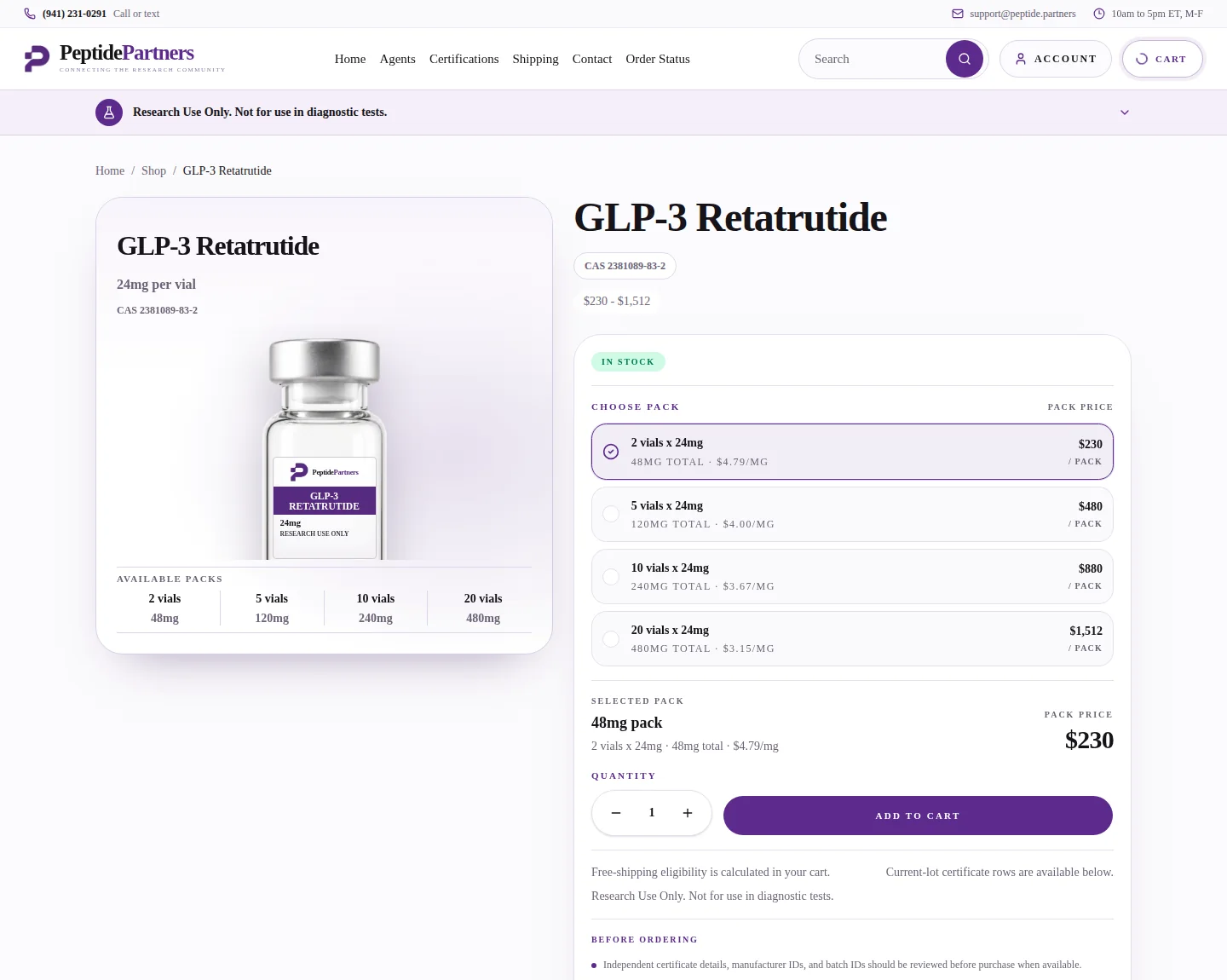
- Peptide Partners sells retatrutide 24 mg in packs of 2 to 20 vials at $75.60 to $115 per vial, or $3.15 to $4.79 per milligram. We hold no price for Huaian Hanyou. ERP and UTHER list retatrutide 30 mg at $0.66 and $1.23 per milligram.
- CertifiedPEPS shows prices only to logged-in customers, and we could not confirm QNTM Research’s storefront, so neither is priced here.
What the two records show
The table compares what these sellers publish with what customer testing found.
| Supplier | U.S. clients linked by code | Those clients’ own certificates that failed | Customer-sent vials of the supplier’s product that failed | Customer-sent vials from those U.S. clients that failed |
|---|---|---|---|---|
| UTHER | 19 | 3 of 695 (0.4%) | 5 of 77 (6.5%) | 3 of 40 (7.5%) |
| ERP (and WBS) | 12 | 8 of 513 (1.6%) | 9 of 166 (5.4%) | 0 of 1 |
Failure means the laboratory found the wrong substance or purity below 98%. Clients’ own certificates cover all their products, not only products linked by code. Customer-sent vials are Finnrick records whose sender is “Public”. Results reviewed September 18, 2026.
For most shared codes, customer testing of the supplier’s product also passed. Of 12 customer-sent tests of ERP and WBS retatrutide 510002, for example, 11 read 99.6% or higher; the twelfth has no purity result. A matching code is not evidence of a problem. The difference is in what each record contains: the U.S. clients’ records consist almost entirely of vials they chose, while the suppliers’ records are mostly vials customers sent in.
When the two records disagree: BPC-157 990007
ERP’s BPC-157 10 mg code 990007 shows what a seller-commissioned record can miss.
| Who sent the vial | Ordered or received | Laboratory | Result |
|---|---|---|---|
| Customer (WBS vial) | Ordered Feb 28, 2026 | BTLabs | 99.8% |
| Chained Aminos | Received Apr 28 | Freedom Diagnostics | 99.34% |
| Customer (ERP vial) | Ordered May 7 | Krause Analytical | 99.5% |
| Customer (WBS vial) | Ordered May 20 | Krause Analytical | 99.6% |
| Customer (WBS vial) | Ordered Jun 18 | Krause Analytical | 81.5% |
| Modus Club | Received Jul 16 | Freedom Diagnostics | 99.38% |
| Customer (ERP vial) | Ordered Jul 19 | Krause Analytical | 81.9% |
| Customer (ERP vial) | Ordered Aug 3 | BTLabs | Wrong substance |
| CertifiedPeps LLC | Received Sep 8 | Freedom Diagnostics | 99.16% |
Dates are the customer’s order date recorded by Finnrick, or the date the laboratory received a seller’s sample. A fourth seller-commissioned certificate for the same code, from a client named “R&D, manufacturing and trade integration,” read 99.22% (received Aug 24).
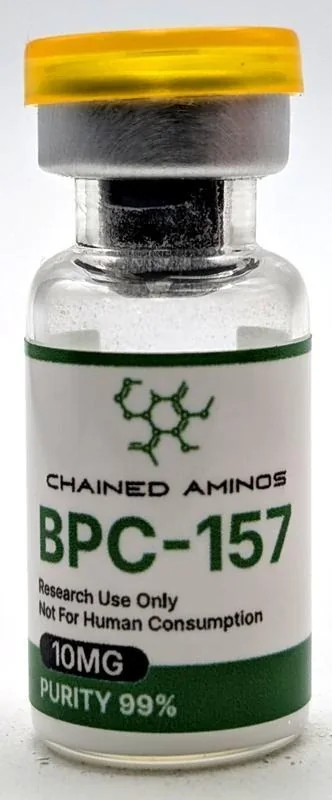
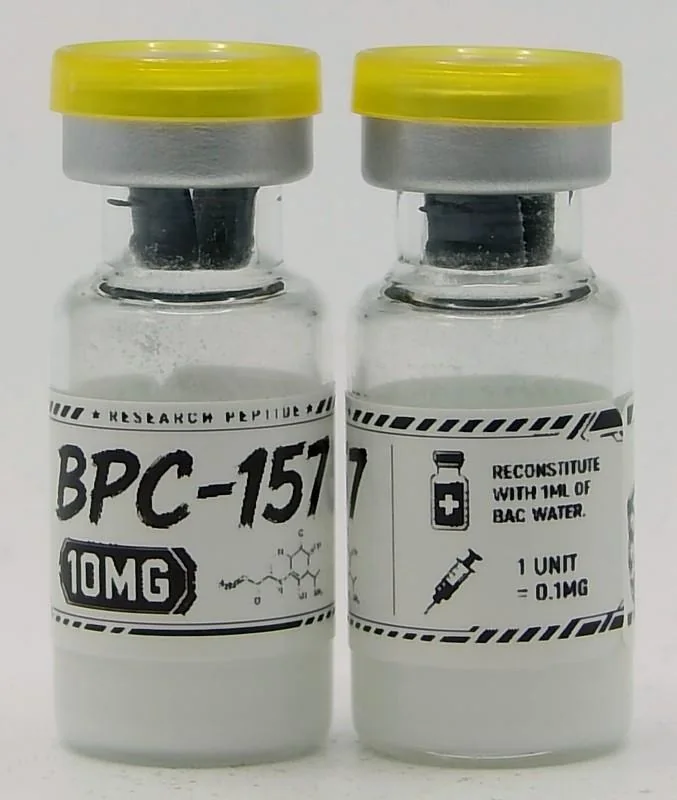
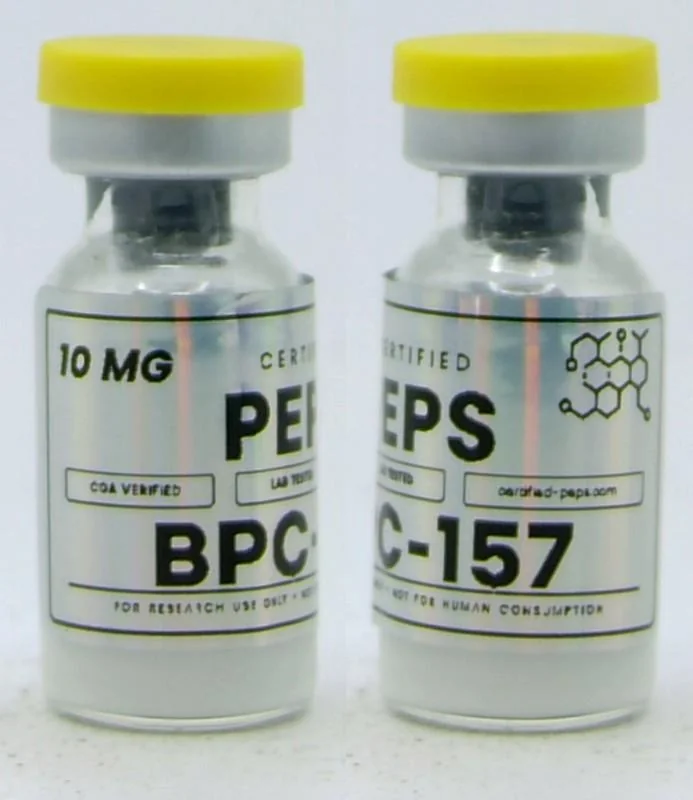
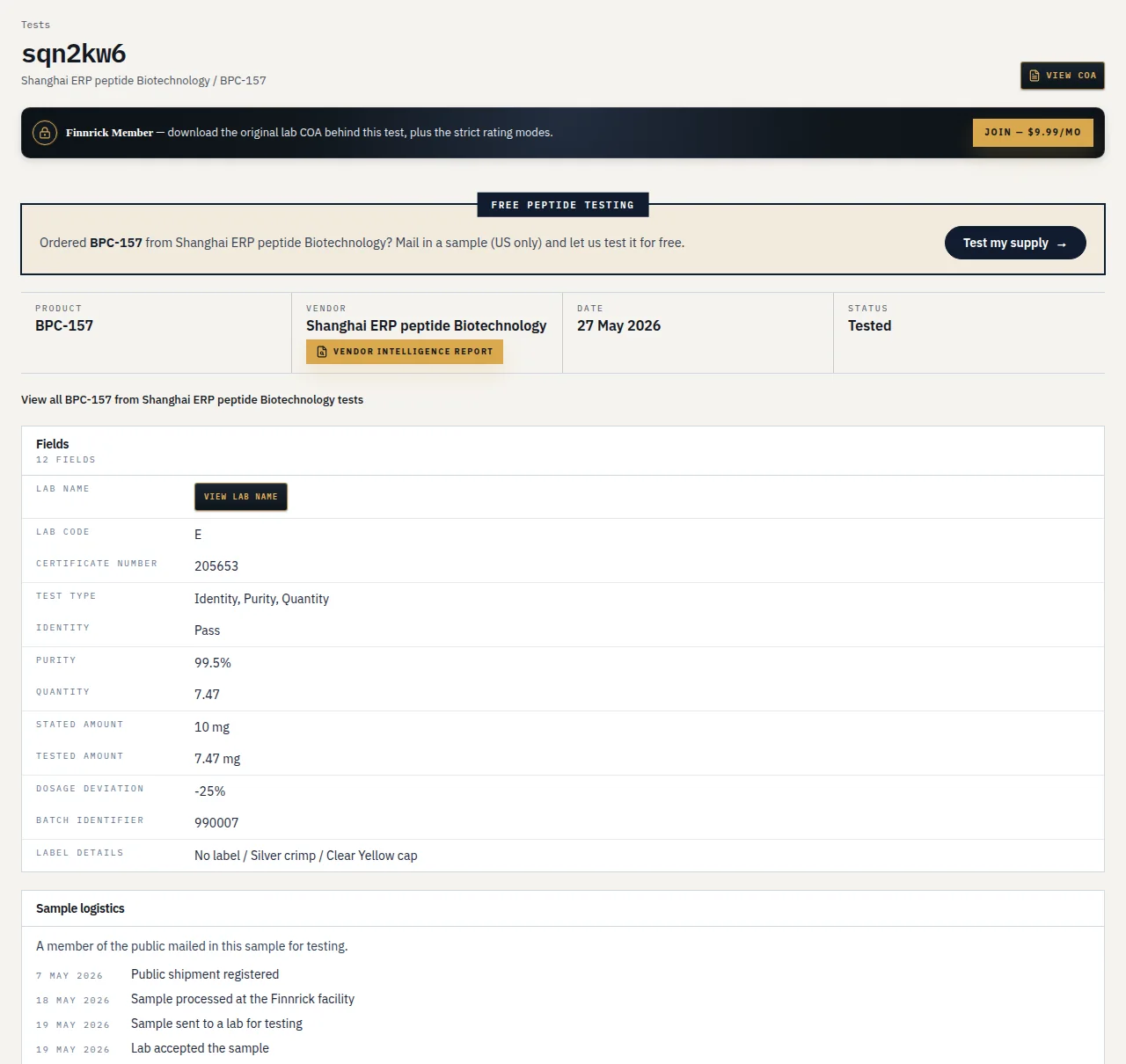
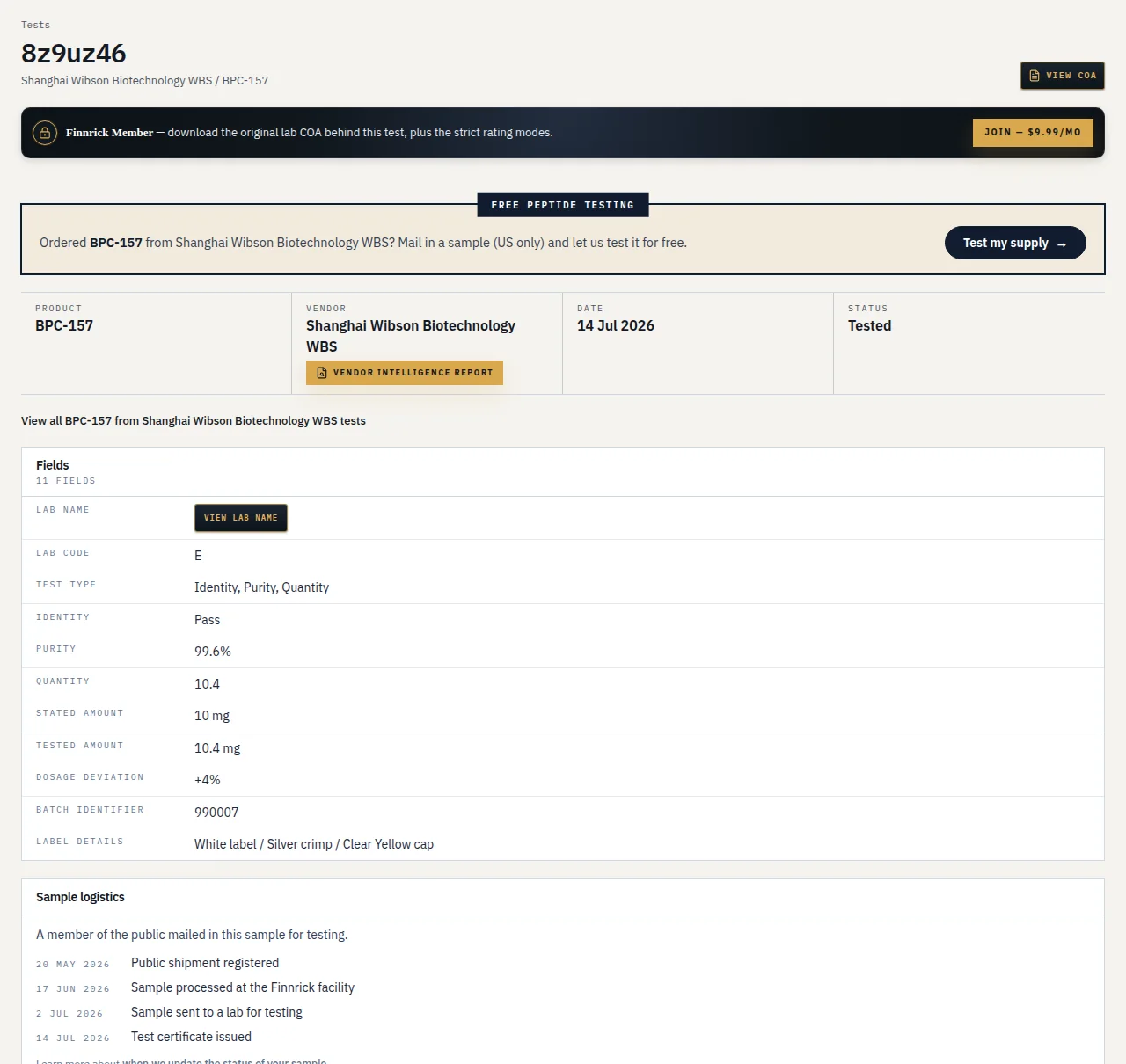
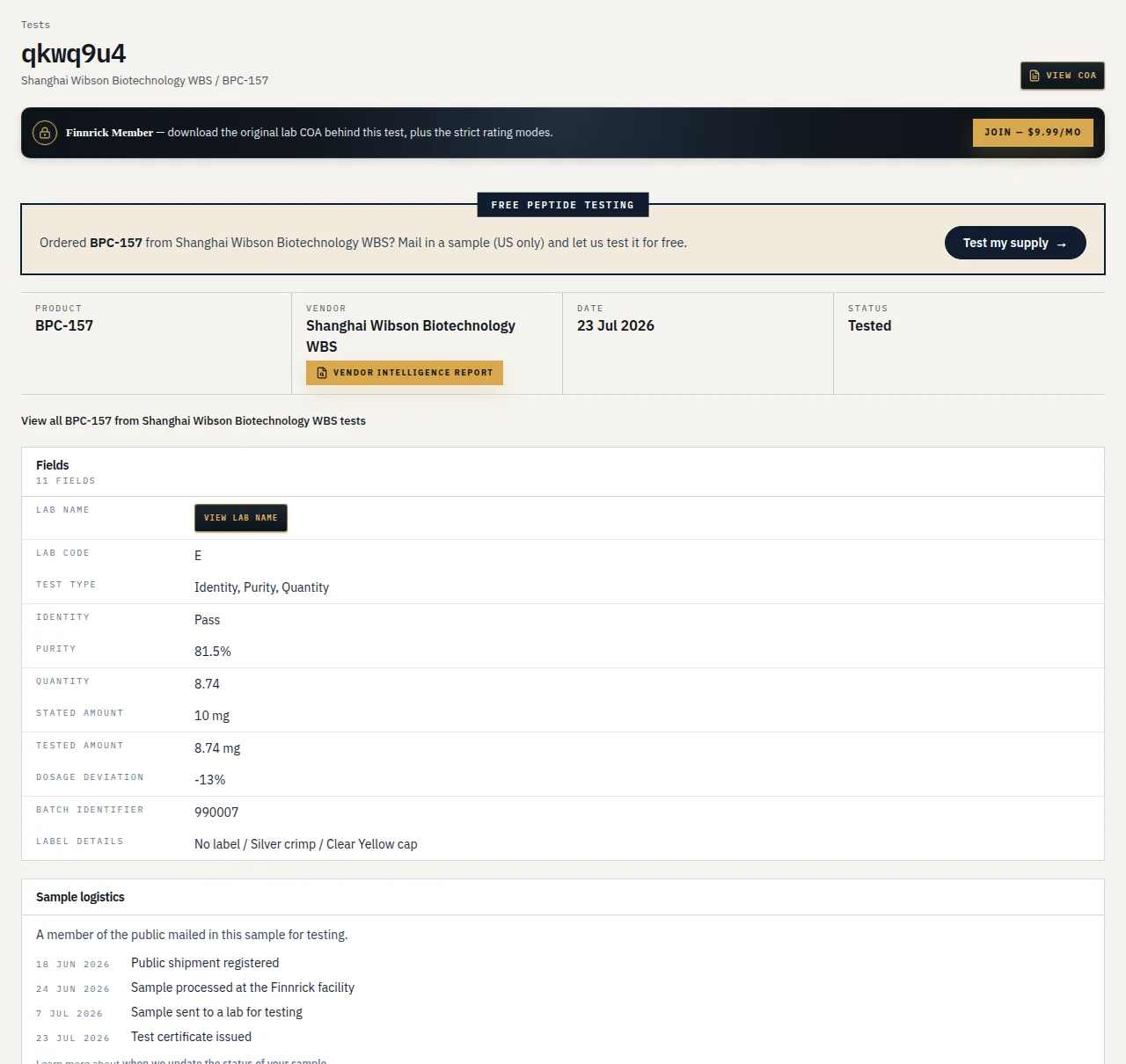
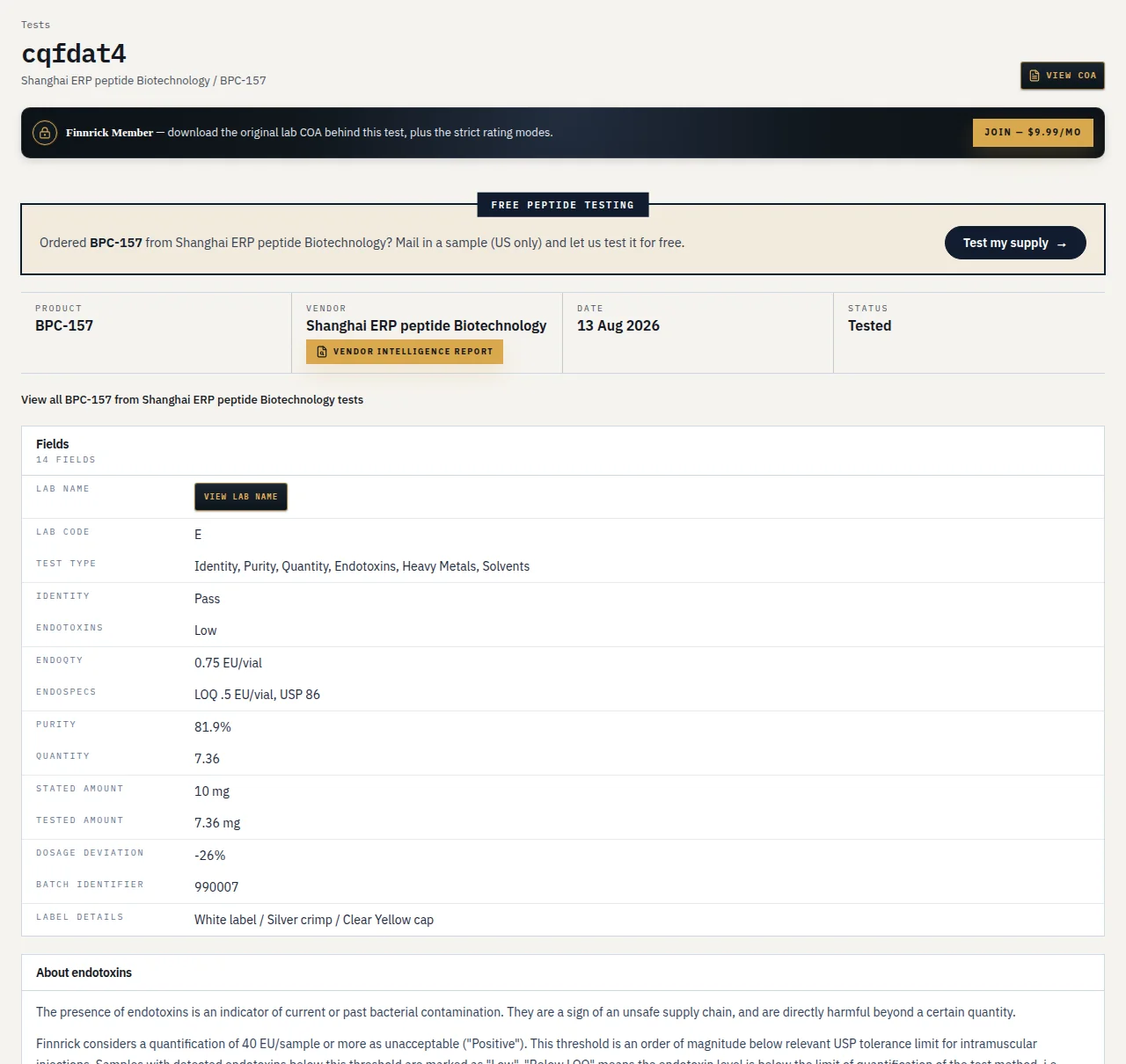
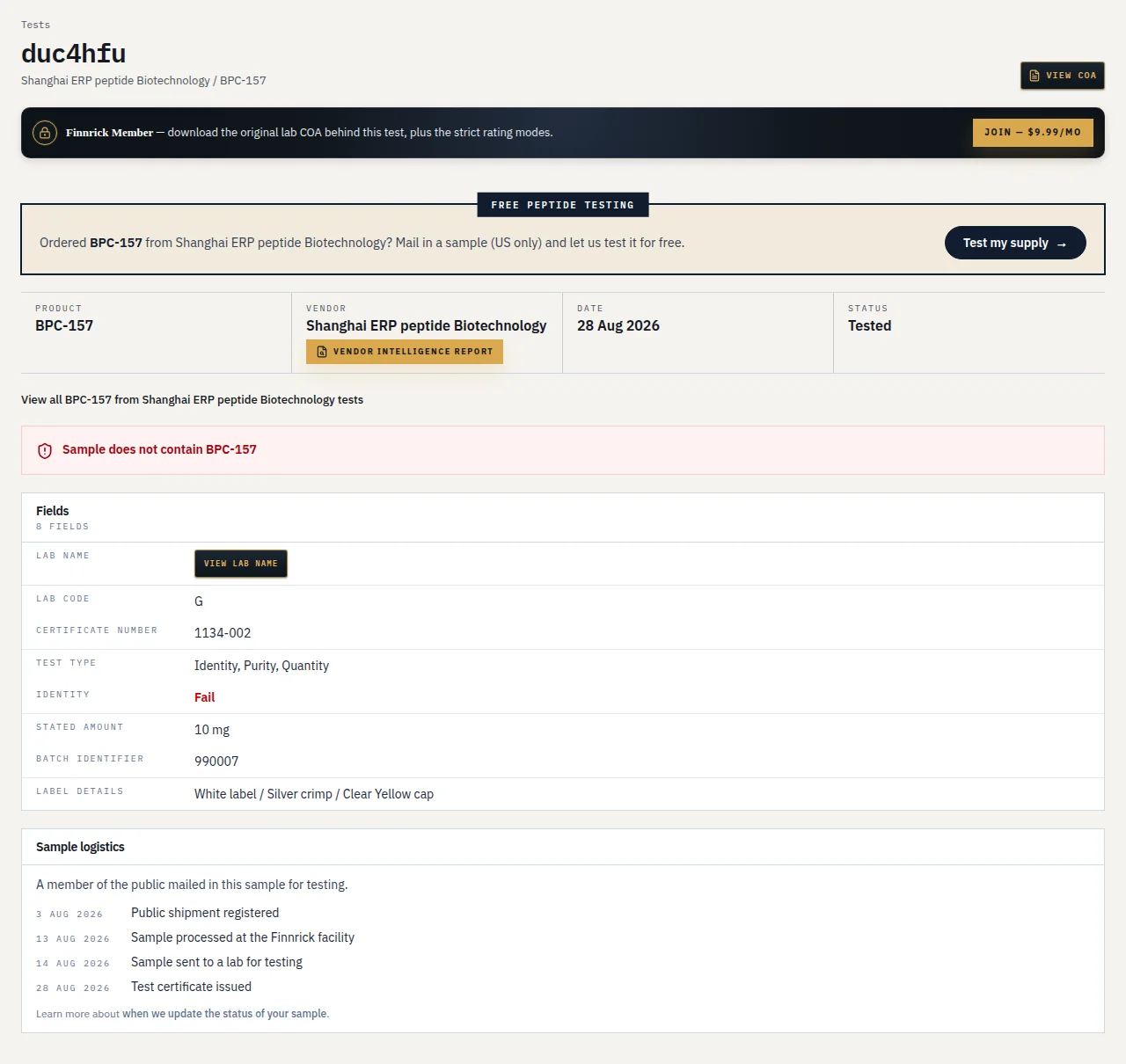
Every customer-sent vial ordered before June passed; every one ordered from June 18 onward failed. Meanwhile each certificate a seller commissioned under the same code passed, including in August and September. Cap color does not separate them: every vial described or photographed from April onward had a yellow cap and silver crimp, passing and failing alike.
The record cannot tell us why. The sellers may have bought earlier stock, or chosen which vials to send. The code may also cover more than one production run. A buyer holding a 990007 vial with a clean seller certificate could not tell which of these applied to them.
The U.S. record is mostly seller-commissioned
U.S. sellers commissioned 89.5% of their published lab results. For international suppliers, the figure is 7.6%.
| U.S. sellers | International suppliers | |
|---|---|---|
| Published results with a pass or fail outcome | 50,870 from 2,540 sellers | 10,034 from 192 suppliers |
| Commissioned by the seller | 45,529 (89.5%) | 759 (7.6%) |
| Sent in by customers through Finnrick | 1,425 (2.8%) | 5,677 (56.6%) |
| Other sources (Janoshik reports ordered by another client, community uploads, other laboratory libraries) | 2,924 (5.7%) | 3,348 (33.4%) |
| Failure rate across the whole record | 2.6% (1,306) | 8.0% (798) |
Rows do not sum to the total: Finnrick records whose sender is listed as “Finnrick” (U.S. 875; international 248) are vials Finnrick bought itself and are shown in the next section, and Freedom certificates naming an individual as client are excluded. We also excluded 1,113 results from 28 sellers that only Finnrick lists as U.S. Finnrick’s location field is free text, and its own vendor reports call the listed U.S. location unsupported for several of them, including LiliPeptide, Reta-Peptide, Oupeptide and HkRoids. Origin method is in Method and sources.
The seller-commissioned U.S. record is large and clean: 768 failures in 45,529 results, or 1.7%. It also stands mostly alone. Of the 2,531 U.S. sellers with their own certificates, 2,463 had no customer-sent vial in Finnrick’s public record.
When customers send the vial, the gap narrows
Customer-sent vials from U.S. sellers failed four to five times as often as those sellers’ own certificates, and at a rate close to international suppliers’.
| Customer-sent vials (Finnrick, sender “Public”) | Vials | Sellers | Failed |
|---|---|---|---|
| U.S. sellers, broader definition | 1,425 | 75 | 131 (9.2%) |
| U.S. sellers on TitrateLab’s reviewed U.S.-reseller list only | 762 | 37 | 51 (6.7%) |
| International suppliers | 5,677 | 138 | 494 (8.7%) |
| Bought by Finnrick from U.S. sellers | 875 | 29 | 154 (17.6%) |
| Bought by Finnrick from international suppliers | 248 | 7 | 41 (16.5%) |
Finnrick labels each record by who supplied the sample. “Public” records say “A member of the public mailed in this sample for testing.” Records Finnrick bought say “This sample was ordered by Finnrick directly from the vendor, anonymously or not.” In neither case did the seller choose the vial. The reviewed-list row is dominated by three sellers: Nexaph, Peptide Sciences and Peptide Partners account for 469 of its 762 vials.
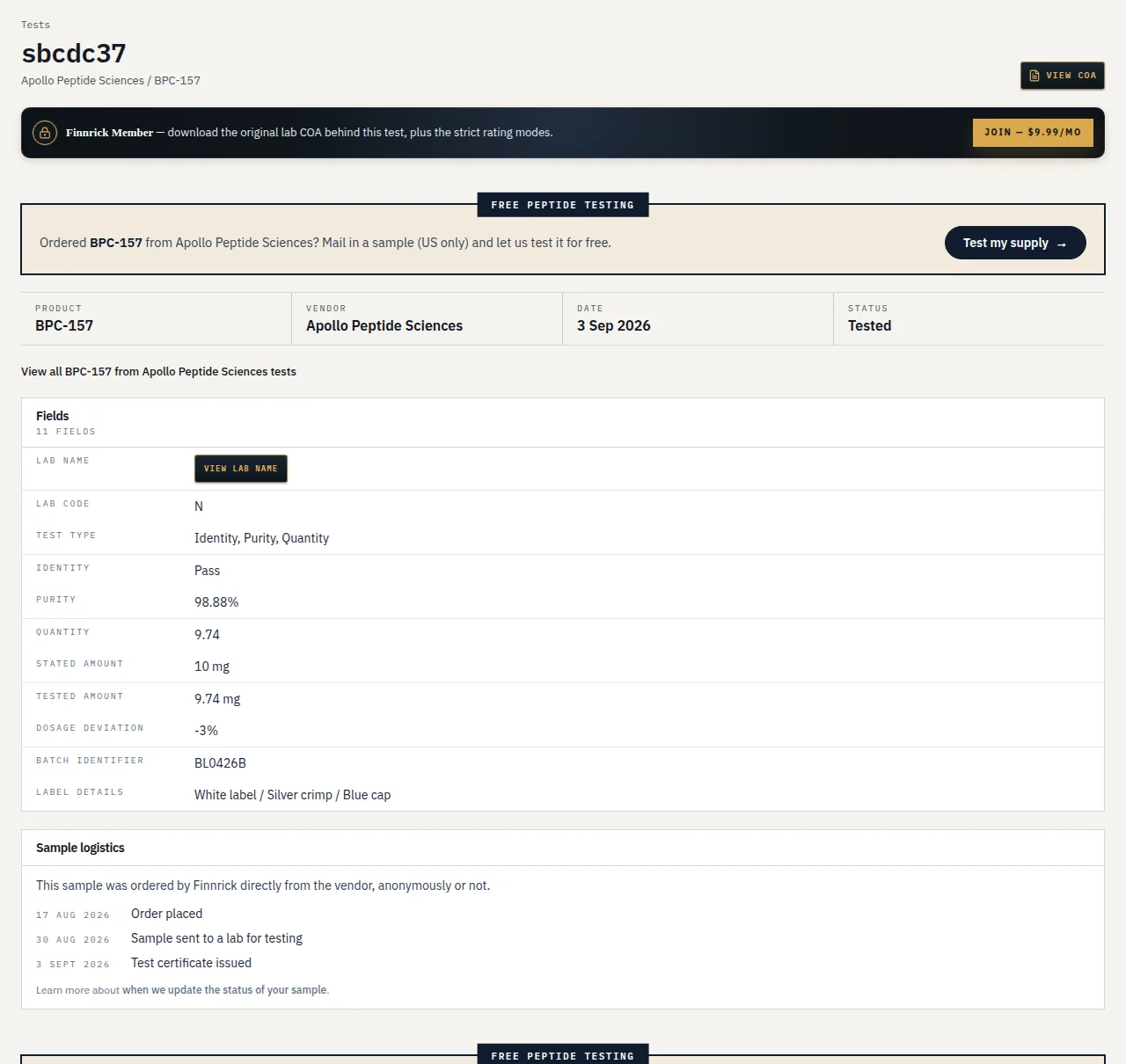
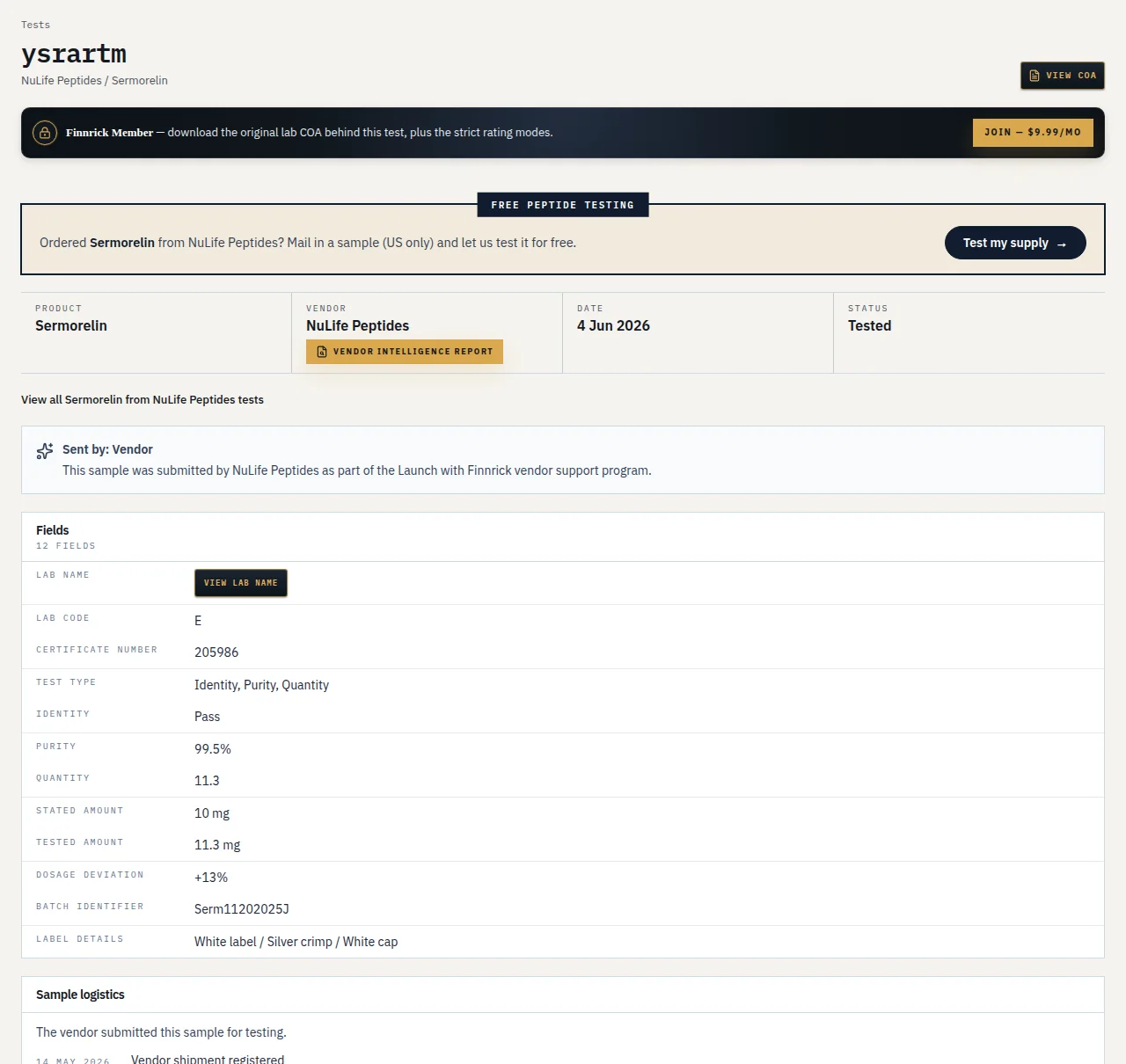
That fits what the supply links suggest. Many U.S. sellers stock the same kinds of Chinese-made vials as international suppliers. When someone other than the seller chooses the vial, it fails far more often than the seller’s own certificates suggest.
The same pattern appears within individual sellers and at a single laboratory:
- Finnrick. Nine sellers had at least three vials sent in by the seller and at least three by customers. None of the 99 seller-sent vials was the wrong substance or below 98% purity. Customer-sent vials from the same nine sellers failed 24 of 375 times (6.4%). Seller-sent Finnrick tests come through its paid Launch with Finnrick program, in which the vendor “can review and approve the test results before publishing.”
- Janoshik. For U.S. sellers, reports ordered by someone other than the seller failed 164 of 1,272 times (12.9%). Reports the seller ordered failed 19 of 668 times (2.8%). For international suppliers there was no such gap: 8.3% (102 of 1,228) against 8.8% (30 of 342).
Laboratory choice is part of the gap
The laboratory matters as much as the sender. Finnrick sends customer vials to several partner laboratories, and their failure rates differ:
| Laboratory (customer-sent vials via Finnrick) | Period | Failed |
|---|---|---|
| Chromate | May 2025 to Jul 2026 | 29 of 201 (14.4%) |
| Krause Analytical | Jun 2025 to Sep 2026 | 590 of 5,985 (9.9%) |
| BTLabs | Sep 2025 to Sep 2026 | 155 of 2,259 (6.9%) |
| Freedom Diagnostics | May to Sep 2025 | 1 of 122 (0.8%) |
Freedom Diagnostics, which tested most seller-commissioned U.S. certificates, failed 1 of the 122 customer vials it tested for Finnrick. Its certificate portal’s own code lists six clients, including three of the largest U.S. clients in our data (Peptaris, Simple Peptide and Planet Peptide), as “Testing Partner”. Those tests date from 2025 and cover a different mix of products, so they cannot settle whether the laboratory itself reads high. They do mean the gap cannot be attributed only to sellers choosing good vials. At least three explanations remain open:
- Sellers choose the vial. A seller can send its best sample, or test before a problem appears.
- Sellers choose the laboratory. Laboratories differ in method and reporting.
- Customers test suspicious vials. Buyers may send in vials that already look wrong, which would raise the customer-sent failure rate.
The third explanation cannot account for the 990007 timeline, where the same customer route produced three passes before three failures. It may still inflate the market-wide customer rate.
What the data do not show
- Intent. The record shows a gap between seller-commissioned and customer-sent results. It does not show that any seller hid a failure or reused a report knowingly.
- Same batch. Shared codes indicate a supply connection. Several suppliers use codes that stay the same across production runs.
- That every certificate client is a seller. Freedom certificates name whoever ordered the test. Some clients, such as ELJ above, appear to be buyers testing supplier vials. Our seller-commissioned figures include those clients where their names look like businesses, which would move some results from the seller column into the buyer column.
- Complete coverage. Many U.S. sellers print their own codes or none at all, so 102 linked sellers is a minimum. GYC, for example, matched only one U.S. client by code.
- Every customer test. Finnrick publishes a public submission only when it has corroboration, and says that about a third of the tests it has completed are not published. The customer-sent record is therefore itself a selected subset.
- Product safety. A passing result describes one vial on one date. It is not evidence of medical safety.
- A precise U.S. customer-sent rate. The rate is 6.7% or 9.2%, depending on whether we count only sellers on TitrateLab’s reviewed U.S.-reseller list or also businesses that commission their own Freedom tests. Finnrick lists some Chinese suppliers with U.S. warehouses as U.S., and we excluded those it alone labels U.S. At Janoshik, we tell a seller from another client by matching names, which may misclassify some reports.
What to check before trusting a certificate
- Who sent the vial? A seller-commissioned certificate is the seller’s evidence. On Freedom Diagnostics reports, the client is usually the seller.
- Which laboratory tested it? Compare results from the same laboratory where possible.
- Is there a customer-sent result for the same product? Search the printed code in Find Your Batch. A match under another seller’s name can reveal the supplier. Read the dates: the code may cover more than one production run.
For how resellers relabel and price supplier kits, see What is a domestic “10x” peptide reseller?. For a worked Batch Finder search, see the Praetorian Peptides case study.
Method and sources
Corpus. TitrateLab’s certificate-of-analysis database as of September 18, 2026: 85,267 published laboratory results with a pass or fail outcome for identity or purity, tested between 2019 and September 17, 2026. Almost all seller-commissioned U.S. results (99.8% of Freedom Diagnostics records) and all Finnrick customer-sent records date from 2025 or 2026.
Failure. The laboratory reported the wrong substance (identity failure) or purity below 98%. We excluded quantity results because laboratories differ systematically in measured quantity.
Sender.
- Customer-sent means Finnrick records whose sender field is “Public”; Finnrick’s record page says “A member of the public mailed in this sample for testing.” Finnrick is a testing service that routes these vials to partner laboratories.
- Bought by Finnrick means records whose sender field is “Finnrick”; the record page says “This sample was ordered by Finnrick directly from the vendor, anonymously or not.”
- Seller-commissioned means Freedom Diagnostics certificates naming a business as client, Finnrick records whose sender is “Vendor” (“The vendor submitted this sample for testing”), sellers’ own published libraries, and Janoshik reports whose client matches the manufacturer. Freedom certificates naming an individual as client were excluded.
Origin. We classified sellers in this order:
- Sellers on TitrateLab’s reviewed U.S.-reseller list count as U.S.
- Sellers our review marks as non-U.S., sellers Finnrick’s public vendor directory places in China or elsewhere, and companies whose names contain Chinese place names or registration forms count as international.
- Remaining businesses that commission their own Freedom Diagnostics certificates count as U.S.; about 37,400 U.S. results rely on this rule. Freedom is a U.S. laboratory, and 98.6% of Freedom certificates from clients with a known location come from U.S. businesses.
- Sellers that only Finnrick labels U.S. are left unclassified: 1,113 results from 28 sellers. Finnrick’s label can reflect a U.S. warehouse rather than a U.S. business.
Results without an identified origin (24,363, including the unclassified sellers) are excluded from the origin comparison but included in the corpus total.
Code matching. A code counts as shared when the same printed code and compound appear on both a U.S. and an international seller’s report. We required at least six characters including four digits, excluded dates and CAS registry numbers, and removed codes printed by more than 15 U.S. sellers as likely generic.
Sources. Freedom Diagnostics public certificates (each linked individually above; laboratory site); Finnrick public test records and test-detail pages (for example, ERP BPC-157, August 28, 2026); Janoshik public verification pages. The laboratory for each Finnrick record is published on the record itself.
Review and corrections. Evidence reviewed September 18, 2026 by the TitrateLab Research Desk. To report an error, see our methodology and corrections policy.

