A domestic “10x” reseller is a U.S. seller that buys peptide vials from Chinese suppliers, adds its own labels and sells them at much higher prices. “10x” means ten times the price per vial; a new label does not make the contents safer.
Standard pack
1 kit = 10 vials
Things to notice
Single vials and new labels
Look past the label
Check the batch number
Evidence
13 suppliers’ catalogues and two batch searches checked September 7; FDA records and three review photos checked September 8, 2026
Limits
These examples do not measure every seller’s prices or product quality. The price example is made up, and matching batch codes do not prove a direct purchase from a factory.
Peptide sellers explained · September 202613 suppliers’ catalogues and two batch searches checked September 7; FDA records and three review photos checked September 8, 2026 · reviewed September 8, 2026
The verdict
A new label does not make a vial safer.
A domestic “10x” reseller is a U.S. seller that buys peptide vials from Chinese suppliers, adds its own labels and sells them at much higher prices. “10x” means ten times the price per vial; a new label does not make the contents safer.
Our review of 13 suppliers’ catalogues found ten-vial kits as the standard pack. We did not review every supplier.
Things to noticeSingle vials and new labels
Check whether the price buys one vial or a whole kit, whether the peptide is clearly named, and whether the seller says who made it.
Look past the labelCheck the batch number
Our searches found the same batch codes under different seller names. That can point to a shared supplier, but does not prove who bought from whom.
How it works
A standard kit contains 10 vials. That is the usual pack size in the supplier catalogues we reviewed. A reseller can buy the kit, add branded stickers and sell the vials one at a time. A sticker from a small label printer does not mean the seller made the peptide.
Say a reseller pays $100 for a kit. That is $10 per vial. If it sells each vial for $100, it is charging 10 times what it paid. These numbers are an example; actual prices vary.
Signs to look for
Single vials for sale. Check whether the advertised price buys one vial or the full kit of 10.
Brand labels on each vial. Chinese-supplier kits can arrive as plain vials with colored caps and a label on the box. A domestic reseller can add its own stickers to each vial, as described above.
Vague names such as “GLP3.” Alongside “research use only” disclaimers, these may signal an attempt to avoid FDA attention. That is a possible explanation, not something a product name can prove.
A brand name without a named manufacturer. The seller’s logo tells you who is selling it, not necessarily who made it.
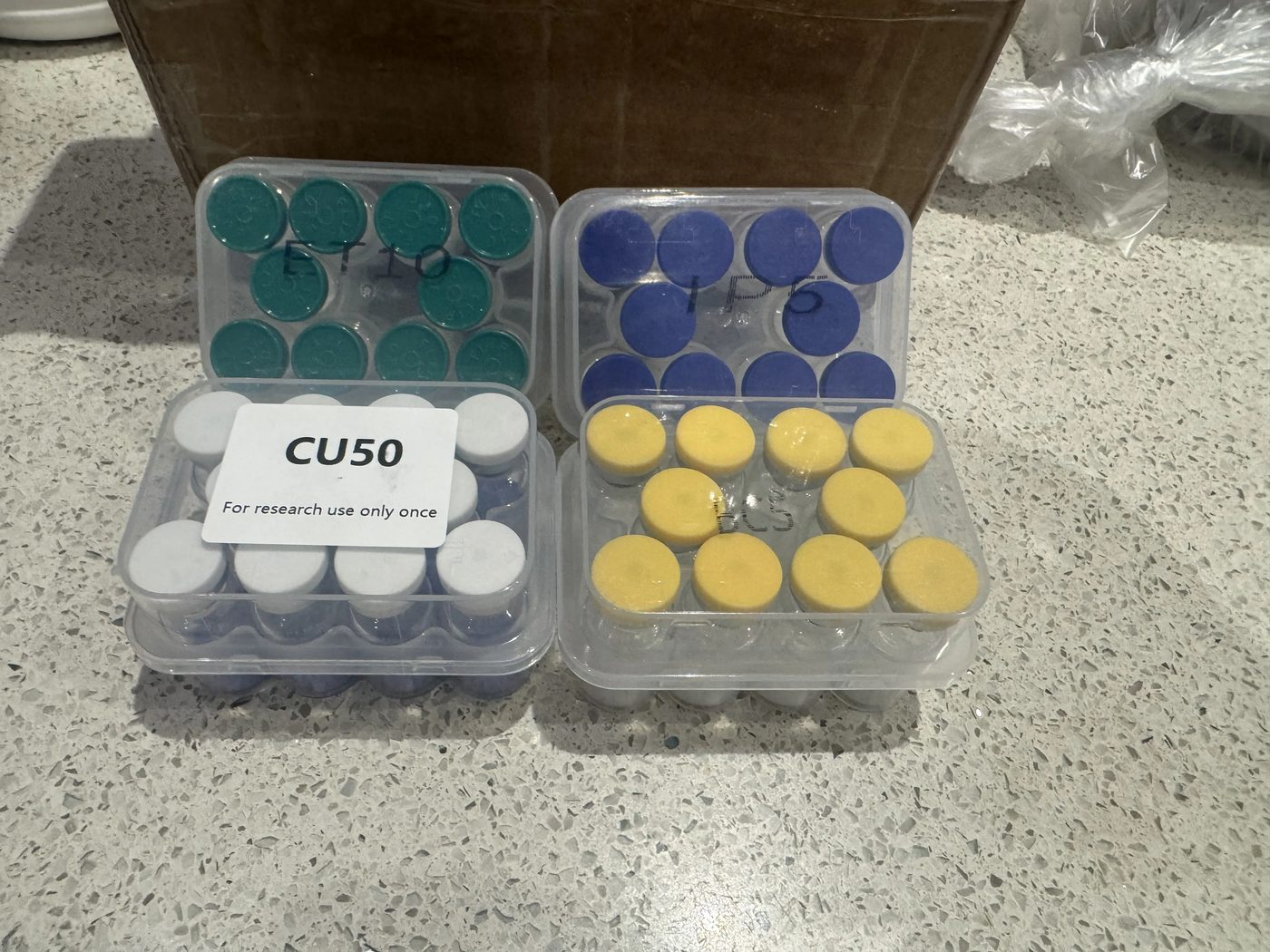
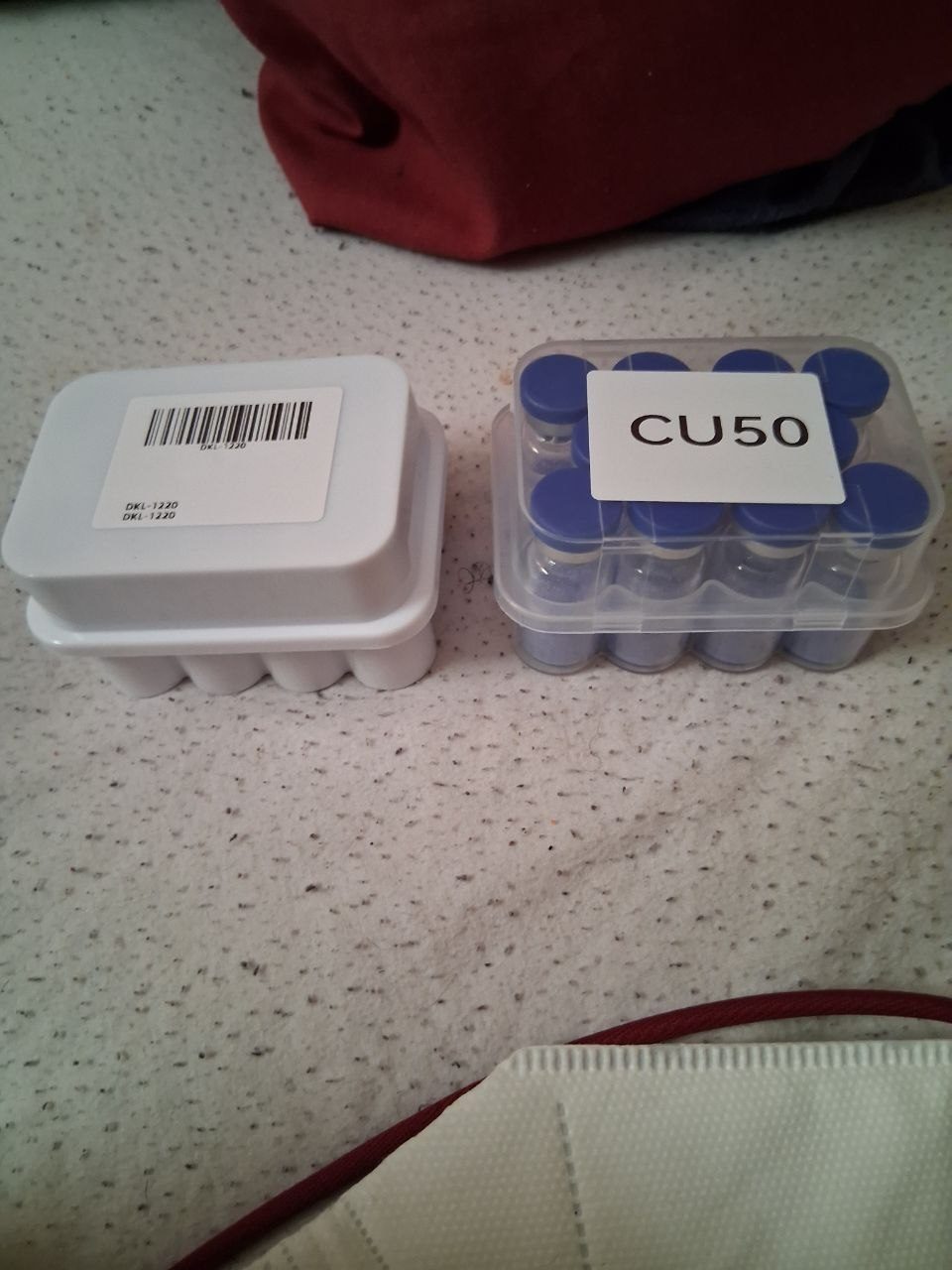
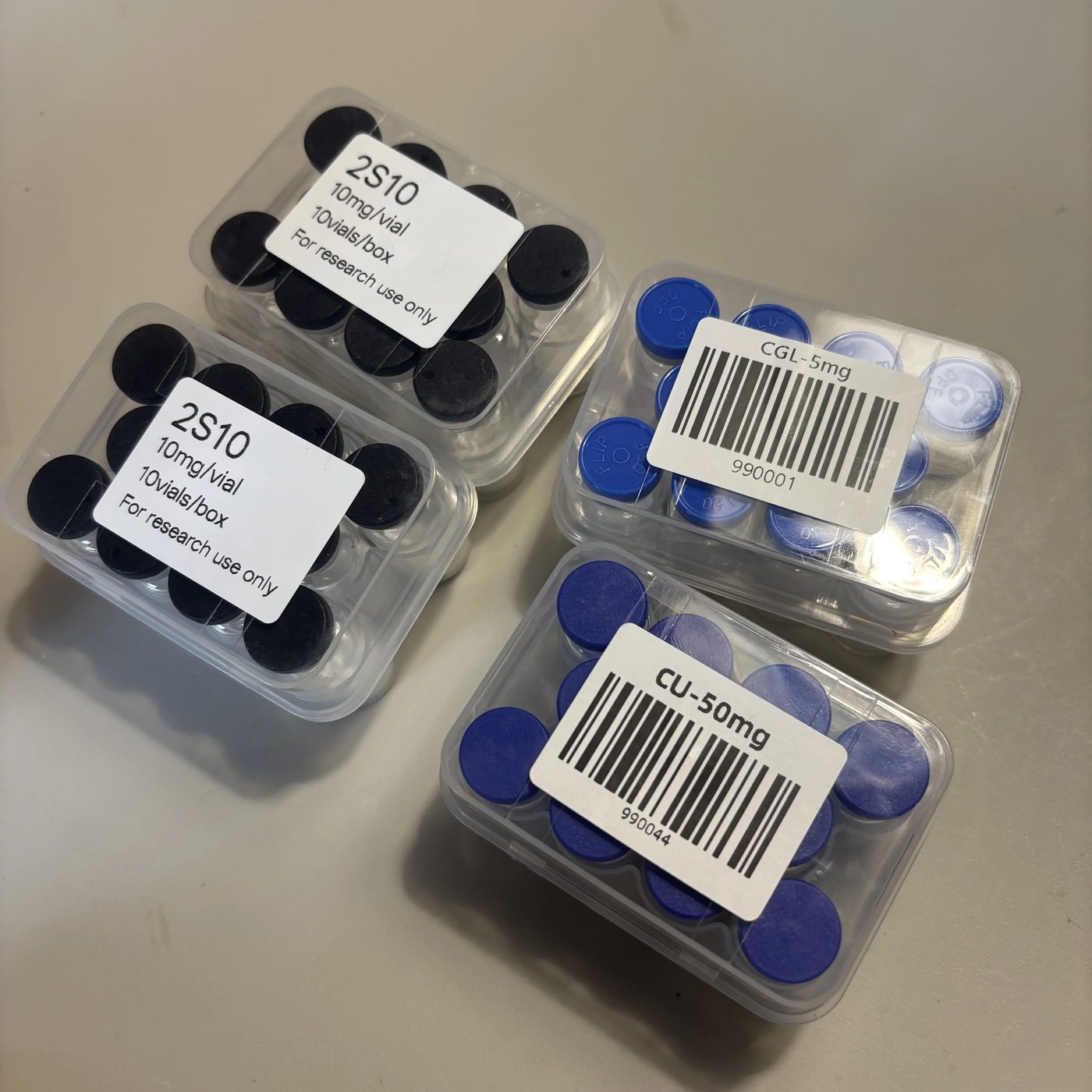
These examples from our reviews show colored caps, plain vial sides and labels on the outer boxes. A cap color cannot identify a peptide or its maker. Tap a photo to enlarge it.
Different caps, standard kits. Four boxes of ten vials. HKMS review, June 30, 2026.Plain vial sides. The visible vials have no individual stickers; the code is on the lid. TFC review, July 22, 2026.Ten vials per box. The pack size is printed on the kit label. WBS review, June 29, 2026.
Does the higher price buy more protection?
A higher price does not prove a safer product. A new label cannot fix the wrong ingredient, too little peptide or contamination. If the original batch number disappears, it can become harder to find out where the vial came from. Our analysis of 85,267 lab results found that vials customers sent in from domestic sellers failed about as often as overseas suppliers’ vials, although the sellers’ own reports looked about three times cleaner.
Extra lab testing can provide useful information, but the report needs to match the batch being sold. Faster shipping and smaller orders are conveniences. They do not tell you what is inside the vial.
Batch numbers can reveal connections
A vial sold under a new brand can still carry its original batch number. That is where Find Your Batch can help.
In checks on September 7, we found this retatrutide code and this tirzepatide code on lab reports under different seller names. Those matches can point toward shared suppliers. They do not, on their own, prove who bought from whom or whether each report represents a new test.
About this article
TitrateLab Research Desk checked the catalogue and batch sources on September 7, 2026, and the FDA records and review photos on September 8, with AI assistance. Our catalogue review covered 13 suppliers; it was not a survey of the entire market. The photos illustrate packaging, not verified contents or factory origins. See how we check evidence, or send corrections to [email protected].
Vendor and manufacturer names are used descriptively to identify parties in the documentary record; inclusion is not endorsement. Think a passage misrepresents the record? [email protected].
TitrateLabPRO
Know what the reseller markup buys.
A different label can hide a large price difference. Pro helps you compare kit and single-vial offers, inspect available batch evidence and assess the seller before paying a premium.
119,405published COA report entries
01Compare the same quantity
Check strength, vial count and package price together.
02Investigate the batch
Inspect matching identifiers and source reports, with their limits.
03Evaluate the extra cost
Review testing history and customer reports alongside price.
TitrateLab
You must be 21 or older to enter.
TitrateLab provides research-use information on peptides for adults. Confirm your age to continue.
For research purposes only. Not for human consumption. By entering you agree to our Terms & Privacy.